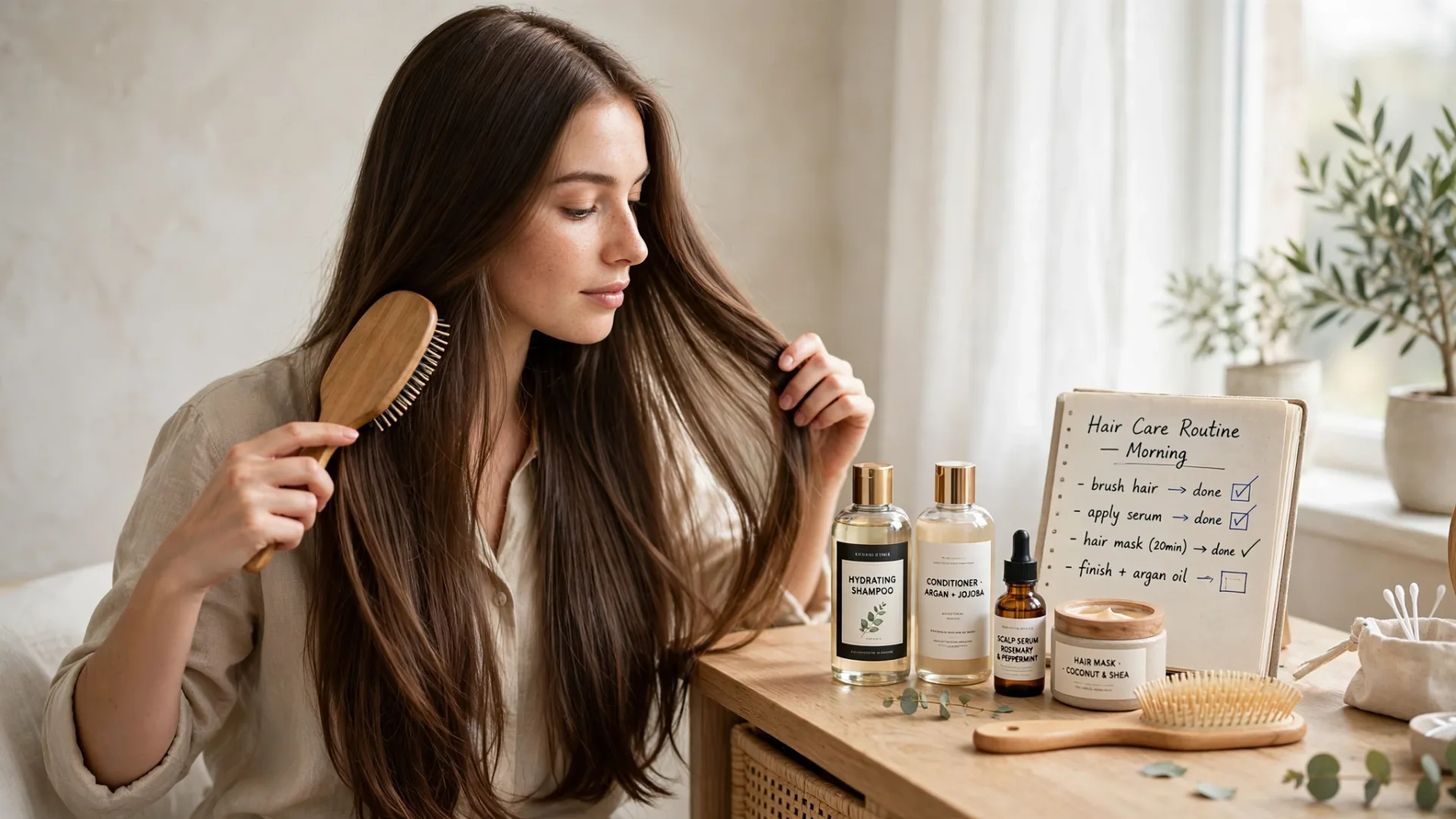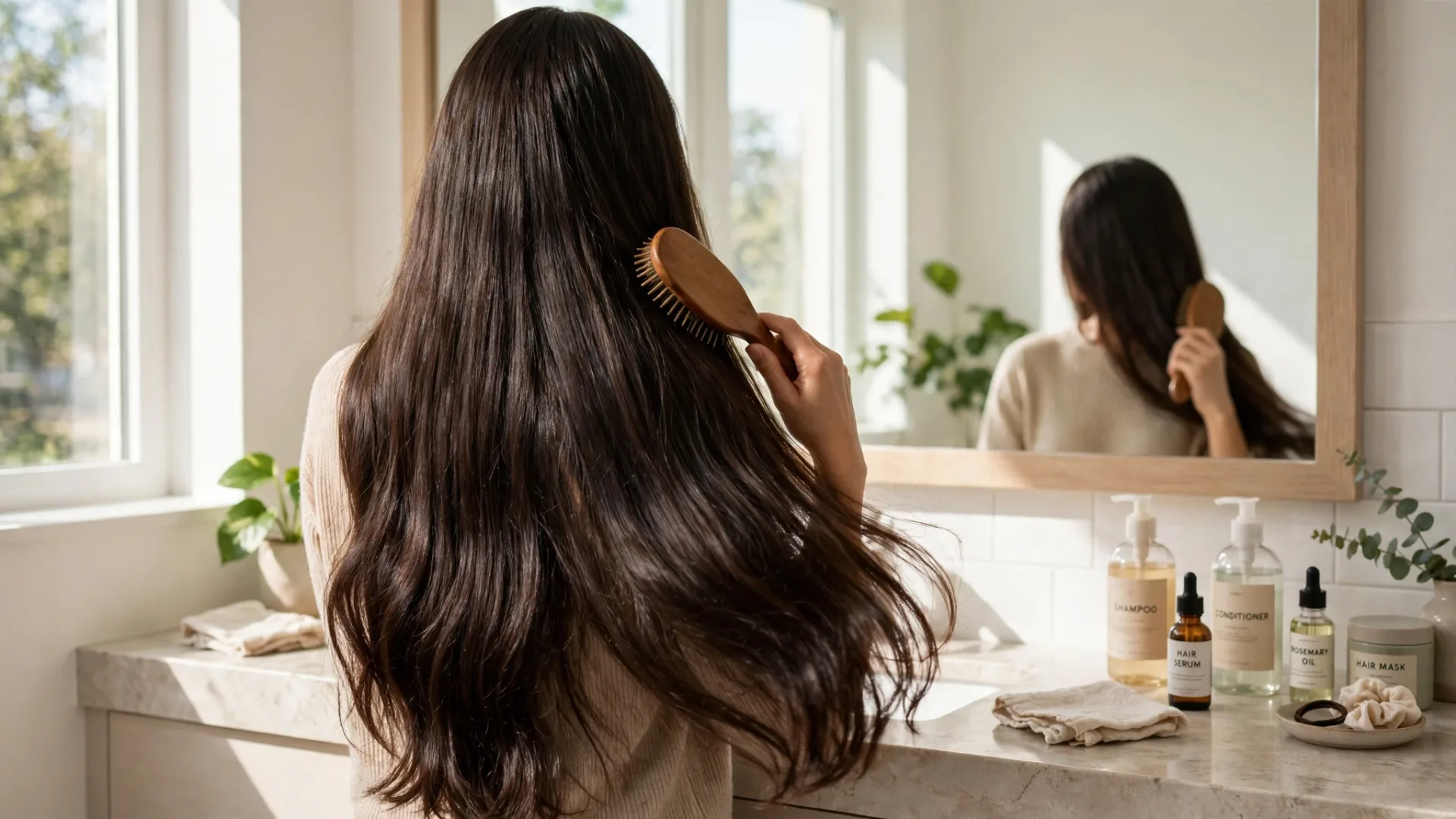

If you have ever stared at your hair in the mirror and wished it would grow faster, you are not alone. Hair growth feels slow because it is slow. On average, hair grows about half an inch per month, and that rate is set mostly by your genes. No shampoo, oil, or vitamin can double it overnight.
But here is the good news: most people are not growing hair as fast as they could. Breakage, an unhappy scalp, poor diet, and rough daily habits quietly eat away at your length. Fix those, and you keep more of what you grow. That is how hair gets longer, thicker-looking, and healthier over time.
These 17 tips cover the full picture — scalp care, food, washing habits, styling, and patience. Pick a few to start with this week, then add more as they become habits. Small, steady changes beat a dramatic routine you quit after ten days.
Start With Your Scalp
Healthy hair starts at the root. Your scalp is skin, and like any skin, it does best when it is clean, calm, and well looked after. If your scalp is itchy, flaky, or clogged with product, your hair will struggle no matter what you put on the lengths.
1. Massage Your Scalp Every Day
A few minutes of scalp massage each day is one of the simplest growth habits you can build. Use your fingertips, not your nails, and move them in small circles all over your scalp. Do it for three to five minutes, either dry or while your conditioner sits in the shower.
Massage boosts blood flow to the hair follicles, which is exactly what they need to do their job. It also helps loosen flakes and spreads your scalp’s natural oils along the roots. Many people notice less shedding and a calmer scalp within a few weeks of daily massage. It costs nothing, and it feels great, so there is no reason to skip it.
2. Try Rosemary Oil
Rosemary oil is one of the few natural growth aids with real research behind it. In one well-known study, rosemary oil performed similarly to a common over-the-counter growth treatment over six months, with less scalp irritation reported.
Never put undiluted essential oil straight on your scalp. Mix a few drops into a carrier oil like jojoba or coconut oil, massage it in, and leave it for at least 30 minutes before washing. Use it two to three times a week. If you notice itching or redness, stop and try a gentler option.

3. Clear Away Scalp Buildup
Styling products, dry shampoo, and hard water can leave a film on your scalp that blocks follicles and dulls your hair. Once every week or two, use a clarifying shampoo or a gentle scalp scrub to wash that buildup away.
Do not overdo it. Clarifying too often strips natural oils and leaves your scalp dry, which can trigger more oil production and more flaking. Once a week is plenty for most people, and once every two weeks is enough if you use light products. Follow with a good conditioner so your lengths stay soft.
Eat for Hair Growth
Hair is made almost entirely of protein, and your body treats it as a low priority. When nutrients run short, your body sends them to vital organs first and hair last. That is why diet shows up in your hair before anywhere else. You cannot out-care a diet that leaves your follicles hungry.
4. Get Enough Protein
Each strand of hair is built from keratin, a protein. If you eat very little protein, your hair can become weak, thin, and slow to grow. Aim to include a protein source at every meal — eggs, chicken, fish, lentils, beans, Greek yogurt, or tofu.
Most adults do well with roughly a palm-sized portion of protein per meal. You do not need protein shakes or extreme diets. Regular, balanced meals with real protein are enough to give your hair the building blocks it needs.
5. Add Iron-Rich Foods
Low iron is one of the most common, and most overlooked, causes of hair shedding in women. Iron helps carry oxygen to your follicles, and without enough of it, growth slows and shedding rises.
Red meat, spinach, lentils, and fortified cereals are all good sources. Pair plant iron with vitamin C — a squeeze of lemon on your lentils or peppers in your salad — and your body absorbs far more of it. If you shed heavily or feel tired often, ask your doctor for a simple blood test before guessing.
6. Do Not Skip Healthy Fats
Omega-3 fats keep your scalp hydrated from the inside and support the oils that protect each strand. Oily fish like salmon and sardines are the richest source, while walnuts, flaxseed, and chia seeds are solid plant options.
Try to eat oily fish twice a week or add a spoonful of ground flaxseed to your breakfast. You will often notice softer, shinier hair within a month, because well-nourished hair holds moisture better and breaks less.

7. Check Your Vitamin Levels
Vitamin D, zinc, and B12 all play a part in the hair growth cycle, and shortages are common. Strict diets, limited sun, and gut issues can all leave you low without obvious symptoms beyond tiredness and shedding.
A basic blood panel can settle the question in one visit. If you are low, food first is the best fix, with supplements only to fill a real gap. Random high-dose supplements rarely help and can backfire — too much vitamin A or selenium, for example, can actually increase shedding.
Wash Smarter, Not Harder
How you wash matters as much as what you wash with. Over-washing strips oils, rough handling snaps wet hair, and hot water roughs up the cuticle. A gentler wash routine protects the length you already have, which is half the growth game.
8. Wash Less Often and Cooler
Most hair types do fine with two to three washes a week. Washing daily strips the natural oils that keep hair flexible, leaving it dry and more likely to snap. If your roots get oily fast, dry shampoo on day two or three can stretch the gap.
Use lukewarm water instead of hot. Hot water lifts the hair cuticle, making strands rough and dull, while cool water at the end of a wash helps the cuticle lie flat. Your hair will look smoother and shinier for it.
9. Condition Every Time, Focus on the Ends
Shampoo cleans your scalp; conditioner protects your lengths. Apply conditioner from the mid-lengths down, where hair is oldest and driest, and leave it on for two to three minutes before rinsing.
Skip heavy conditioner on your roots if your hair is fine, since that can weigh it down and make it look flat. The ends are the part that breaks first, so they deserve the most care.
10. Use a Weekly Deep Treatment
A weekly hair mask or deep conditioner replaces moisture that daily washing and styling take away. Look for masks with shea butter, coconut oil, or hydrolyzed protein, and leave them on for ten to twenty minutes.
Fine hair should use lighter masks and rinse well, while thick or curly hair can handle richer formulas. This one habit alone can cut breakage noticeably within a month, and less breakage means the length you grow actually stays.
Handle Your Hair Gently
Most hair loss people blame on slow growth is really breakage. Wet hair stretches and snaps easily, rough towels rough up the cuticle, and tight styles pull at the roots. Gentle handling is free, and it protects every inch you grow.
11. Detangle With Care
Always detangle from the ends upward, working out knots in small sections instead of dragging a brush from root to tip. Use a wide-tooth comb on wet hair and a soft bristle brush on dry hair.
Never rip through tangles. Hold the section above the knot so you are not pulling on your scalp, and add a leave-in conditioner or detangling spray if your hair knots easily. Five patient minutes here saves weeks of regrowth later.

12. Ditch the Rough Towel Dry
Rubbing wet hair hard with a regular towel creates friction that roughs up the cuticle and causes frizz and split ends. Instead, gently squeeze water out with a microfiber towel or an old cotton t-shirt.
Press, do not rub, and let your hair air-dry at least partway before styling. This small switch makes a real difference in smoothness, especially for wavy and curly hair.
13. Sleep on Silk or Satin
Cotton pillowcases pull moisture from your hair and create friction as you move in your sleep. A silk or satin pillowcase lets hair glide instead, so you wake up with less frizz, fewer tangles, and less breakage.
A loose braid or a satin bonnet works the same way if a new pillowcase is not on your list. Protecting your hair for eight hours every night adds up fast.
Style Without the Damage
Heat and tension are the two biggest styling enemies of growth. You do not have to give up styling altogether, but the way you do it decides whether your length survives to be seen.
14. Turn Down the Heat
Flat irons, curling wands, and high-heat blow drying weaken hair over time, and damaged hair breaks before it ever looks long. Let your hair air-dry when you can, and keep hot tools for special occasions rather than every day.
When you do use heat, always apply a heat protectant first and use the lowest setting that gets the job done. One pass at a moderate temperature beats three passes at maximum heat every time.
15. Trim Split Ends on Schedule
It sounds backward, but regular trims help hair look longer. Split ends travel upward and fray the strand, forcing a bigger cut later. A small trim every eight to twelve weeks removes damage before it spreads.
Ask for a dusting — just a quarter inch — if you are growing your hair out. You keep your length while keeping the ends healthy and thick-looking.
16. Loosen Up Your Hairstyles
Tight ponytails, buns, and braids worn every day pull constantly on the hairline and can cause thinning around the face. This type of loss, called traction alopecia, is preventable if you catch it early.
Switch to looser styles, use soft scrunchies instead of thin elastics, and vary where you place your ponytail so the same hairs are not stressed daily. Give your hair a few loose days each week to recover.
Stay Patient and Track Progress
Hair growth rewards consistency, not intensity. The people with the longest, healthiest hair are usually the ones who kept a simple routine going for months, not the ones who tried every product for a week.
17. Track Your Growth and Be Patient
Take a photo of your hair from the back once a month, in the same light and same position, and measure from a fixed point like your shoulder or a shirt seam. Real progress is invisible day to day but obvious month to month.
Give any new habit at least three months before judging it — that is roughly one full growth cycle for new hairs to show. If shedding suddenly increases, or you notice bald patches, see a dermatologist rather than trying product after product. Most growth problems have a fixable cause once you find it.
Longer hair is not built in a weekend. It is built by a healthy scalp, good food, gentle handling, and time. Start with the tips that fit your life, keep them going, and let your hair do the rest.