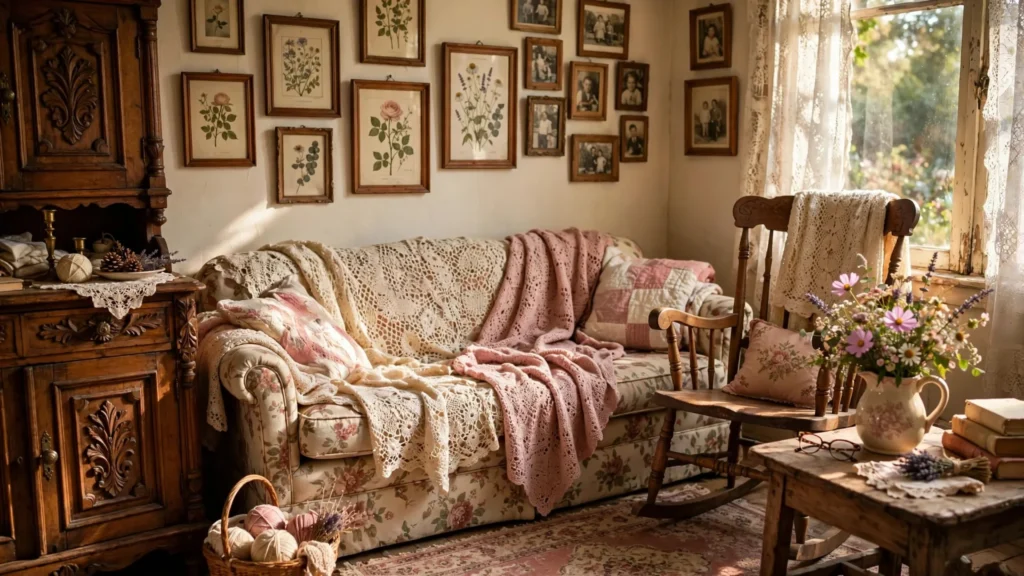

The first thing that hits you when you walk into my grandmother’s house is the smell. Lavender water, a little bit of furniture polish, and whatever is simmering on the stove — usually something with cinnamon. Then come the sounds: the tick of the old clock in the hallway, the creak of the rocking chair, the kettle starting to complain. I have been trying to recreate that feeling in my own apartment for three years, and I finally figured out why most people’s attempts at the vintage grandma house aesthetic fall flat: they decorate it like a trend instead of living it like a memory.
Here is the thing. My grandmother never once said the word “aesthetic.” She just bought a floral quilt at a church sale in 1984, got the sideboard from her own mother, kept the teacups her sister gave her, and somehow the whole place ended up feeling like a warm hug. The rooms look collected, not curated. That is the entire secret of this style, and once you understand it, you can build it on almost any budget.
This guide walks you through everything that makes the vintage grandma house aesthetic work in a real home — floral fabrics, antique wood, heirloom displays, cozy lighting, and all the small nostalgic details — plus the mistakes I made along the way so you do not have to.
Why This Aesthetic Works in Real Homes
Most decor trends ask you to strip things away: bare walls, one plant, a single beige sofa. The grandma aesthetic does the opposite. It asks you to keep the things with stories. A scratch on the dining table is not a flaw; it is where your grandfather used to set down his coffee every morning for thirty years.
That is why this style is so forgiving. It does not require a big budget or a big house. A studio apartment can pull it off with a quilt, a lace curtain, and a shelf of thrifted teacups. What it requires is patience — building the look slowly, piece by piece, the way a real grandmother’s house comes together over decades.
1. Layer Floral Fabrics Like They Were Collected Over Decades
Floral textiles are the heartbeat of this style. I started with a single floral quilt I found at an estate sale for $15, and honestly, that one piece changed my whole bedroom. The mistake I made at first was buying a matching “floral bedding set” from a big-box store. It looked too crisp, too new, too much like a hotel room trying to be quaint.
Real grandma style mixes florals that do not quite match but feel related. A faded rose quilt, a lace-edged pillowcase in sage green, a small floral cushion with yellow daisies. The trick is keeping them in the same faded color family so nothing shouts. Mix one big floral with two or three smaller prints, and keep your furniture solid and neutral so the room does not spin.
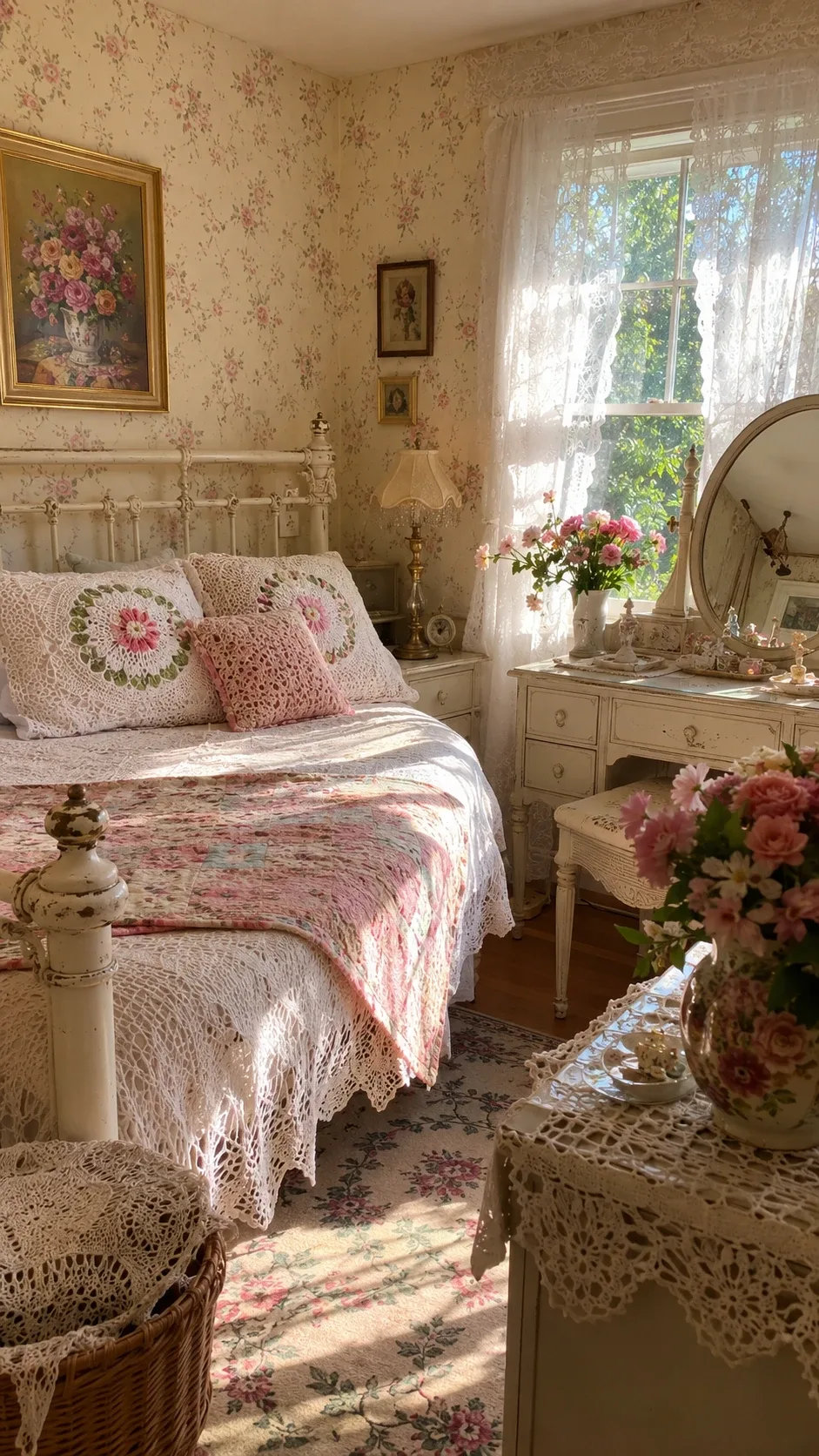
Let things look soft and relaxed. A quilt casually folded over an armchair reads far more authentic than linen folded into hospital corners. Wrinkles are part of the charm here.
2. Let Antique Wood Furniture Be the Star
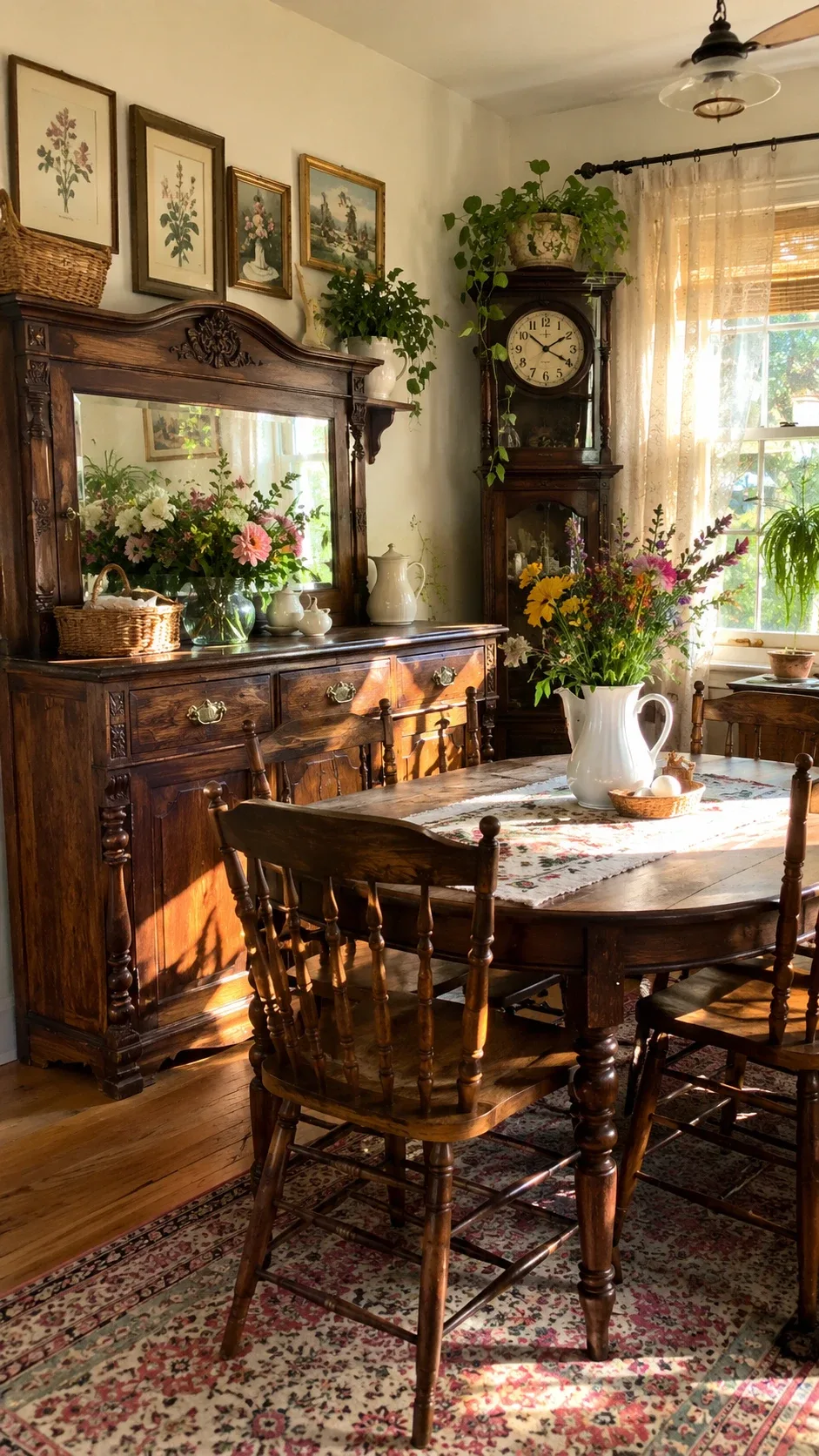
Solid wood furniture is what separates this look from a cheap farmhouse knockoff. Oak, walnut, pine, mahogany — pieces with carved details, curved legs, and visible grain. My best find is a 1970s oak dresser with scratches on top that I paid $40 for. The scratches are my favorite part; they mean someone lived with it before me.
You do not need a whole set. One bigger vintage piece per room is enough — a wooden dining table, a carved sideboard, a rocking chair. Then let simpler modern pieces fill in around it. If you refinish anything, keep the patina. Original finish with gentle wear gives ten times more warmth than wood stripped and stained to look brand new.
3. Build a Reading Corner You Will Actually Use
Every grandmother’s house I have ever been in has one chair that is clearly the good chair. Mine is a secondhand wingback I re-covered in a faded floral fabric. It sits by the window with a knit throw, a small side table, and a stack of books that keep growing.
The key word is actually. Do not build a staged corner that nobody sits in. Put the chair near natural light, add a real reading lamp with a warm bulb (not a cold white one), and leave room for a mug of tea. Throw in a basket of extra blankets and a framed family photo. It will become the most-used spot in your home within a week.
4. Display Heirlooms with Intention, Not Clutter
There is a fine line between “treasured family history” and “flea market explosion,” and I crossed it in my first year. I put everything I owned on every surface. It looked like a yard sale. Now I follow a simple rule: three to five meaningful objects per surface, grouped by theme.
Vintage clocks, porcelain figurines, silver trays, framed photographs, handmade embroidery — pick the pieces with the best stories and give them breathing room. Odd-numbered groupings (three teacups, five frames) look more natural than even ones. And rotate things seasonally. My grandmother swaps her shelf displays around Christmas, and it keeps the house feeling alive without buying anything new.
5. Add Lace and Crochet Details (Small Touches, Big Payoff)
If you are short on money, start here. Handmade textiles deliver more vintage charm per dollar than anything else. A lace curtain softens a whole window. A crochet doily under a vase makes a cheap thrift find look like an heirloom. Cream-colored lace blends better than bright white, which can look stark against old wood.
You do not need to crochet them yourself — though learning is not a bad weekend project. Thrift stores sell handmade doilies and runners for almost nothing. I bought a stack of fifteen for $4 at a church sale, and I use them everywhere: under candles, over side tables, even framed on the wall like art.
6. Style Collections on Open Shelves
Collections are what make a house feel like somebody’s. Vintage teacups, glass bottles, ceramic pitchers, old books with worn fabric covers, small decorative boxes — gathered by theme, not scattered randomly. My shelf holds every ceramic pitcher I have ever found, and together they look intentional and gorgeous. Apart, they would just be junk.
Leave air between objects. The eye needs resting space, especially when everything on the shelf is detailed. Stack some books horizontally, stand some vertically, tuck a small trailing plant at the end to soften it. Step back and squint: if it looks like one display instead of six, you did it right.
7. Switch to Warm, Layered Lighting
This one change transformed my living room more than any furniture purchase. I swapped the overhead light for three table lamps with pleated fabric shades and warm bulbs, and the room went from “apartment” to “evening at grandma’s” instantly. Harsh ceiling light is the enemy of this aesthetic.
Multiple small light sources beat one big one every time. A lamp on the sideboard, a sconce by the reading chair, a small lamp on the dresser. Use warm-toned bulbs (2700K) that mimic old incandescent light. Pleated lampshades are the cheapest vintage signal you can buy — I found two brass-based lamps with pleated shades for $10 each at a thrift store.
8. Use Flowers in Every Room
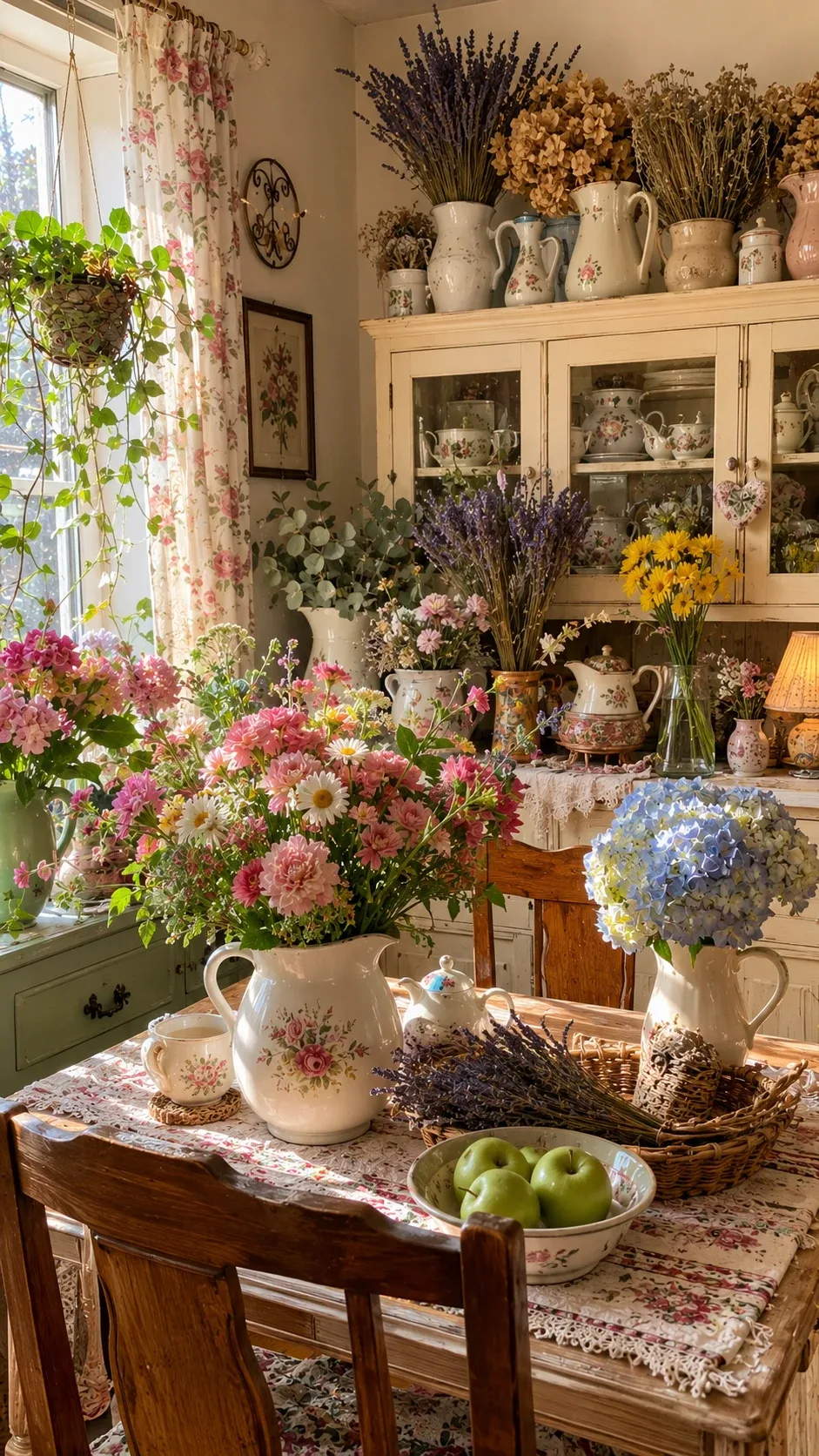
Fresh garden blooms, dried lavender, eucalyptus, hydrangeas — flowers were everywhere in my grandmother’s house, and they cost her almost nothing because she grew most of them. You do not need a garden. A $6 bunch of grocery-store flowers split across three small vases in different rooms works beautifully.
Stick to soft, muted colors that play well with vintage wood: blush pinks, creams, dusty purples. Arrange in simple ceramic pitchers instead of formal vases. And in winter, switch to dried bundles — lavender, wheat, baby’s breath. They last for months and still smell faintly of the thing you are trying to evoke: a house that has been loved for a long time.
9. Bring Out the Vintage China
Beautiful china rotting in a cabinet is a tragedy this aesthetic refuses to accept. Put the teacups on an open shelf. Display the serving plates inside a glass-front cabinet. Use the creamer for actual cream. My grandmother served soup in bowls that are now worth more than my couch, and she was right: the point of a beautiful thing is to be used.
You do not need a complete matching set — in fact, mismatched is better. Mix inherited china with thrifted finds that share a color. Group them by pattern or color family on the shelf, and leave enough space that each piece can be seen. Everyday elegance beats special-occasion hiding, every single time.
10. Pick a Soft, Faded Color Palette
The colors of this style look like they have been through a gentle wash cycle: dusty rose, sage green, butter yellow, cream, muted blue, warm beige. Nothing neon, nothing stark. Paint walls in soft neutrals and let the color come from fabrics, art, and flowers.
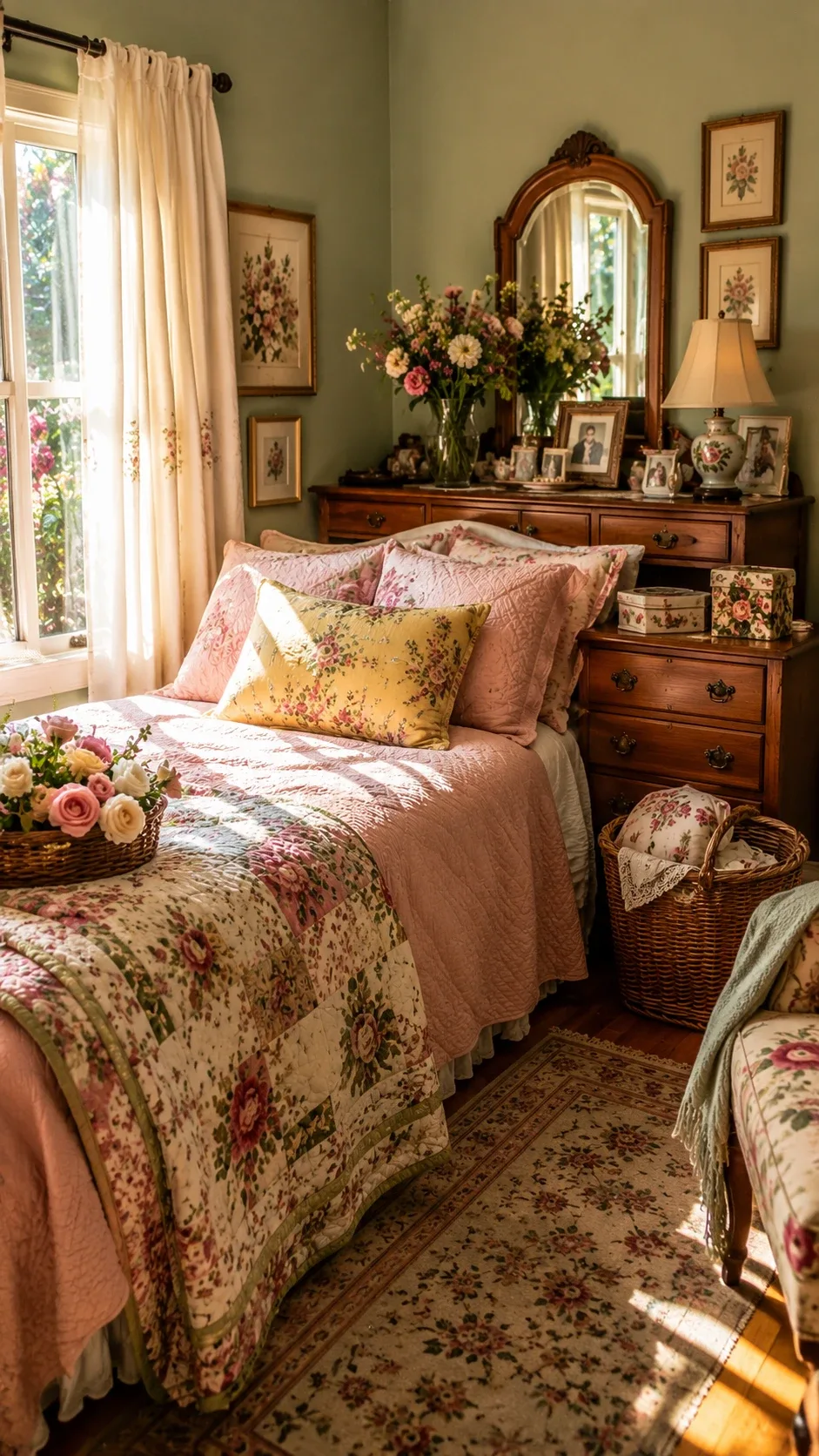
My personal rule: three to four main colors for the whole home. I use cream, dusty rose, sage, and wood tones everywhere, so the rooms flow into each other the way a real grandmother’s house does. It also makes thrifting easier — you learn to spot your colors across a crowded shelf instantly.
11. Make the Kitchen Part of the Decor
The grandma kitchen is never hidden away; it is on display. Ceramic mixing bowls on open shelves, glass jars of flour and sugar, wooden utensils in a crock, enamel cookware hanging within reach. My grandmother’s kitchen counter looked like a still-life painting, and she cooked in it every day.
Group things by color so open shelves look tidy, not chaotic. Natural materials — wood, ceramic, glass — age beautifully and reinforce the cozy feel. A ceramic pitcher of wooden spoons, a row of mismatched vintage canisters, a folded flour-sack towel on the oven handle: small, practical, and exactly right.
12. Add Handmade Pieces Everywhere
Nothing says grandma like something someone made. A knitted blanket draped over the sofa, embroidery hoops on the wall, a handmade quilt folded at the foot of the bed, woven baskets holding yarn or magazines. These are the pieces people ask about, and the story is the decoration.
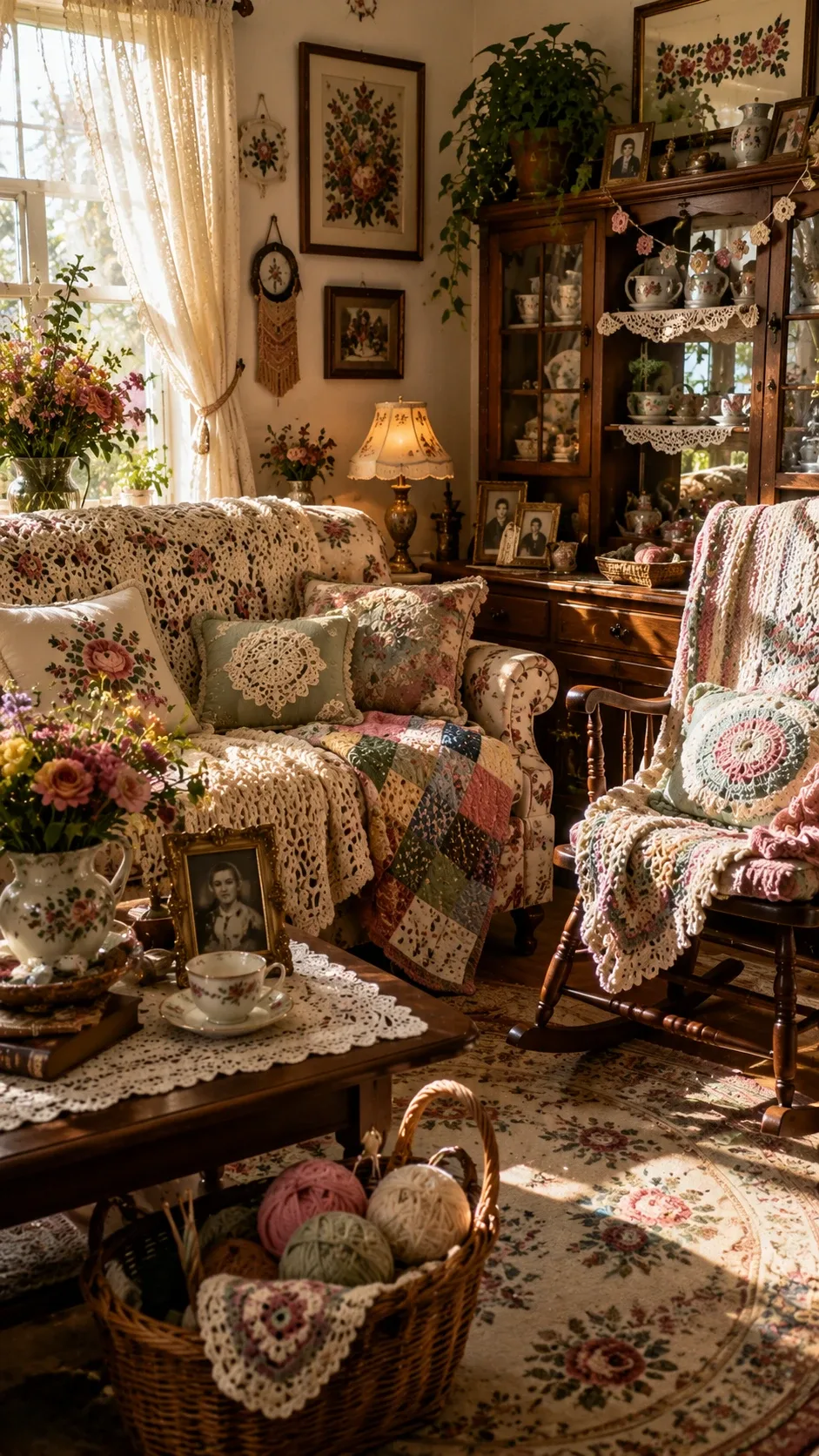
Spread handmade things through every room instead of piling them in one corner. And embrace the imperfections. The slightly uneven stitching on my grandmother’s afghan is what makes it irreplaceable — a factory cannot make that, and that is precisely the point.
13. Finish with Nostalgic Details
The last layer is the small stuff: an old clock that still ticks, framed botanical prints, brass candlesticks, an antique mirror, scented candles that smell like vanilla or cinnamon. My grandmother keeps a bowl of potpourri in the hallway that she has been refreshing for fifteen years. It is absurd and wonderful and completely the point.
Collect slowly. Flea markets, estate sales, antique shops, your own family’s boxes. Decorate gradually and leave some empty space between objects so each one can be appreciated. The best vintage homes are never finished — they just get more meaningful with every piece you add.
Mistakes That Kill the Look (I Made All of These)
Buying everything at once from one store. That gives you a display, not a home. Spread it out over months and mix sources. Over-cluttering every surface. If guests cannot find a place to set down a coffee cup, pull back. Mixing in neon or ultra-modern black. One modern piece is fine; a neon sign in a floral room is a fight. And finally: copying a Pinterest photo exactly. Your grandmother’s house did not look like a template, and yours should not either. Take the ideas, add your own family’s stories, and let it evolve.
Start Small and Let It Grow
The vintage grandma house aesthetic is not really about decor. It is about building a home that feels safe, familiar, and full of stories — the kind of place where people take their shoes off and stay for dinner. Start with one room, one quilt, one lamp. Let the collection grow the way it is supposed to: slowly, personally, and with a little dust on the shelves.
My grandmother’s house smells like lavender and cinnamon. Mine is getting close. Yours will too — just give it time, and do not forget to actually sit in the good chair.