
Curly hair has a mind of its own. Some mornings it falls into perfect spirals, and other mornings it turns into a cloud of frizz before you have even left the house. The difference is rarely luck. It is usually the routine — the order of the steps, the amount of product, and how you treat your hair between wash days.
This guide walks you through a complete curly hair care routine that defines curls without the frizz. It covers wash day from start to finish, how to style for lasting definition, how to refresh curls on day two and three, and the mistakes that quietly undo all your good work.
Start by Knowing Your Curl Pattern
Not all curls behave the same way, and a routine that works for loose waves will not work for tight coils. Loose waves (type 2) need light products and can be weighed down easily. Classic curls (type 3) need moisture and hold in equal measure. Tight coils (type 4) need the most moisture and the gentlest handling of all.
You do not need to memorise a chart. Just look at your hair when it is wet and product-free. If it forms S-shaped waves, treat it as wavy. If it forms clear spirals, treat it as curly. If it forms tight zigzags or tiny coils, treat it as coily. Most people have more than one pattern on their head, which is completely normal — work with the pattern that covers most of your hair and adjust for the rest.
Porosity matters just as much as pattern. Hair with high porosity soaks up water fast and dries fast, which means it loses moisture quickly and frizzes easily. Hair with low porosity resists water, so products can sit on top and feel heavy. A simple test: drop a clean strand of shed hair into a glass of water. If it sinks quickly, porosity is high. If it floats for a long time, porosity is low. High-porosity hair benefits from richer creams and sealing oils, while low-porosity hair does better with lighter leave-ins applied to very wet hair.
Wash Day: The Foundation of Defined Curls
Wash day sets the tone for the whole week. Rushing it, or skipping steps, shows up as frizz two days later. Give yourself enough time, and treat each step as part of one connected process.
Step 1: Detangle Before You Wet Your Hair
Detangling dry, curly hair is a recipe for breakage, but detangling soaking wet hair without any slip is nearly as bad. The sweet spot is damp hair coated with conditioner or a detangling spray. Work in sections, starting from the ends and moving upward, using a wide-tooth comb or your fingers. Never drag a fine brush through a knot — you will snap the hair and create the very frizz you are trying to avoid.
Step 2: Cleanse Gently
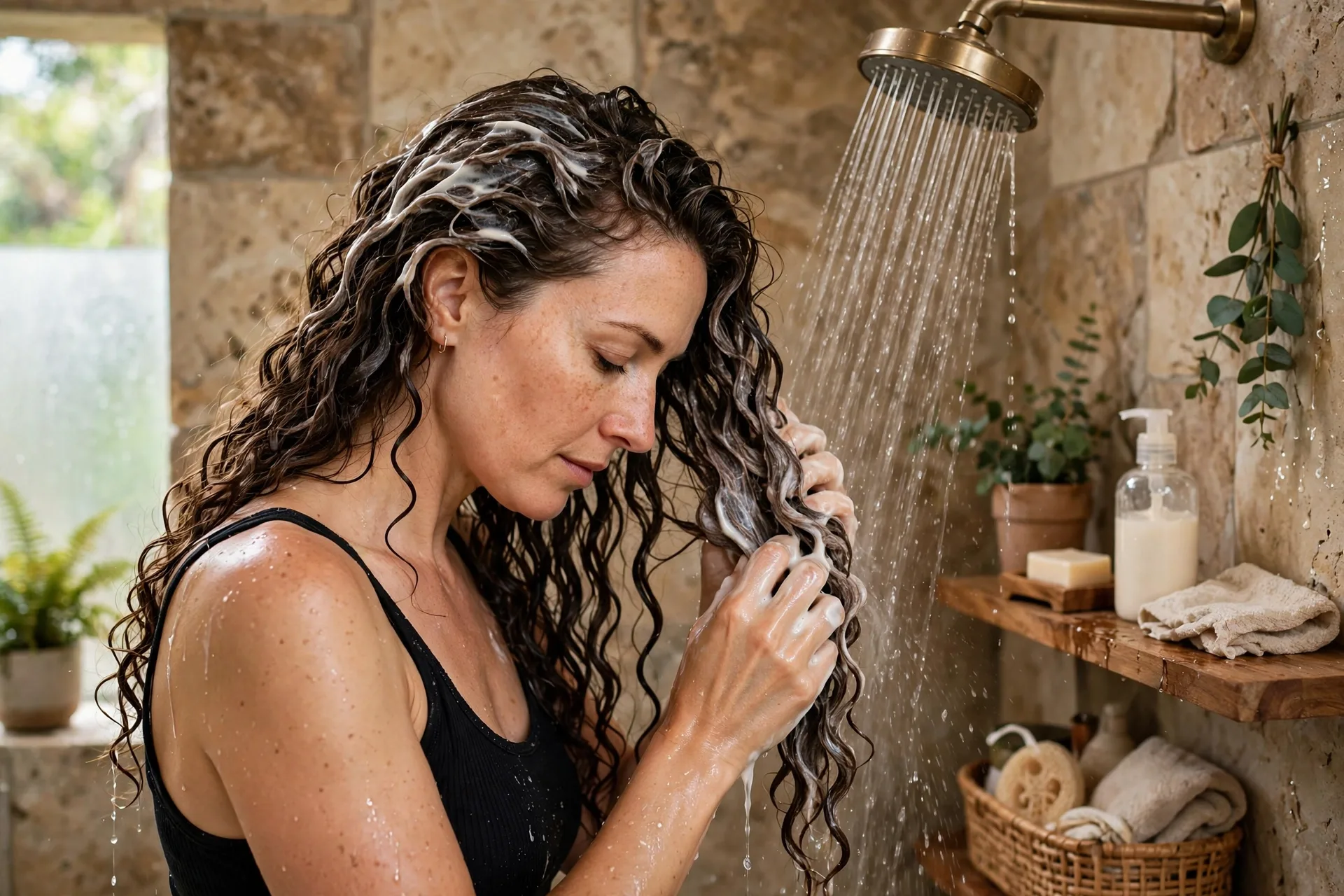
Harsh shampoos strip the natural oils that curls depend on, leaving hair dry, rough, and prone to frizz. Choose a sulfate-free shampoo and focus it on your scalp, where oil and buildup actually collect. Let the lather run down the lengths as you rinse rather than scrubbing the ends. Most curly hair does best being washed two to three times a week; washing every day dries it out, while going too long between washes can lead to scalp buildup and limp curls.
If your hair feels coated or your products stop working the way they used to, use a clarifying shampoo once every few weeks. This resets the hair by removing buildup from products, hard water, and styling residue. Follow a clarifying wash with a deep conditioner, since clarifying shampoos are stronger than your everyday cleanser.
Step 3: Condition Generously
Conditioner is not optional for curly hair — it is the main source of moisture and slip. Apply it generously from mid-length to ends, and use your fingers or a wide-tooth comb to distribute it evenly while the conditioner is still in. This is also the best moment to finish detangling, because the slip protects the hair from snapping.
Let the conditioner sit for three to five minutes before rinsing. Rinse with cool or lukewarm water rather than hot water, which lifts the hair cuticle and invites frizz. You do not need to rinse every trace of conditioner out; leaving a small amount in the ends gives your styling products a smoother base to work on.
Step 4: Deep Condition Weekly
Once a week, swap your regular conditioner for a deep conditioning mask. Apply it after shampooing, cover your hair with a shower cap, and leave it on for 20 to 30 minutes. Gentle warmth helps the mask absorb — you can wrap a warm towel over the cap. Deep conditioning keeps curls soft, elastic, and far less likely to break when you style them.
If your hair feels mushy, overly soft, or refuses to hold a curl, you may be over-moisturising. In that case, alternate your deep conditioner with a light protein treatment every few weeks. Protein restores strength and structure, and the balance between moisture and protein is what keeps curls springy rather than limp.
Styling for Definition Without Frizz
Styling is where definition is made or lost. The golden rule is simple: style on soaking wet hair, and then leave it alone until it is fully dry. Touching curls while they dry breaks up the curl clumps and creates frizz that no product can fix afterwards.
Apply Products in the Right Order
Layer products from lightest to heaviest. Start with a leave-in conditioner on soaking wet hair to lock in moisture. Follow with a curl cream if your hair needs extra softness and control, especially for thicker or coarser curls. Finish with a gel or mousse to hold the curl shape as it dries.
Use less product than you think you need at first. You can always add more, but too much product weighs curls down and leaves a sticky or crunchy residue. A good starting point is a coin-sized amount of leave-in and a similar amount of gel for medium-length hair, adjusted up or down for your length and thickness.
Techniques That Encourage Curl Clumps
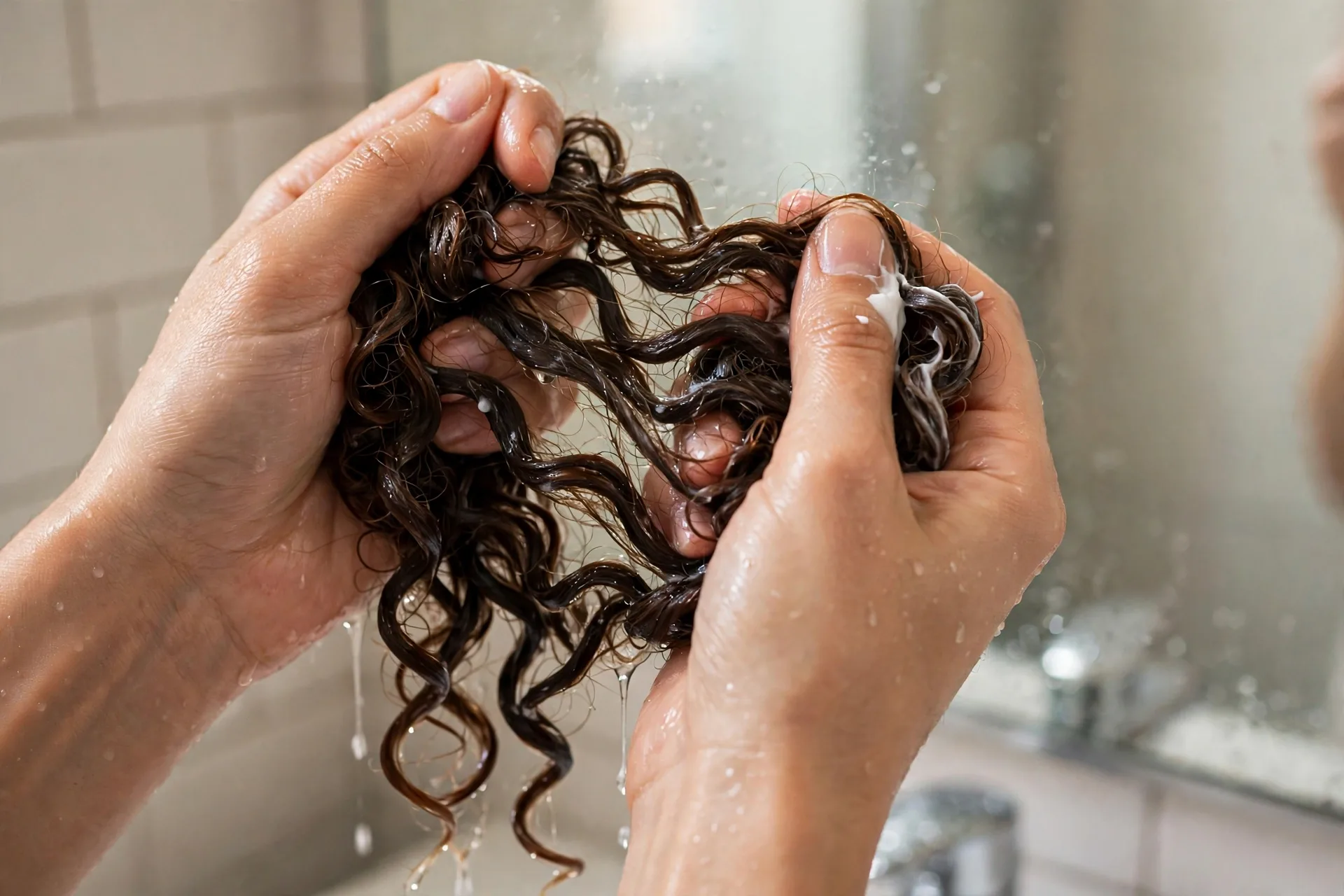
How you apply product matters as much as which product you use. Raking — running your fingers through sections like a comb — spreads product evenly but can separate curls. Scrunching — gently squeezing sections upward toward the scalp — encourages curls to clump together and spring up. Many people get the best results by raking product through first, then scrunching to reform the clumps.
For extra definition, try finger coiling a few sections around your finger, especially the pieces framing your face. It takes a little longer, but it turns loose, uneven sections into neat spirals. Another popular method is “praying hands”: smoothing product over sections between flat palms, which seals the cuticle and reduces frizz before you scrunch.
Drying: Diffuse or Air Dry
Air drying is the gentlest option, but it takes a long time and can leave curls stretched out by their own weight. Diffusing with a hair dryer on low heat and low speed gives more volume and a stronger curl pattern. Cup sections of hair into the diffuser bowl, hold it at the scalp for 20 to 30 seconds, then move on — avoid blasting hair around with hot air, which is a fast route to frizz.
Whichever method you choose, do not touch your hair until it is completely dry. If you used gel, your hair will feel hard or “crunchy” once dry. This is normal and actually a good sign — it means the gel formed a cast that protected the curls while they dried. Once fully dry, gently scrunch out the crunch with clean hands or a drop of light oil. The cast breaks away and leaves soft, defined curls underneath.
For drying, swap a regular towel for a microfibre towel or an old cotton T-shirt. Standard terry towels rough up the cuticle and cause frizz. Gently squeeze water out with the T-shirt instead of rubbing, or try “plopping”: wrapping your wet, styled hair in a T-shirt for 15 to 20 minutes to remove excess water while encouraging curl formation.
Refresh Days: Keeping Curls Alive Between Washes
A good routine is not just about wash day. How you treat your hair on day two, three, and four decides whether your curls last the week or fall flat by Tuesday.
The Night Routine
Protecting your curls at night is the single easiest way to extend your style. Sleep on a satin or silk pillowcase, which creates far less friction than cotton. Even better, gather your hair loosely on top of your head in a “pineapple” — a loose, high ponytail held with a silk scrunchie — which keeps curls from being crushed flat while you sleep. For shorter hair or tighter coils, a satin bonnet or scarf works just as well.
Morning Refresh
On refresh days, you do not need to rewash. Lightly mist your hair with water until it is damp, not dripping. Smooth a small amount of leave-in conditioner or a dedicated refresh spray over the frizzy sections, then scrunch gently to reactivate the curl pattern. A tiny amount of gel on the worst sections can restore hold without a full restyle.
Resist the urge to brush or comb dry curls. Brushing breaks curl clumps apart and turns defined spirals into a fuzzy halo. If a section is badly tangled, wet it first and detangle with your fingers, then scrunch it back into shape.
Common Mistakes That Cause Frizz
Most frizz comes from a handful of habits that are easy to fix once you spot them.
First, touching your hair while it dries. Every touch breaks a curl clump and introduces frizz. Style it, then hands off until it is dry. Second, using a regular towel and rough drying. Switch to microfibre or a cotton T-shirt and squeeze instead of rubbing. Third, skipping leave-in conditioner. Gel alone on dry-feeling hair gives crunch without softness; moisture must come first.
Fourth, applying products to hair that is only damp rather than soaking wet. Curly hair styling products work best when they can distribute evenly through wet hair and lock in that moisture as it dries. If your hair has started drying before you style, mist it thoroughly first. Fifth, using the wrong products for your hair type — heavy butters on fine waves cause buildup and limp curls, while light mousses on thick coils may not provide enough hold.
Finally, heat damage. Frequent flat ironing or high-heat drying without protection weakens the curl pattern over time, and damaged curls will not spring back no matter how good your routine is. If you use heat tools, keep the temperature as low as possible, always use a heat protectant, and give your hair heat-free weeks to recover.
Building Your Own Routine
There is no single routine that suits every head of curls, so treat this guide as a starting point and adjust it. Change one thing at a time — a new product, a different drying method, an extra refresh step — and give it two or three wash days before deciding whether it helped. Changing everything at once makes it impossible to tell what worked.
Keep notes on what your hair liked. Which shampoo left your scalp clean without dryness? Which gel gave hold without crunch that would not scrunch out? Over a few weeks, a personal routine emerges that fits your curl pattern, your lifestyle, and your climate. Humidity, hard water, and seasonal changes all affect curls, so expect to tweak products between summer and winter.
Above all, be patient with your curls. Healthy, defined hair is built over weeks of consistent care, not from a single miracle product. Stick with gentle cleansing, generous conditioning, careful styling, and nightly protection, and your curls will repay you with definition that lasts well beyond wash day.

Frequently Asked Questions
How often should I wash curly hair?
Most curly hair thrives on washing two to three times a week. Wavy hair may need washing slightly more often, while coily hair often does well with once a week plus co-washing in between. Watch your scalp: itching or buildup means wash sooner, while dryness means stretch the gap.
Should I brush curly hair?
Brush curly hair only when it is wet and coated with conditioner, using a wide-tooth comb or a brush designed for wet detangling. Never brush dry curls unless you are deliberately going for a big, voluminous look, because brushing dry hair breaks curl clumps and creates frizz.
Why is my hair frizzy even with gel?
Frizz despite gel usually comes down to moisture or technique. If hair is dry underneath, gel cannot fix it — add a leave-in conditioner first. If you touched your hair while it dried, the gel cast broke too early. And if you styled on damp rather than soaking wet hair, the product could not distribute evenly. Fix the base steps before switching products.
Can I use regular shampoo on curly hair?
You can, but sulfate-free formulas are generally kinder to curls because they clean without stripping natural oils. If you use a regular shampoo, follow it with a good conditioner and a weekly deep conditioning mask to replace lost moisture.
How do I make my curls last longer?
Combine a strong wash-day foundation with nightly protection and light refreshes. A gel cast that you scrunch out once fully dry, a pineapple or bonnet at night, and a water-and-leave-in refresh in the morning will usually carry curls three to four days without a full wash.