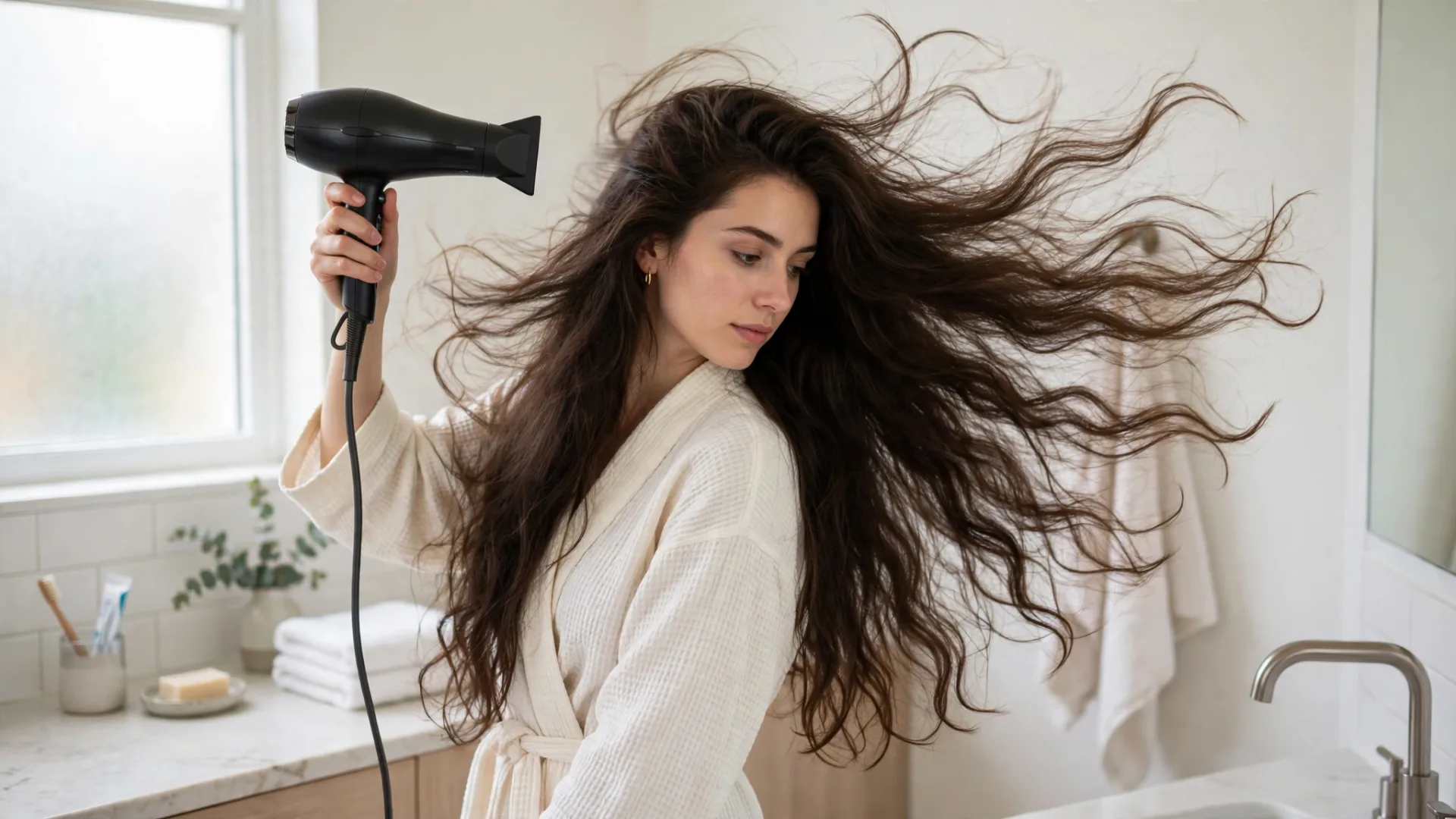

If you have thick hair, you already know the truth: drying it can take forever. A dryer that works fine on fine hair may leave thick hair damp at the roots, frizzy at the ends, and tired arms halfway through. The good news is that the right dryer can cut that time in half, not by blasting your hair with more heat, but by matching power, airflow, and attachments to what thick hair actually needs.
This guide walks you through the seven best types of hair dryers for thick hair, how to compare them, and what to look for before you buy. You will not find made-up scores or prices here. Instead, you will get the practical detail that helps you pick a dryer you will still love six months from now.
Why Thick Hair Needs a Different Dryer
Thick hair holds more water, plain and simple. There is more hair per square inch, and each strand can absorb a good amount of moisture. A weak dryer has to run longer to get the same result, and longer heat exposure is exactly what leads to dryness, frizz, and breakage over time.
That is why drying time is not just about comfort. A dryer that moves a lot of air at a controlled temperature dries thick hair faster with less heat damage. Think of it this way: you want strong airflow doing most of the work, with heat playing a supporting role, not the lead.
Weight matters too. Drying thick hair takes longer than drying fine hair, so you will hold the dryer up for more minutes per session. A heavy dryer can leave your arm aching before you finish the back sections. A lighter model, or one with a well-balanced body, makes a real difference on wash day after wash day.
The 7 Best Hair Dryers for Thick Hair
Below are seven dryer styles worth considering for thick hair, each with a different strength. Read through them and note which strength matches your biggest frustration: drying time, frizz, arm fatigue, noise, or styling control.
1. The High-Wattage Ionic Dryer
This is the classic workhorse for thick hair. Higher wattage, usually around 1800 to 2200 watts, pushes more air, and ionic technology helps break water droplets into smaller particles so they evaporate faster. The result is often a smoother finish with less frizz.
Best for: anyone whose main complaint is drying time. If your hair takes 30 minutes or more to dry, start here.
Watch out for: very high heat settings. More power does not mean you should always use the hottest setting. Use medium heat with strong airflow for most of the drying, then a short cool shot to set the style.
2. The Lightweight Dryer
Some modern dryers weigh well under a pound while still delivering strong airflow. For thick hair, that lighter weight is a genuine benefit, not a luxury, because you hold the dryer longer.
Best for: long or very dense hair, anyone with shoulder or wrist discomfort, and people who dry their hair every day.
Watch out for: compact dryers with small motors that look light but move little air. Check airflow and wattage, not just weight, before you buy.
3. The Ceramic Dryer
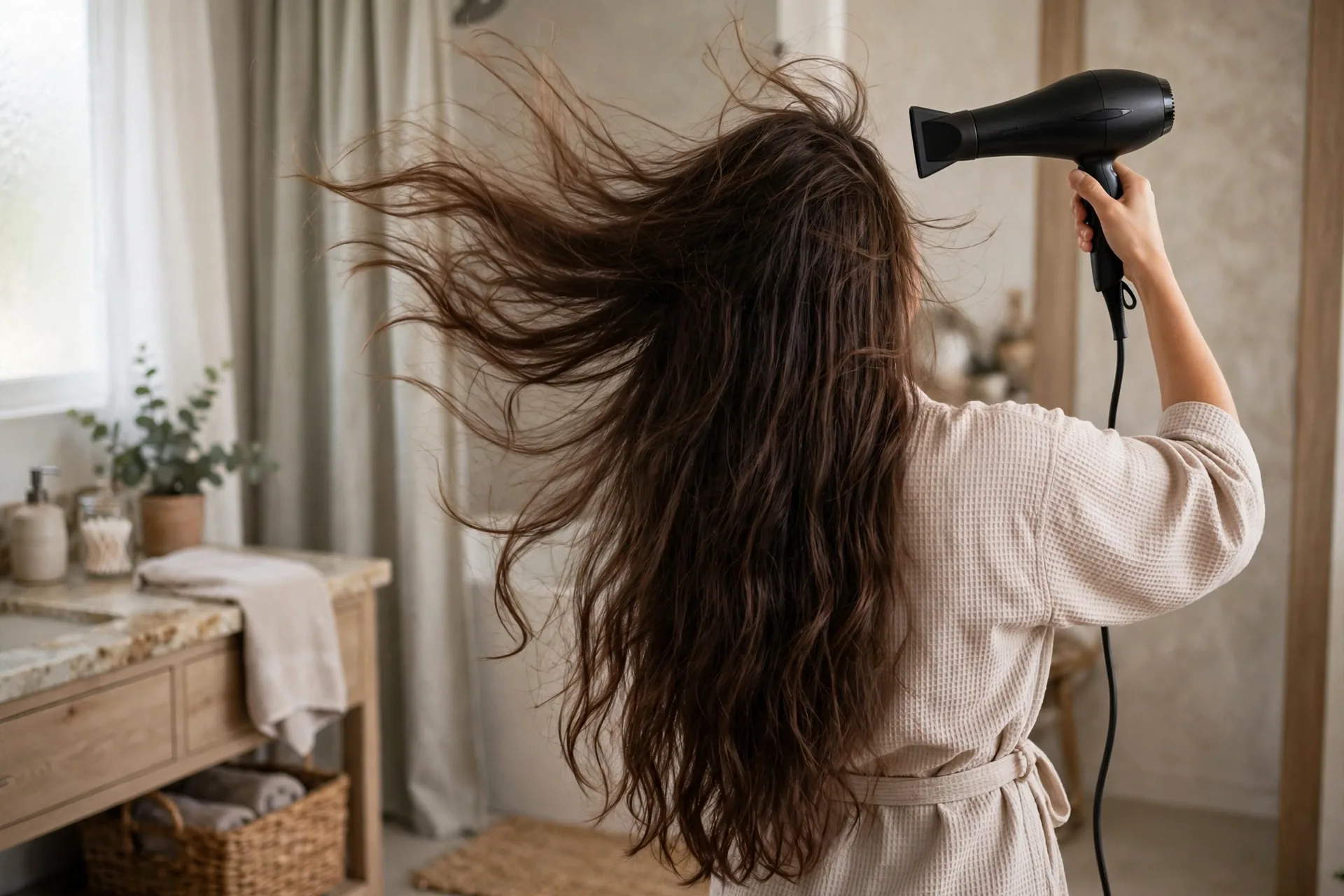
Ceramic dryers spread heat more evenly than a bare metal heating element. That even heat helps reduce hot spots that can scorch one section while another stays damp. Many ceramic dryers also produce negative ions, which can help smooth the hair cuticle.
Best for: thick hair that is also dry, color-treated, or prone to frizz. The gentler, more even heat is kinder over time.
Watch out for: ceramic alone does not guarantee speed. Pair it with good wattage if drying time is your top concern.
4. The Dryer With a Diffuser for Wavy and Curly Thick Hair
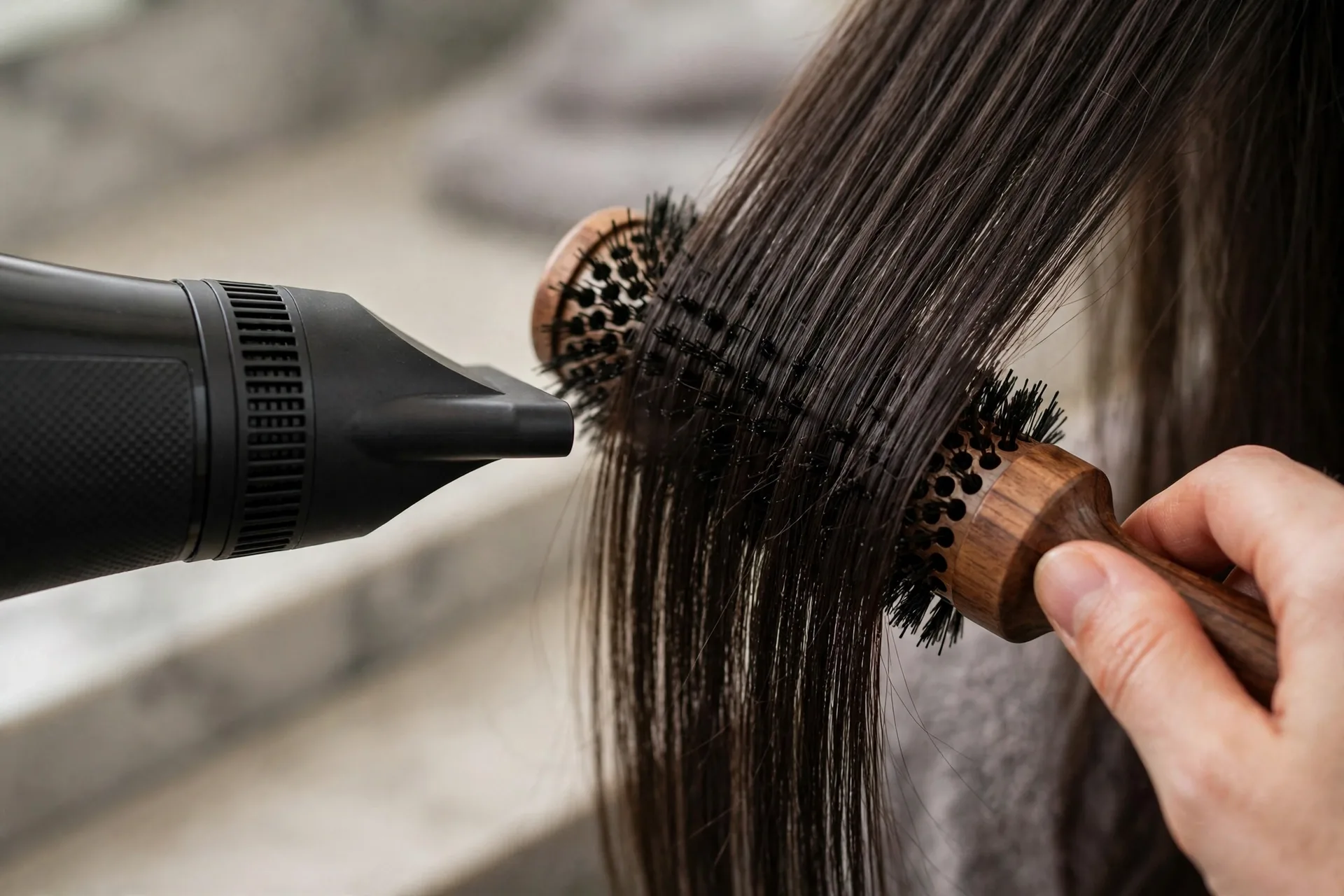
If your thick hair has waves or curls, a diffuser attachment changes everything. It spreads airflow over a wider area so curls dry without being blown apart. Look for a deep bowl diffuser with prongs long enough to reach into thick hair.
Best for: wavy, curly, and coily thick hair, and anyone who wants volume without frizz.
Watch out for: dryers sold without a diffuser, or with a shallow one that only touches the surface layer. If curls matter to you, the diffuser is not an optional extra.
5. The Dryer With a Concentrator Nozzle for Smooth Blowouts
A narrow concentrator nozzle focuses airflow into a thin stream. Used with a round brush, it lets you smooth sections one at a time, which is the secret to a salon-style blowout on thick hair. Most good dryers include one, but the width and fit vary.
Best for: straight or straightened thick hair, sleek blowouts, and taming flyaways.
Watch out for: wide nozzles that scatter air. A slim, magnetic or snug-fitting nozzle gives you more control.
6. The Quiet Dryer
Noise is easy to overlook until you dry your hair early in the morning or while someone else sleeps nearby. Some dryers use better motor design and sound insulation to run noticeably quieter without losing power.
Best for: early risers, parents drying hair while kids sleep, and anyone sensitive to loud appliances.
Watch out for: a quiet dryer that achieves silence by cutting airflow. Compare the airflow and drying time, not just the decibel claim.
7. The Versatile Multi-Attachment Dryer
Some dryers come as a small system: concentrator, diffuser, and sometimes a smoothing or volumizing attachment. If your hair changes with the seasons, or if more than one person in the house uses the same dryer, that flexibility pays off.
Best for: households sharing one dryer, and people who switch between curly wash-and-go days and smooth blowout days.
Watch out for: attachments you will never use. A drawer full of unused nozzles is not value. Pick the set that matches how you actually style your hair.
Features That Matter Most for Thick Hair
Once you know the type you want, compare these features side by side. They matter more than the brand name on the box.
Wattage and Airflow
Wattage is a rough guide to power, and for thick hair, 1800 watts or more is a sensible starting point. But airflow matters just as much. A dryer with strong, steady airflow dries hair faster than one that simply runs hotter. If you can test a dryer in a store, hold your hand in front of it: you want a strong, even stream, not a weak puff of very hot air.
Heat and Speed Settings
Look for at least three heat settings and two or three speed settings, plus a cool shot button. Thick hair rarely needs the same setting from roots to ends. A common routine is: high speed with medium heat to remove most of the water, then lower speed with a brush to style, then a cool shot to lock in shine and reduce frizz.
Ionic and Ceramic Technology
Ionic technology can help thick hair dry faster and look smoother, while ceramic helps distribute heat evenly. Neither is magic, and neither replaces good technique, but both are useful extras on a dryer that already has strong airflow. If you must choose one, pick the dryer with better airflow first and treat ionic or ceramic as a bonus.
Attachments
For thick hair, attachments are not extras; they are tools. A concentrator nozzle is almost essential for smooth styles, and a diffuser is essential for curls and waves. Check that attachments fit snugly and stay on during use. An attachment that slips off mid-blowout is more than annoying; it breaks your rhythm and adds minutes.
Weight and Balance
Pick the dryer up and hold it the way you would while drying the back of your head. Does it feel nose-heavy or well balanced? A dryer around one pound or less is easier to live with for thick hair, but balance matters too. A slightly heavier dryer that sits well in your hand can feel lighter than a light one that pulls forward.
Noise Level
Manufacturers measure noise differently, so numbers are hard to compare directly. Reviews and in-store tests help more. If quiet operation matters to you, look for models described as quiet by multiple users, and test one in person when you can.
Cord Length and Storage
A cord of at least six feet gives you room to move around a mirror without stretching. A hanging loop or a simple storage case keeps the dryer tidy and protects the cord from kinks, which can shorten its life.
How to Dry Thick Hair Faster Without Damage
The dryer is only half the story. How you use it decides how fast you finish and how healthy your hair looks after.
Start by removing as much water as possible before you switch the dryer on. Gently squeeze sections with a microfiber towel or an old cotton T-shirt. Rough towel-drying creates frizz; pressing and squeezing does not.
Apply a heat protectant through the lengths and ends. It will not make heat harmless, but it does reduce moisture loss and helps the hair surface stay smooth.
Work in sections. Clip the top layers up and dry the underneath layers first, then release one layer at a time. It feels slower at first, but it is faster overall because every section actually gets dry instead of staying damp under a dry top layer.
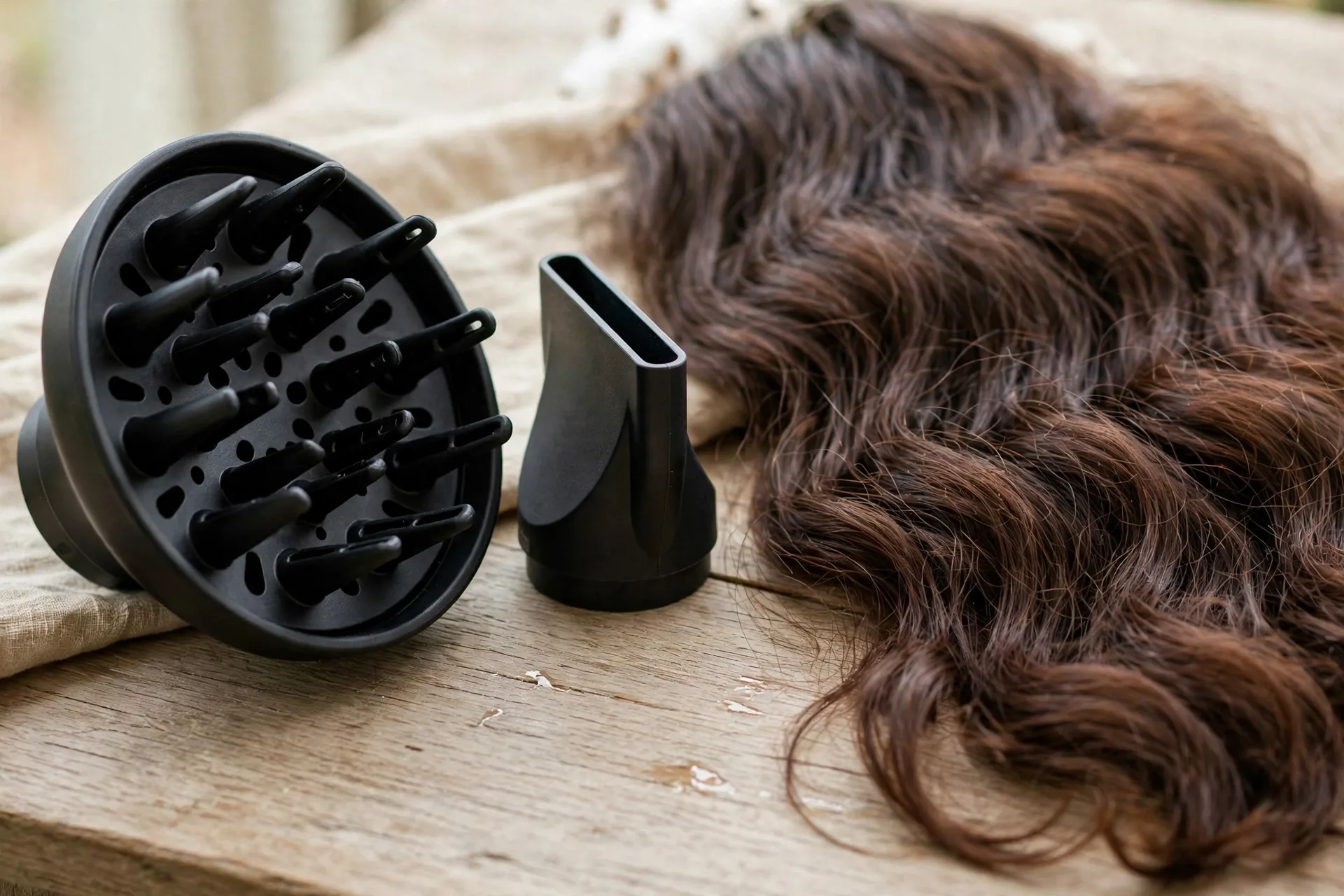
Keep the dryer moving. Holding it in one spot overheats that section while the rest stays wet. Aim the nozzle down the hair shaft, from roots toward ends, which helps the cuticle lie flat and adds shine.
Finish with a cool shot. Once a section feels dry, a few seconds of cool air helps set the style and calm flyaways. It is a small step that makes a visible difference, especially on thick hair that tends to puff up as it cools.
Common Mistakes to Avoid
Using the hottest setting for the whole session is the most common mistake. High heat dries the surface fast but can leave the inside of thick sections damp, so you end up going over the same hair twice. Medium heat with strong airflow is usually faster in the end.
Skipping sections is another one. Drying only the top layer and calling it done leaves hidden dampness that turns into frizz within an hour. Sectioning takes an extra minute of setup and saves several minutes of re-drying.
Forgetting the attachments is a third. A bare dryer nozzle blows air everywhere and nowhere. The concentrator or diffuser focuses that air where you need it, which is why dryers include them in the first place.
How to Choose: A Quick Buying Checklist
Before you buy, run through this short list:
- Wattage of 1800 or more, with strong airflow you can feel.
- At least three heat settings, two speed settings, and a cool shot button.
- The attachments you actually need: concentrator for smooth styles, diffuser for curls and waves.
- A weight and balance you can hold comfortably for 15 to 20 minutes.
- A cord long enough for your bathroom or dressing area.
- A warranty and return policy that lets you test it on your own hair.
If a dryer ticks most of these boxes and fits your budget, it is a strong candidate. No single dryer is perfect for everyone, because thick hair varies: fine strands packed densely behave differently from coarse strands, and straight thick hair has different needs from curly thick hair. Match the dryer to your hair, not to a trend.
Frequently Asked Questions
Do I really need a high-wattage dryer for thick hair?
Not always, but it helps. Higher wattage usually means stronger airflow, which shortens drying time. If your current dryer leaves your hair damp after a long session, wattage and airflow are the first things to upgrade.
Is ionic better than ceramic for thick hair?
They solve different problems. Ionic technology aims to speed drying and reduce frizz, while ceramic aims to spread heat evenly. Many dryers combine both, and that combination suits thick hair well.
How often should I replace my hair dryer?
Most dryers last several years with regular use. Replace yours if it smells like burning, blows unevenly, overheats quickly, or takes much longer than it used to. Cleaning the filter every few weeks also extends its life.
Can a dryer alone fix frizz?
A good dryer helps a lot, but frizz also comes from technique and hair care. Heat protectant, sectioning, aiming the nozzle downward, and finishing with a cool shot all matter as much as the dryer itself.