
I never planned to have a tea station. I just kept leaving my teapot, my favorite mug, and the tea jars out on the counter because I was too lazy to put them away every morning. One day a friend came over, looked at my little corner, and said, “Oh, you have a tea station!” That was the moment I realized the mess had become a feature — and that with a little intention, it could be a beautiful one.
Tea station ideas are trending for a reason. A tea station turns an ordinary kitchen corner into the coziest spot in the house, and it costs almost nothing to set up because you probably own most of what you need already. Below are the seven tea station ideas I have tried, copied, or admired in friends’ homes — from a simple counter setup to a full rolling cart — plus what actually works day to day and what looks good in photos but drives you mad by Tuesday.
Quick Answer Box: Tea Station Ideas in a Nutshell
- The easiest tea station to start today: a kitchen counter setup — a tray, your teapot, two mugs, and three jars of tea. Five minutes, no drilling, no new furniture.
- The most-loved setup: a rolling tea cart — it holds everything, moves where you need it, and looks like a piece of furniture instead of clutter.
- The rule that matters: keep the kettle and the mugs within one arm’s reach of each other. If you have to cross the kitchen to make a cup, the station is decoration, not a habit.
What Is a Tea Station, Really?
A tea station is just a dedicated spot where everything you need for a cup of tea lives together: the kettle or teapot, the mugs, the tea itself, and the little extras like honey, sugar, and a spoon. That is all it is. The magic is in the togetherness — when everything is in one place, making tea stops being a chore and starts being a small ritual.
You do not need a big kitchen. Some of the best tea stations I have seen live on a single shelf or a tray on a side table. What matters is that the spot is yours, it is always set up, and it makes you smile when you walk past it in the morning.
Before you buy anything, watch yourself make tea for two days. Notice where your hands go: where the kettle sits, which mug you grab, where the tea bags end up. Your station should sit right there, in the path your hands already take. Mine ended up on the left side of the counter because that is where I always stand while the kettle boils.
1. The Kitchen Counter Classic
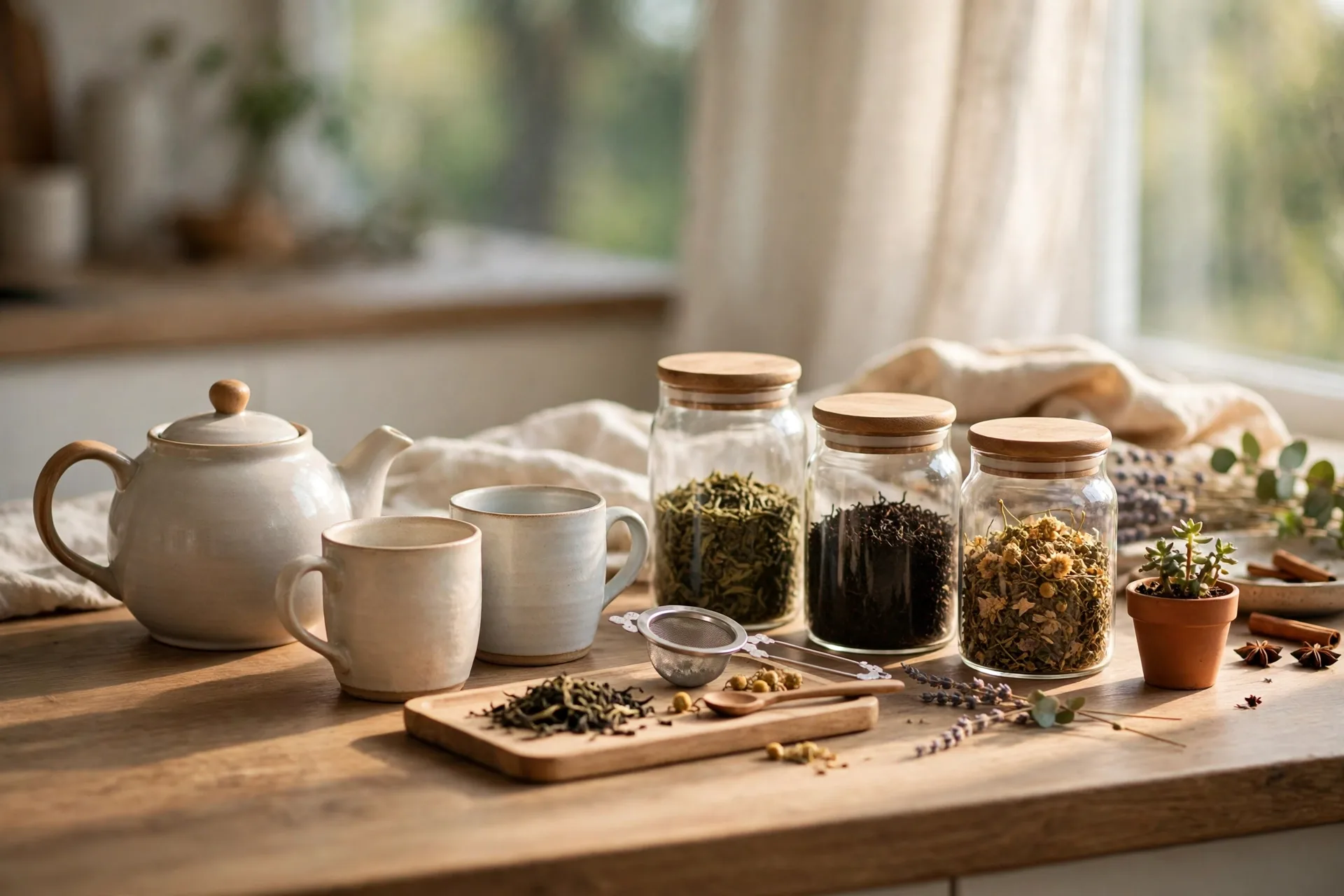
This is where most tea stations start, and honestly, it is where most of them should stay. A wooden tray on the counter, a teapot on it, two mugs, three glass jars of loose tea, and a tiny plant if you have one. It takes up about as much space as a cutting board.
The tray is the whole trick. It gathers everything into one neat shape so the counter still looks tidy, and when you need the space for cooking, you lift the whole tray and move it in one go. I bought a plain wooden tray for very little money, and it is the single best thing I did for my kitchen. No tray, no station — without it, the jars just wander all over the counter.
Use glass jars for the tea, because seeing the leaves is half the pleasure. Green tea, black tea, and one herbal like chamomile cover almost every mood. Put a little label on each jar — a small paper tag tied with string looks lovely and costs nothing. Keep the honey in a small jar with a wooden dipper next to the tea, and the sugar in a matching one.
One thing I would change if I started again: keep only two mugs on the tray. I started with five because they were pretty, and they just collected dust. Two mugs, used every day, stay clean and ready. The pretty extras can live in the cupboard.
2. The Rolling Tea Cart
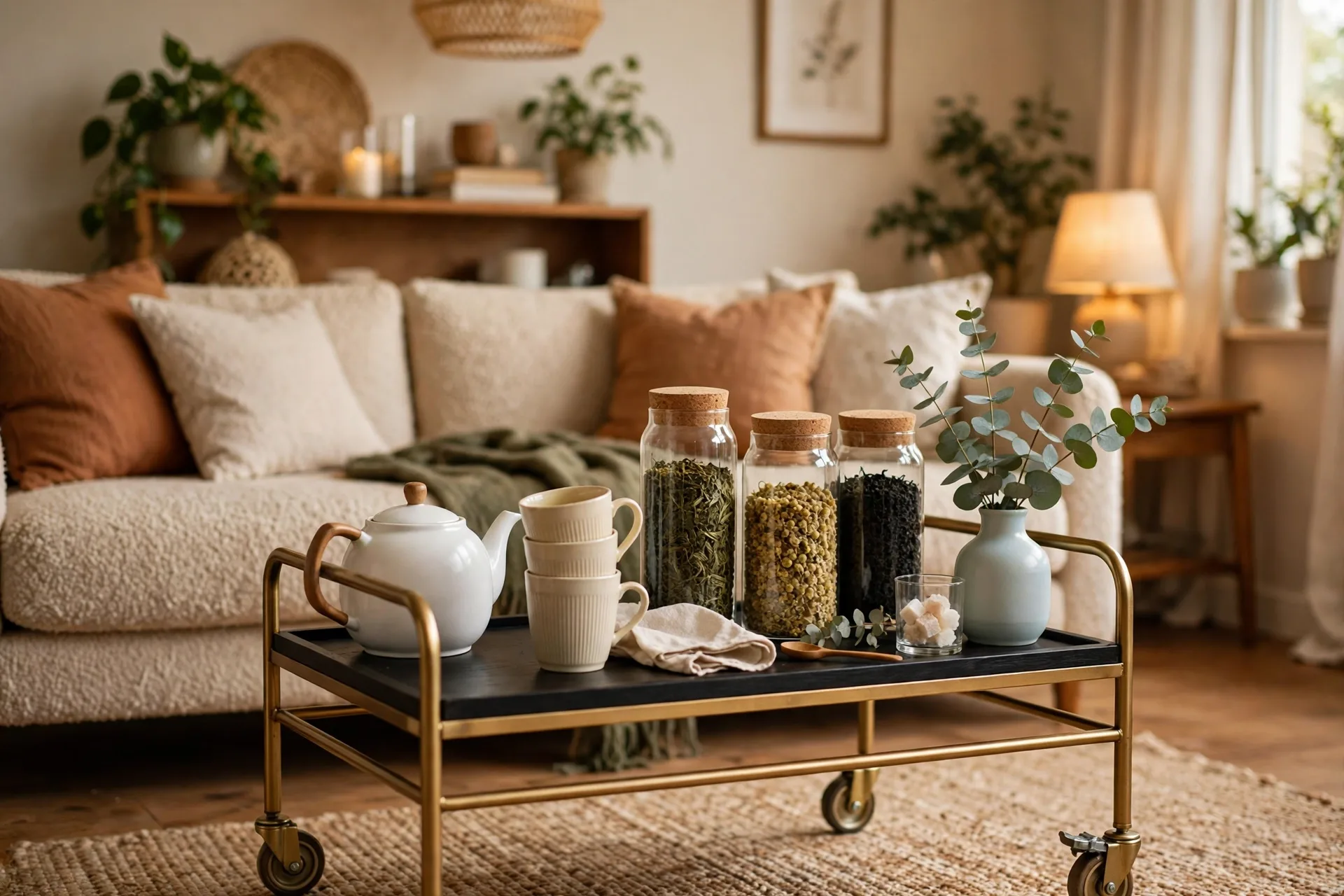
If the counter is crowded, a rolling bar cart is the answer. I found mine secondhand, and it changed how I use my living room. The cart holds the teapot, a stack of mugs, three jars of tea, and a little vase, and I can wheel it next to the sofa on a cold evening or out to the balcony on a warm morning.
Set the cart up in layers. The top shelf is for what you touch every time: teapot, mugs, tea jars. The bottom shelf is for the extras: a spare teapot, a box of tea bags for guests, a small tin of biscuits. Keep the middle clear or use it for a plant — a little green makes the whole cart look alive.
The mistake I made was overloading the top shelf until the cart wobbled every time I moved it. Now I follow a simple limit: if I cannot roll the cart with one hand without anything sliding, something has to go. A small non-slip mat under the teapot helps too.
A tea cart also solves the guest problem beautifully. When friends come over, I just roll the cart to where we are sitting instead of making six trips to the kitchen. People always comment on it, and it takes less effort than carrying a tray.
3. The Mug Wall and Shelves
If your mugs are pretty, let them be the decoration. A wooden shelf with hooks underneath is the classic tea station look, and it works even in a tiny kitchen because it uses wall space instead of counter space.
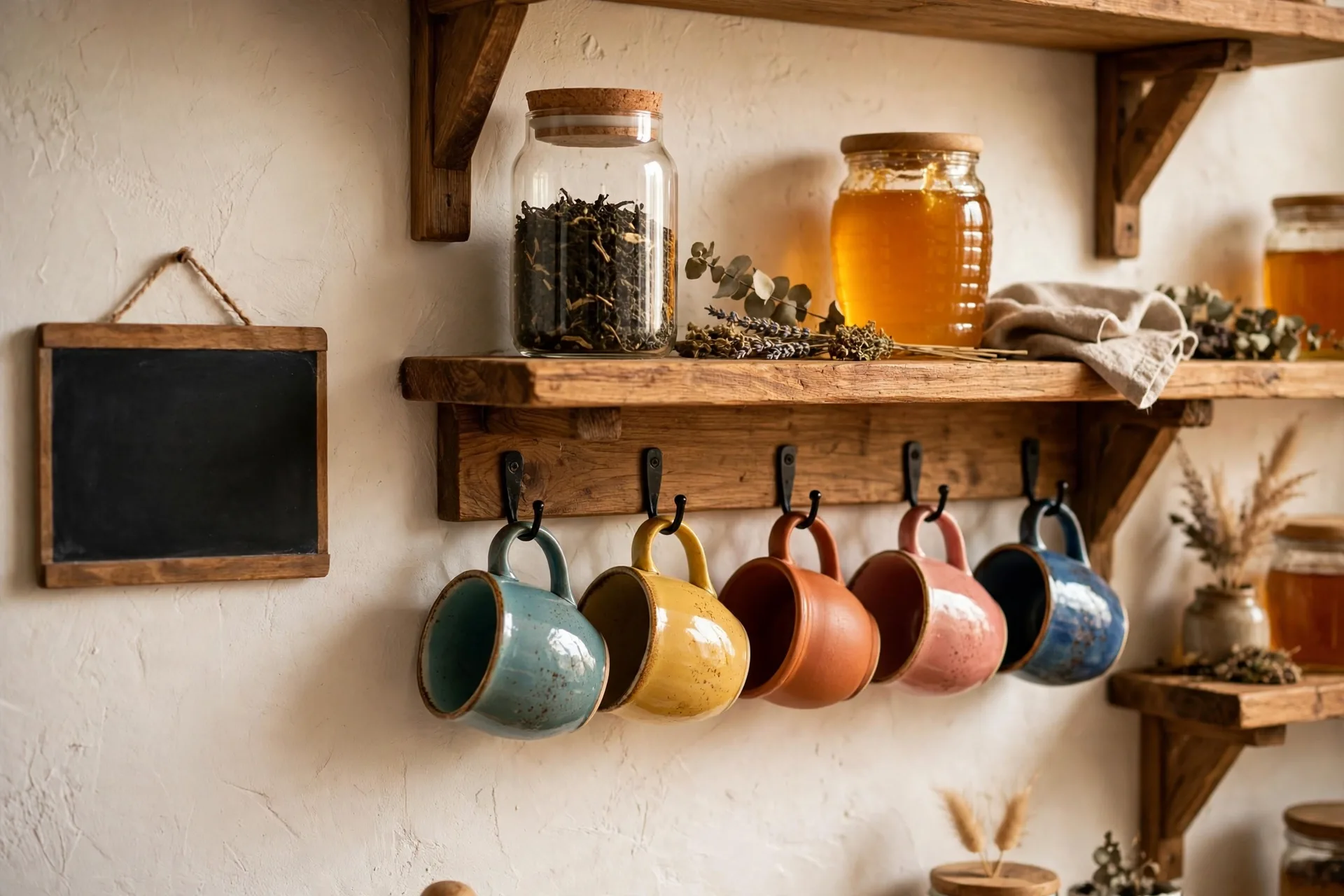
Hang the mugs you actually use on the hooks — five is a good number — and put the tea jars and honey on the shelf above. A small chalkboard on the wall beside it is a sweet touch; I write the tea of the week on mine, and my kids now argue about whose turn it is to pick it.
Choose mugs in a mix of colors that go together. Mine are blue, yellow, terracotta, pink, and deep blue — different colors, same handmade feel, and they look like a collection instead of a random pile. If your mugs are all different shapes and sizes, the shelf looks messy instead of charming, so I keep the odd ones in the cupboard.
Hang the shelf at a height where you can grab a mug without stretching. Mine is just above counter height, and the jars sit on top of it where I can see the labels at a glance. If you have to climb on a chair to reach your tea, you will stop using the station within a week.
4. The Bedroom Tea Nook
This one sounds like a luxury, but it is just a side table, a small teapot, and a mug next to your favorite chair. I set mine up in the corner of the bedroom, and it has become the place where I sit for ten quiet minutes before the day starts.
An electric kettle is the key piece here. A small one lives on the side table, and I fill it at the bathroom sink in the morning. The teapot stays small — one or two cups — because a big pot is too heavy to carry back and forth. A little tray under everything catches the drips and keeps the table safe.
Add something soft nearby: a folded blanket over the chair arm, a cushion, a stack of two or three books. The nook is not just about tea; it is about giving yourself a reason to sit down for ten minutes. The fairy lights I strung along the wall were meant to be temporary, but they stayed, because the corner looks so much warmer with them on in the evening.
Keep the tea here simple — one jar of your favorite, not a whole collection. The bedroom nook is for one quiet cup, not for choosing between twelve teas.
5. The Tiered Tray Tea Station
A tiered tray — the kind with two or three levels — makes a small tea station look generous. The top tier holds a small teapot and a sugar bowl, the middle holds two mugs, and the bottom holds the tea jars and a little dish of lemon slices. Everything is visible at once, which is why it photographs so well.
This setup is perfect for a dining table centerpiece or a sideboard. When guests come for afternoon tea, the tray is already dressed, and I just add a plate of biscuits on the side. It turns an ordinary visit into a little occasion without any extra work.
The practical warning: tiered trays are top-heavy. Put the heaviest things — the tea jars and the full teapot — on the bottom tier, and keep the top tier light. I learned this the day my tray tipped and chamomile went everywhere. The bottom tier is also the safest place for the honey jar, because honey on a white tablecloth is a mistake you only make once.
6. The Small-Space Shelf Station
If you live in a small flat or a dorm room, your whole tea station can be one shelf. A single wooden shelf above the kettle, holding three jars, two mugs, and a tiny plant, is enough. It is the smallest station on this list and honestly one of the best, because there is nothing to maintain.
Pick a shelf with a lip or a small rail at the front so the jars cannot slide off. Use stackable mugs to save space — two mugs stacked take up the room of one. A tea bag holder or a tiny tin for tea bags keeps the sachets from spilling all over the shelf.
The rule for small stations is one in, one out. Every time a new mug comes home, an old one goes to the cupboard or to a friend. I keep a strict limit of three mugs in my small station, and it has stayed tidy for a year. The day I let a fourth mug in, the shelf started looking crowded again.
A small station also travels well. When I moved flats last year, the whole station fit into one box: the shelf, three jars, two mugs, and the kettle. It was the first thing I set up in the new kitchen, and the new place felt like home the moment it was on the wall.

7. The Holiday Tea Station
December is the best month for a tea station, because the whole house is already leaning cozy. Add a string of warm fairy lights, a few cinnamon sticks in a jar, a small sprig of pine, and your regular station turns into a holiday one without buying anything new.
I swap my everyday mugs for two festive ones — one red, one deep green — and put a little dish of star anise next to the honey. The smell alone makes the kitchen feel like Christmas. A small plate of shortbread or ginger biscuits on the tray finishes it, and suddenly the morning cup of tea feels like a holiday moment.
Keep the holiday extras small and removable. After the season, the fairy lights come down, the red mug goes back in the cupboard, and the station is itself again. That is the beauty of a tea station: it is a base you can dress up for a season and strip back in January.
If you have kids, let them pick one decoration for the station. Mine chose a tiny wooden snowman that now lives next to the teapot all winter. It is the first thing they look for when they come into the kitchen, and the station has become a little family spot instead of just my corner.
How to Keep Your Tea Station Tidy
A tea station only works if it stays clean enough to use without thinking. My weekly routine takes five minutes: wipe the tray, rinse the jars’ lids, wash the two mugs, and check the tea levels. That is it. If a jar is empty, I refill it the same day so the station never has a gap.
Keep a small cloth folded on the tray. Tea drips happen every day, and a cloth right there means you wipe them up in two seconds instead of leaving them to dry into rings. I went through three wooden trays before I learned this, because the rings stained each one.
Finally, change one thing with the seasons. In summer I put a jar of iced tea and a tall glass on the station; in winter it is cinnamon and a thick mug. One small seasonal swap keeps the station feeling fresh all year without a full redesign.
Frequently Asked Questions
Where is the best place to put a tea station at home?
The best spot is where you already make tea — usually a kitchen counter near the kettle. If your counter is full, a rolling cart, a wall shelf, or a side table by your favorite chair all work well. The key test is simple: if you can reach the kettle, the mugs, and the tea without taking more than two steps, the spot is right.
What do I need to start a tea station?
You need very little: a tray, a teapot or kettle, two mugs, two or three jars of tea, and honey or sugar. That is a complete station. Everything else — a tiered tray, a mug wall, fairy lights — is decoration you can add later. Start with the basics and let the station grow as you use it.
How do I keep tea fresh in glass jars?
Keep the jars out of direct sunlight and away from the stove, because heat and light fade the flavor. A jar with a tight wooden or cork lid works well, and a cool cupboard shelf is better than a sunny windowsill. Loose tea kept this way stays fresh for months, and you can tell at a glance when it is time to buy more.