
Last summer, around 6 PM, I caught my reflection in a shop window and barely recognized myself. My foundation had slid into my laugh lines, my T-zone was doing its best disco-ball impression, and the matte powder I’d carefully pressed on at 8 AM was long gone. I had oily skin my whole life and a full routine of serums and toners, but everything I layered on sat on top of a face that was never truly clean.
That night I did something I’d always thought was overkill: I washed my face twice. Not with two pumps of the same face wash — with two completely different cleansers, one after the other. Within two weeks, the midday shine calmed down, the tiny clogged pores along my nose started clearing, and my breakouts — those stubborn little ones along my jaw — finally stopped showing up uninvited.
This is double cleansing, and if you have oily skin, it might be the missing piece your routine has been begging for. Here’s exactly how I do it, what I got wrong at first, and how to pick products that clean your skin without stripping it raw.
What Double Cleansing Actually Is (No Fluff Version)
Forget the fancy name. Double cleansing just means washing your face in two steps, in a specific order:
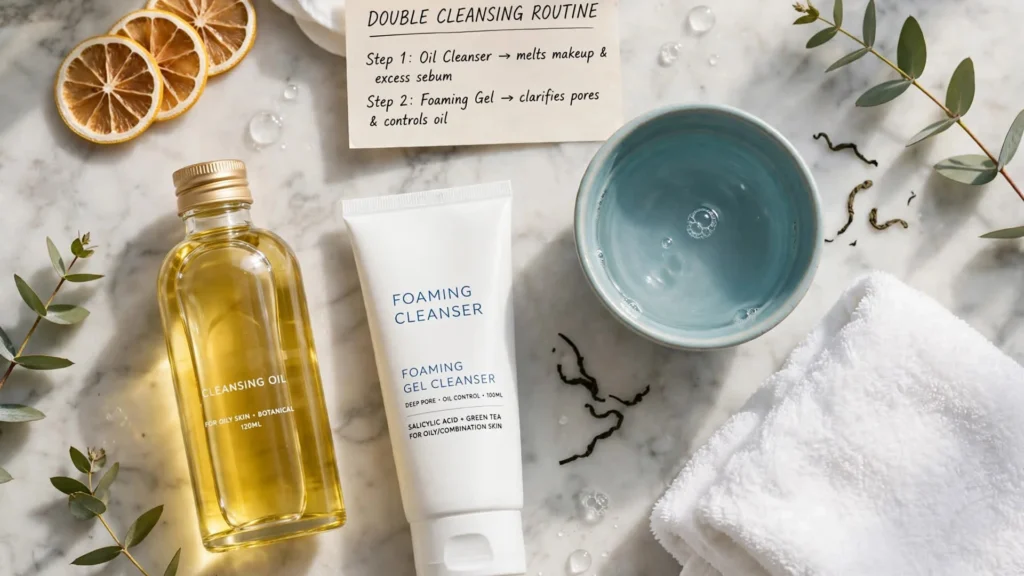
Step one: an oil-based cleanser (a cleansing oil or a cleansing balm) that melts through sunscreen, makeup, and your skin’s own excess oil.
Step two: a water-based cleanser (a gel or foaming face wash) that sweeps away sweat, dust, and whatever the oil left behind.
The logic is simple: oil dissolves oil. Your regular foaming cleanser is great at water-based grime but struggles with the waterproof sunscreen and long-wear makeup we all pile on — especially those of us with oily skin who layer sunscreen like our lives depend on it (because honestly, they kind of do). The oil step grabs all that stubborn stuff, and the second cleanse makes sure no oily film is left behind.
Why It Works So Well for Oily Skin
Here’s the part that surprised me. I always assumed putting MORE oil on my already-oily face was a terrible idea. It felt counterintuitive, like fighting fire with fire. But dermatologists point out that an oil-based first cleanse is actually one of the most effective ways to remove excess sebum — the very thing making you shiny.
Think about it this way: by the end of the day, your face is wearing layers — morning moisturizer, SPF 50, maybe foundation or concealer, plus hours of your own sebum, city dust, and sweat. A single foaming wash mostly moves that around. When I switched to double cleansing at night, my serums started absorbing noticeably better. Products I’d been using for months suddenly started “working,” and the real reason was embarrassingly simple: they were finally landing on clean skin instead of a greasy film.
The Exact Order: My Nightly Routine Step by Step
Step 1: The Oil Cleanse (on Dry Skin — This Matters)
Start with dry hands and a dry face. This is the step I messed up for a full week — I kept wetting my face first out of habit, and the oil just slid around doing nothing. The oil needs to meet the oil on your skin directly.
Pump a coin-sized amount of cleansing oil (or scoop a blueberry-sized amount of balm and melt it between your palms) and massage it all over your face for a full 60 seconds. I do slow circles — forehead, cheeks, chin, and extra time on my nose where my blackheads used to camp out. The massage isn’t just pampering; it gives the oil time to actually dissolve everything. If you wear mascara, let the oil sit on your lashes for a few seconds before gently wiping.
Then add a splash of water and keep massaging for another 15–20 seconds. The oil will turn milky-white — that’s it emulsifying, which means it’s ready to rinse. Rinse thoroughly with lukewarm water. Not hot. Hot water plus oil plus oily skin is a recipe for irritation, and I learned that the red-cheeked way.
Oil or balm — which one? Honestly, both work. Cleansing oils (like the classic DHC Deep Cleansing Oil or Anua Heartleaf Pore Control Cleansing Oil) are quicker and feel lighter. Balms (like Banila Co Clean It Zero) feel more luxurious and travel better. Pick whichever texture you’ll actually enjoy using every night, because the best cleanser is the one you don’t dread.
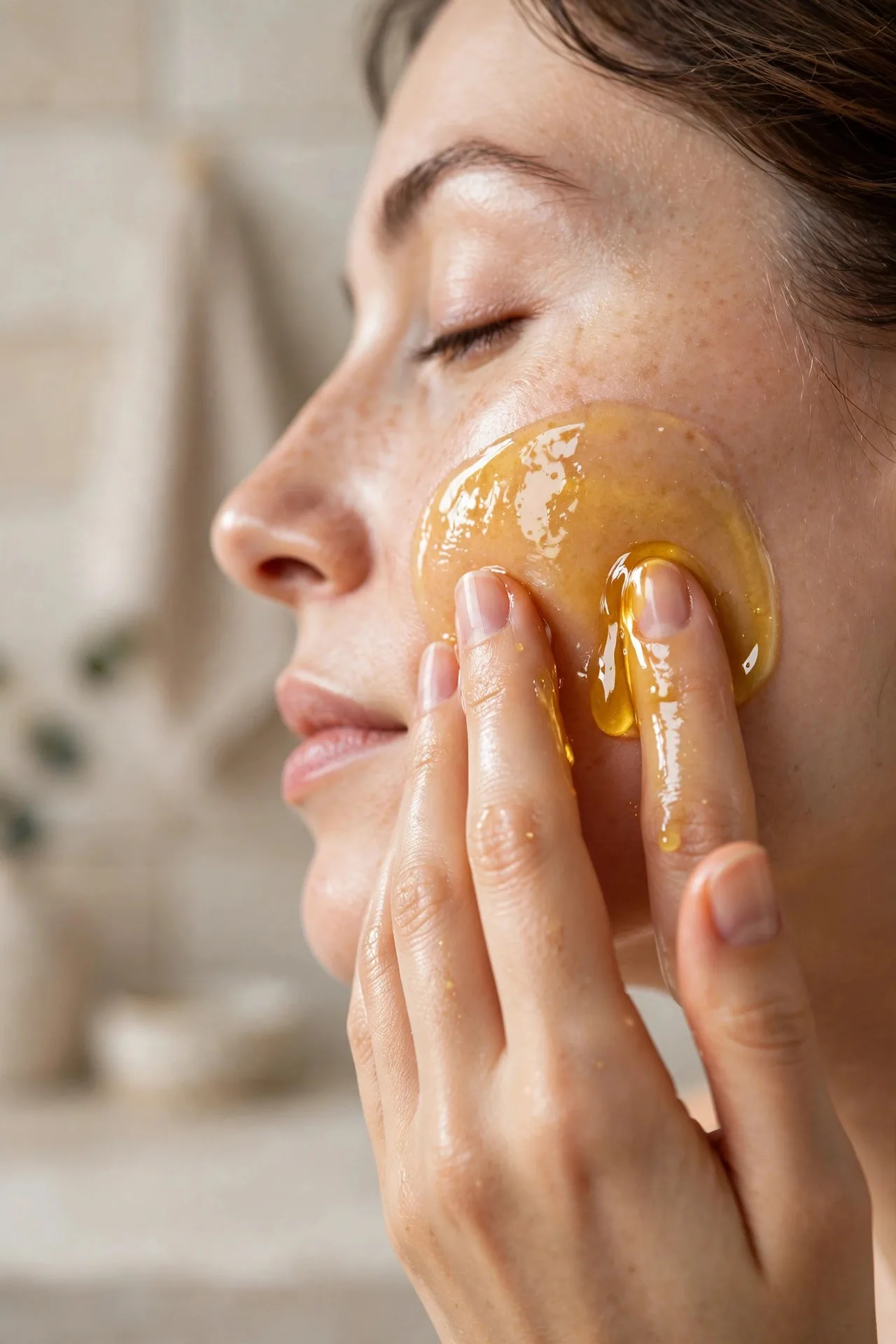
Step one: massage the cleansing oil over dry skin for a full 60 seconds — patience here really pays off.
Step 2: The Second Cleanse (Gentle Gel or Foam)
Keep your face damp — don’t towel off between steps. Take a pea- to dime-sized amount of a gentle gel or foaming cleanser and massage for about 30–45 seconds. For oily skin, look for words like “purifying,” “foaming,” or “for oily skin” on the label, and a formula with a skin-friendly pH. My personal workhorses: La Roche-Posay Toleriane Purifying Foaming Cleanser and CeraVe Foaming Facial Cleanser. Both clean thoroughly without that tight, squeaky feeling.
Rinse well — and I mean really well, especially around your hairline, jawline, and the sides of your nose where cleanser loves to hide. Pat dry with a clean towel (not the one you dried your hands on all day, please).
That’s it. Your face should feel clean, comfortable, and calm — not tight, not “squeaky,” not like it’s about to crack. If it feels tight, your second cleanser is too harsh, and that’s your cue to swap it.

Step two: a pea-sized amount of gentle gel or foam, massaged for 30–45 seconds — no scrubbing needed.
How Often Should You Double Cleanse?
Night only. That’s the honest answer for most oily skin.
At night, you’re removing a full day of sunscreen, makeup, pollution, and sebum — that’s when the double cleanse earns its keep. In the morning, your face just has overnight oil and maybe some pillowcase lint. A single gentle wash (or even just lukewarm water if your skin is on the calmer side) is plenty.
I made the mistake of double cleansing twice a day for the first two weeks because I was excited. My skin responded by overproducing oil to compensate — my forehead was shinier by noon than before I’d started. Lesson learned: more cleansing is not better cleansing. Washing too often dries the surface and can actually throw your oil balance off worse than before.
Picking Products That Won’t Wreck Your Skin Barrier
The biggest fear people have — and I had it too — is that an oil cleanser will clog pores or cause breakouts. The trick is choosing the right formulas:
For the first cleanse, look for a light, non-comedogenic cleansing oil or balm. Fragrance-free is safer if your skin is reactive. Avoid anything with heavy mineral oil if your skin tends to get irritated, and always patch-test a new product on your jaw for a few days before going full-face.
For the second cleanse, go for a mild gel or foam, not a heavy-duty “deep pore scrub.” Ingredients like niacinamide or salicylic acid in your second cleanser are a nice bonus for oily, breakout-prone skin — they keep working while you wash. Skip anything with big scrubby beads or strong fragrance; you’re cleaning your face, not sanding a table.
And after? Don’t skip moisturizer. I know, I know — “my skin is already oily, why add more?” But clean skin still needs hydration. A lightweight gel moisturizer seals everything in and tells your skin it doesn’t need to panic-produce more oil. This one step made a bigger difference to my midday shine than any mattifying product ever did.
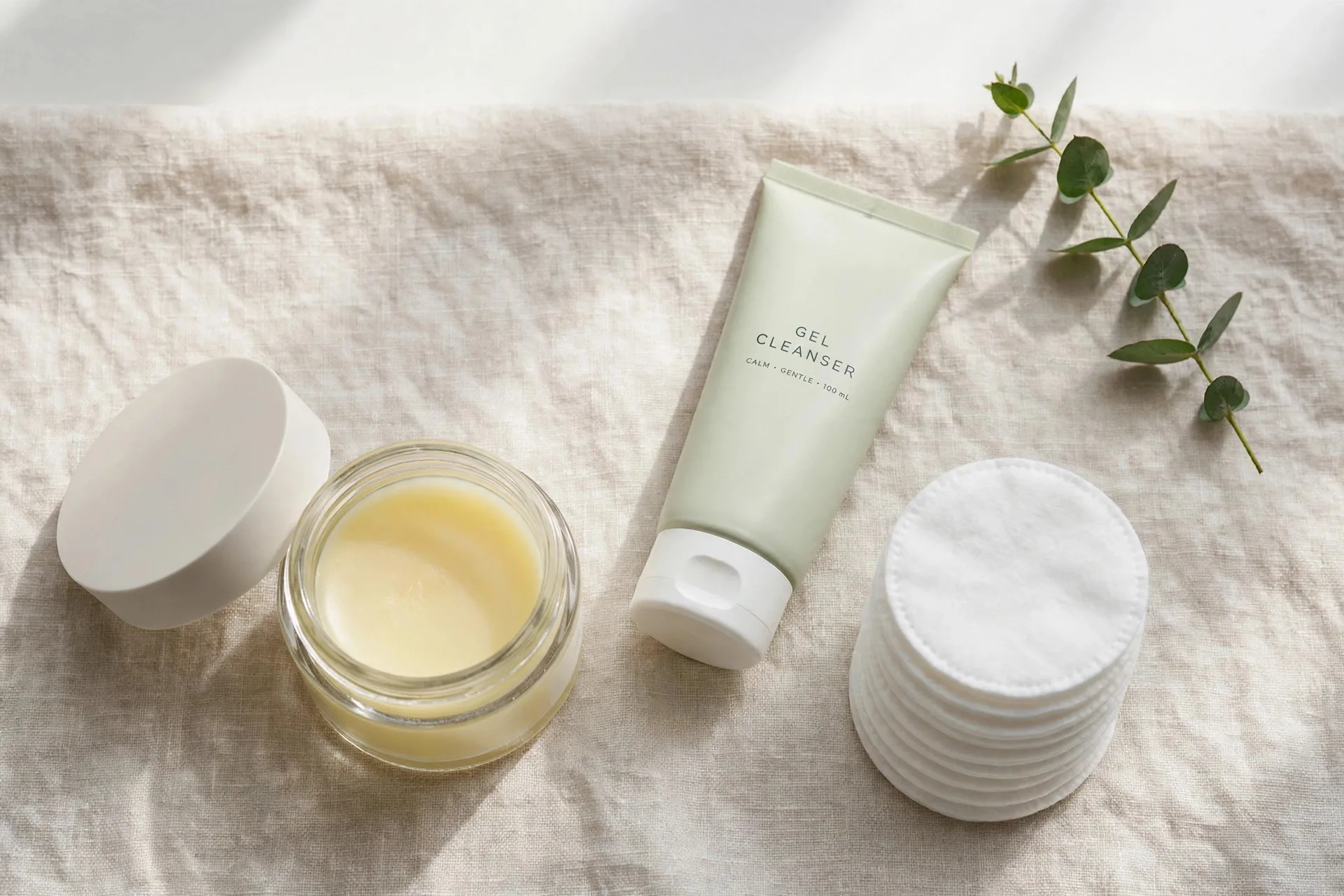
My everyday duo: a lightweight cleansing balm for step one, a gentle foaming cleanser for step two.
Common Mistakes I Made (So You Don’t Have To)
Mistake #1: Using the oil cleanser as my ONLY cleanser. For the first three days, I skipped the second step because the oil felt so thorough. Big mistake. Oil cleansers leave a thin film, and without the water-based step, that film sat on my skin and gave me tiny bumps along my forehead. The second cleanse isn’t optional — it’s the whole point.
Mistake #2: Using two strong foaming cleansers “to be extra clean.” I thought double cleansing meant double the foam. It means two different TYPES. Two harsh foams in a row stripped my skin, and my face responded with a revenge-oil-slick by lunchtime. One gentle oil, one gentle foam — that’s the formula.
Mistake #3: Scrubbing hard and using hot water. Gentle circles, lukewarm water. Your skin isn’t a dirty dish. Aggressive scrubbing damages the skin barrier and triggers redness, especially around the cheeks.
Mistake #4: Not rinsing the first step properly. The emulsify-and-rinse part (that milky stage) matters. I used to rush it, and the leftover oil mixed with my second cleanser and made everything less effective. Take the extra 20 seconds.
Mistake #5: Expecting overnight miracles. My blackheads didn’t vanish in a week. What happened first: less new congestion, calmer shine, better product absorption. The real pore-clearing showed up around week three or four. Skincare is a slow game — give it a month before you judge.
Signs It’s Working (and Signs to Stop)
It’s working if: your midday shine is softer rather than dramatic, you get fewer new clogged pores and whiteheads, your makeup sits better, and your serums seem to absorb faster. Your skin should feel comfortable — clean but not tight.
Pause and reassess if: you notice more redness, itching, stinging, or a sudden crop of tiny bumps that weren’t there before. That usually means one of your two products is too harsh (or the combo is too much for your skin). Swap to milder formulas, drop back to once a day — night only — and if irritation persists, check in with a dermatologist, especially if you’re using strong acne treatments.
Double cleansing isn’t for everyone, every day. People with very dry or sensitized skin, or a damaged skin barrier, may find even a gentle version too much. Listen to your skin over any routine you read online — including this one.
My Final Thoughts
A year into double cleansing, my bathroom shelf is honestly simpler than it used to be. One oil, one foam, and skin that behaves. The shine is still there some afternoons — I have oily skin, that’s not changing — but it’s the manageable, healthy kind of glow now instead of the sliding-makeup kind.
If you’re on the fence, just try it for two weeks, nights only. That’s a small experiment with a pretty good chance of paying off. And if your skin hates it? You’ll know fast, and you’ll have lost nothing but a fortnight.