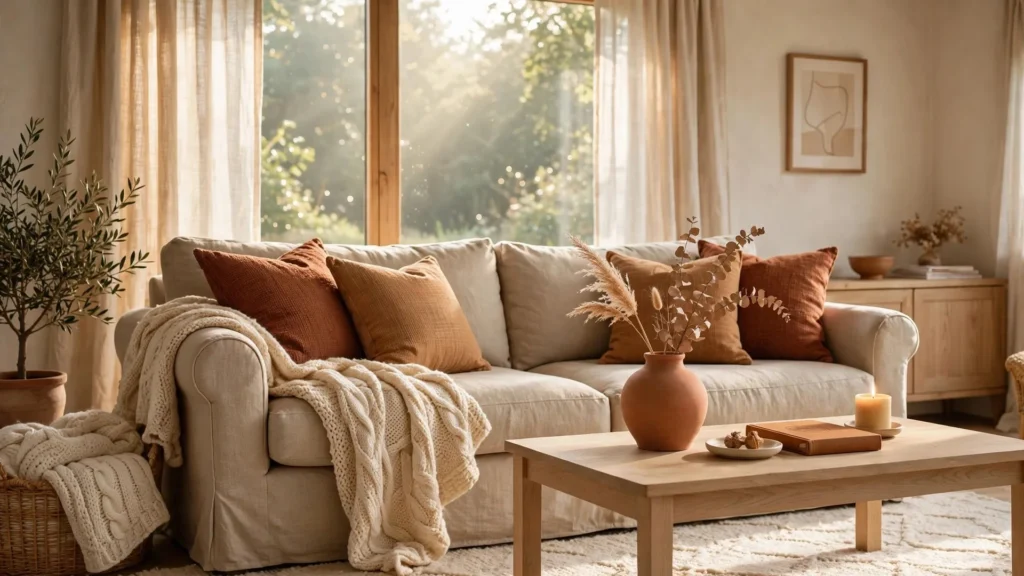

My beige couch showed up on a Tuesday afternoon, and by Tuesday evening I was already panicking. I had spent weeks picking it out — linen slipcover, warm sand color, the kind of sofa that looks like it belongs in a magazine. But in my actual living room, next to my old oak coffee table and the cream walls, it looked… flat. Like a cloud that forgot it had a personality.
Here’s what I’ve learned since then: a beige couch isn’t boring. It’s a blank canvas, and that’s exactly why it goes wrong so easily. Everything around it needs to work a little harder. Over the past year I’ve restyled my own beige sofa more times than I can count — through fall, through the holidays, through one regrettable turquoise-pillow phase we don’t talk about — and I finally landed on what actually works. These are the 15 ideas that made the biggest difference.
1. Add black accents for crisp contrast
A beige couch on cream walls has no outline — it just floats. The fastest fix I found was black. I added a slim black metal floor lamp (an IKEA Skruvsta-style arc I already owned) and three black picture frames, and suddenly the sofa had edges again.
You don’t need much. Think of black like eyeliner for the room: a floor lamp, a coffee table, and a couple of frames at three different heights. I kept the largest dark piece visually light (open frame, no chunky block) and balanced it with a cream rug so the room stayed friendly, not harsh. Matte or softly aged black works best — glossy black can look oddly disconnected from casual beige linen.
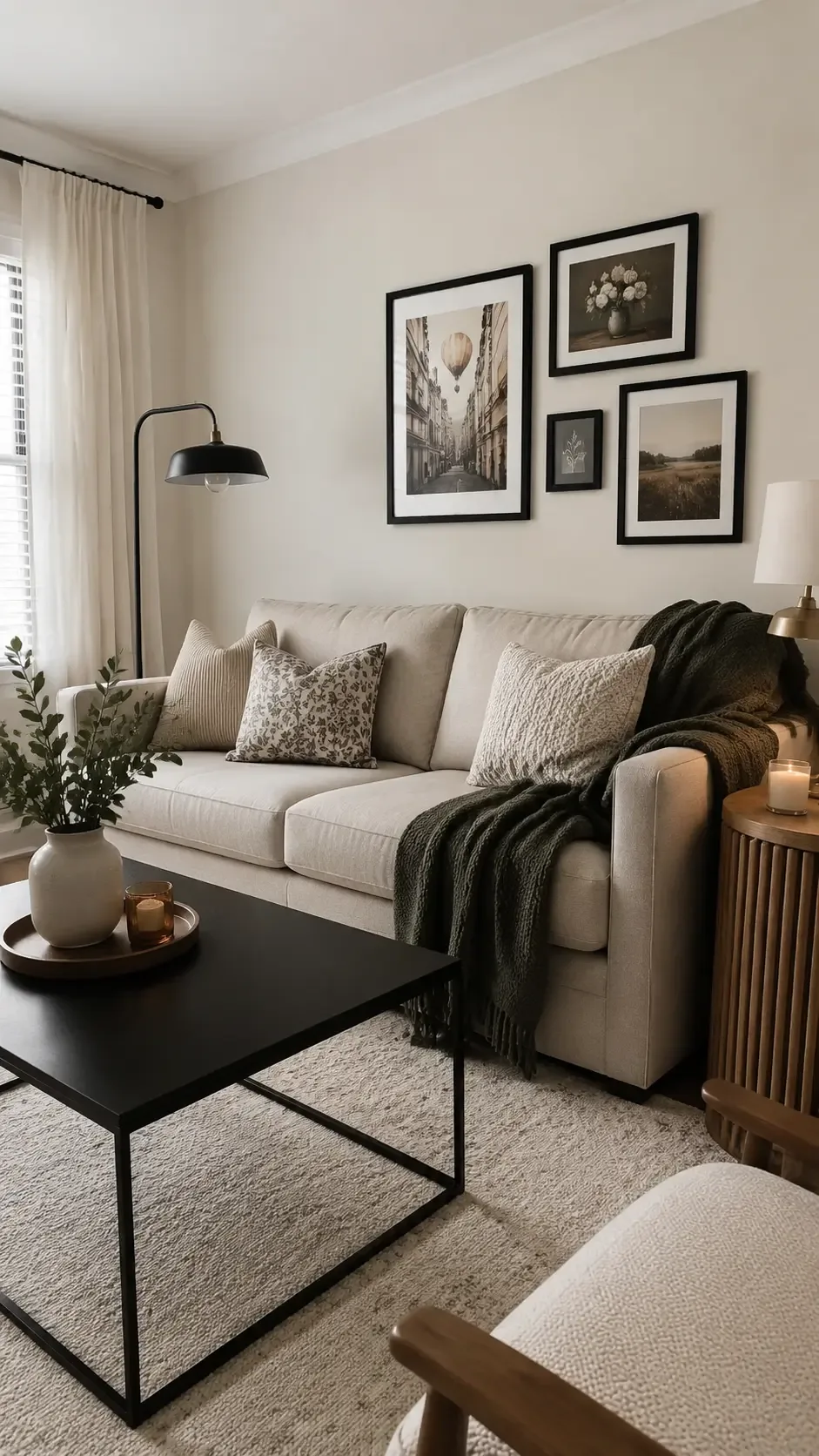
Image credit: homedishy.com
2. Build a warm earth-tone palette
Rust, caramel, clay, cinnamon. If your beige leans warm (mine does — sandy rather than gray), earth tones are the easiest win you’ll ever get. They share the sofa’s warm undertone but bring actual saturation, which is what the room is missing.
I started with one patterned cushion that had two earth tones in it, then pulled solids from there: a rust velvet pillow, a caramel knit throw, a small terracotta pot on the side table. The mistake I made at first was buying a pre-bundled pillow set. It looked fine, but it looked… bought. Mixing textures — chunky knit, worn velvet, crisp cotton — is what makes it feel layered instead of like a package deal. Leave some beige showing, by the way. When I covered every seat cushion with pillows, the couch just looked smaller.
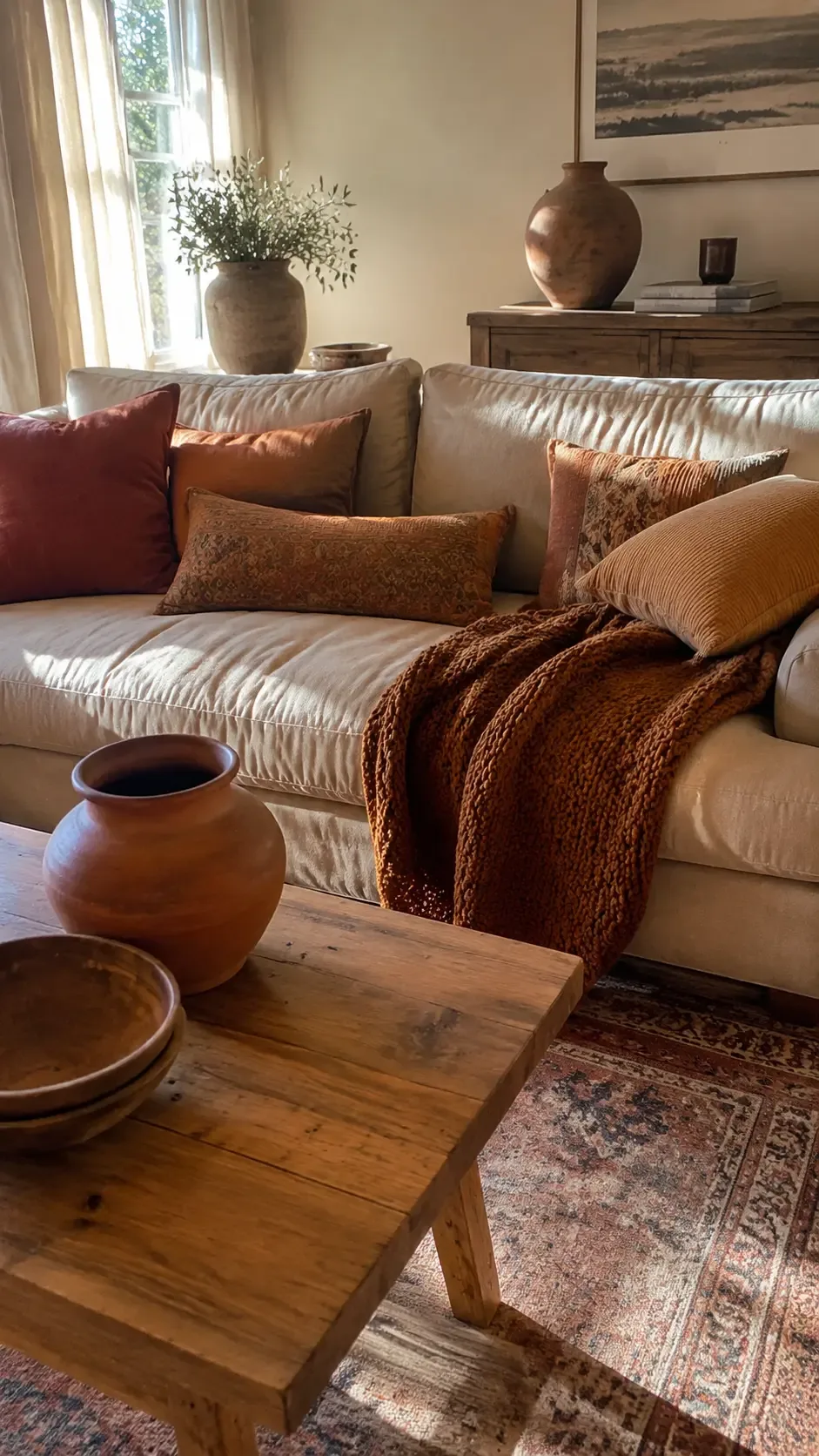
Image credit: homedishy.com
3. Pair it with soft coastal blue
This one surprised me. Faded, dusty blue — not bright turquoise, which I tried and regretted — does something beautiful to beige. It adds freshness without sharp contrast, and in a room with pale wood and lots of daylight, it reads coastal through texture and color rather than obvious seashell decorations.
I used one medium dusty blue and one lighter blue in pillows, then repeated them in a small ceramic bowl and a piece of art. The trick is keeping the big surfaces neutral and letting natural fibers — a jute rug, woven baskets — supply the warmth. Bright turquoise will fight a beige sofa; dusty blue sits next to it calmly.
4. Bring in botanical green and natural wood
Olive cushions plus real plants is probably the most forgiving combination on this list. Green makes beige feel earthy instead of plain, and the best part is that most of the color comes from movable pieces — which made my landlord very happy.
I kept a couple of olive pillows on the sofa year-round and rotated plants near the window. One practical lesson: pick plants for the room’s actual light, not just for leaf shape. My fiddle-leaf fig survived exactly six weeks in a north-facing corner before giving up. A pothos in the same spot has now thrived for a year. Repeat the olive on the sofa, pick one wood tone for your biggest table, and vary your planter materials but keep them quiet.
5. Use a muted terracotta accent wall
This is the boldest move on the list, and it completely changed my living room. A muted terracotta wall behind the sofa makes the beige upholstery look brighter and gives the whole room a warm focal point. The shade has to look earthy rather than orange — think clay pot, not construction cone.
Walnut furniture and handmade-style ceramics bridge the wall and the sofa with useful middle tones. Two things I wish I’d known before painting: test a big sample board behind the sofa in both morning and evening light (the same paint looked completely different at 5pm), and once the wall is up, calm down on the other warm accents. With the wall doing the heavy lifting, I pulled out half my rust pillows and the room actually looked better.
6. Create interest with tonal beige layers
An all-neutral room only works when the surfaces don’t all reflect light the same way. Linen next to boucle next to wool next to pale oak — those small differences create shadows and texture across a narrow palette, and suddenly the beige couch looks intentional instead of like the default option.
I built mine slowly: an ivory boucle accent chair, oatmeal linen pillows, a nubby cream rug, a pale oak side table. My rule of thumb is to compare neutral pieces in the room before removing the tags. Lay them against the sofa in daylight. Mix rough with smooth, matte with softly reflective. And add one dark object — a book, a frame, a plant pot — to give the eye somewhere to rest. One warning: one identical beige repeated everywhere looks flat. Mix values from ivory down to tan.
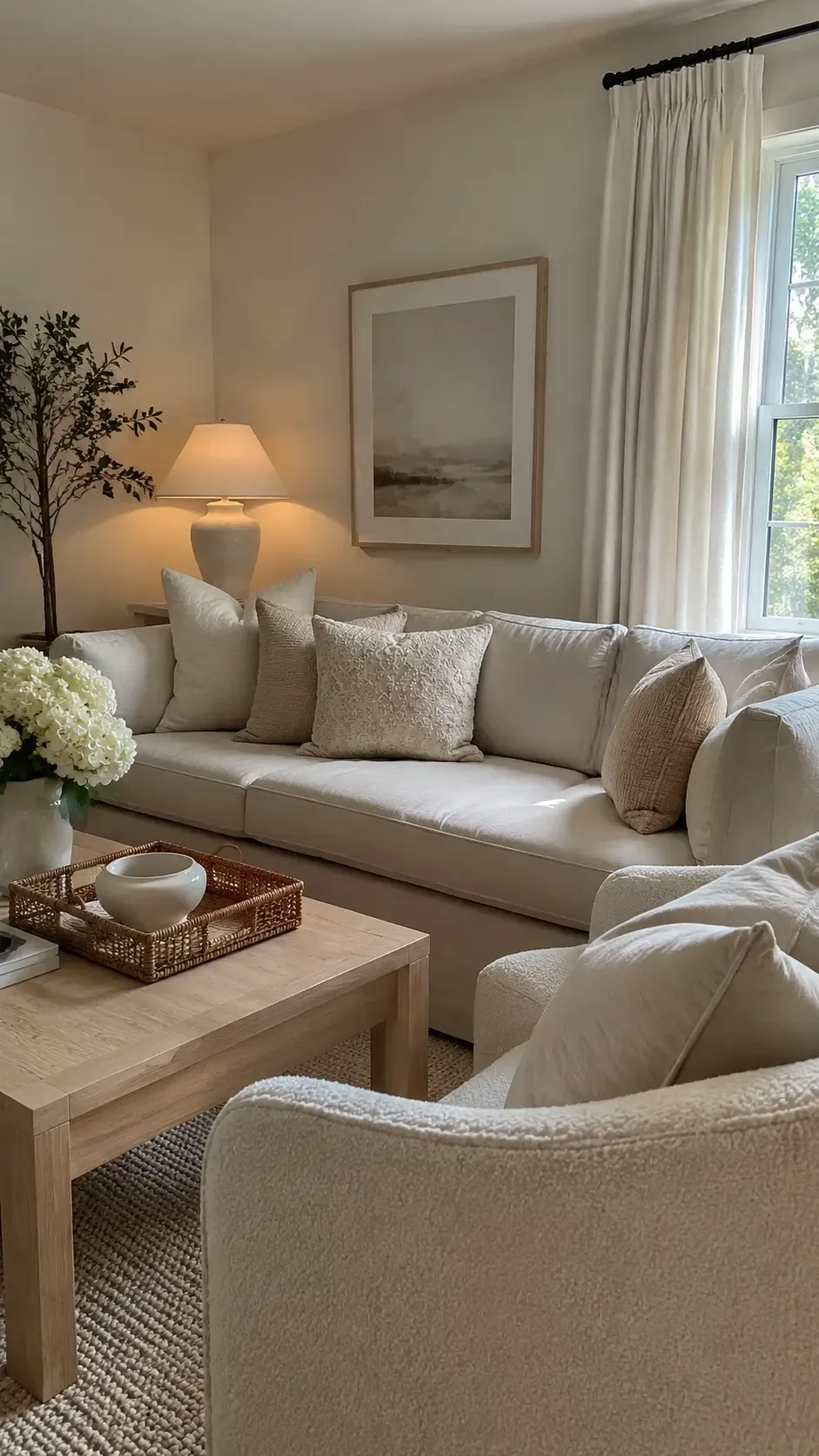
Image credit: homedishy.com
7. Balance it with dark wood tradition
If you already own dark walnut furniture — inherited pieces, thrift finds, the coffee table you bought in your twenties — it can actually make a beige sofa look better, not worse. Dark wood gives the light upholstery weight and a bit of maturity.
The pairing works best with one substantial dark piece (mine is a vintage walnut sideboard) and a few small echoes — dark lamp bases, wooden frames. I found that muted, slightly faded floral or patterned pillows help the new-looking upholstery sit comfortably beside older wood. The one thing to avoid: don’t shove every dark piece to the perimeter of the room. One central dark coffee table balances the couch much more effectively than dark furniture hugging the walls.
8. Layer relaxed coastal woven texture
A beige slipcovered couch is practically made for jute, rattan, weathered oak, and loose linen. This look is relaxed, practical, and — in my experience — very forgiving with kids and dogs.
I anchored the couch with a jute rug big enough for the sofa’s front legs to sit on, added a rattan chair I found at a flea market, and left the linen curtains slightly relaxed instead of perfectly tailored. One small faded-blue textile — a throw, a lumbar pillow — keeps all the warm neutrals from blending into one blur. Practical note I learned the hard way: use a rug pad under woven rugs. They slide, and they’re much more comfortable with extra cushioning underneath.
9. Try modern organic stone and wood
When I got tired of soft textures everywhere, I went the other direction: stone, plaster, sculptural wood. These materials give a beige couch stronger form without adding loud color. The room stays calm, but irregular surfaces — a travertine side table, a rounded oak coffee table — give it character.
The key is visible texture. Perfectly polished stone can look cold next to beige; stone with some grain and variation looks collected. I kept accessories low and limited, added a simple branch arrangement in a dark vessel (one dark vessel is important here — without it, beige ceramics everywhere start to look like a showroom), and used warm directional lamplight in the evening to reveal the textures.
10. Mix colorful, collected pillows
Here’s a secret: a beige sofa supports a colorful pillow mix better than almost any other upholstery. Because the base is neutral, you can go bolder with pattern and color than you’d think. My current mix has navy, rust, mustard, and deep green — and it works.
The difference between collected and chaotic is repetition. I start with the most complex pattern I own, pull three colors from it, and build around those. Vary the sizes, keep one neutral piece in the mix, and be honest: remove anything that doesn’t repeat a color already present. I also keep a folded vintage textile throw over one arm as a backup accent. And stop before the cushions take up more seating space than actual people can comfortably use — I had to relearn that one twice.
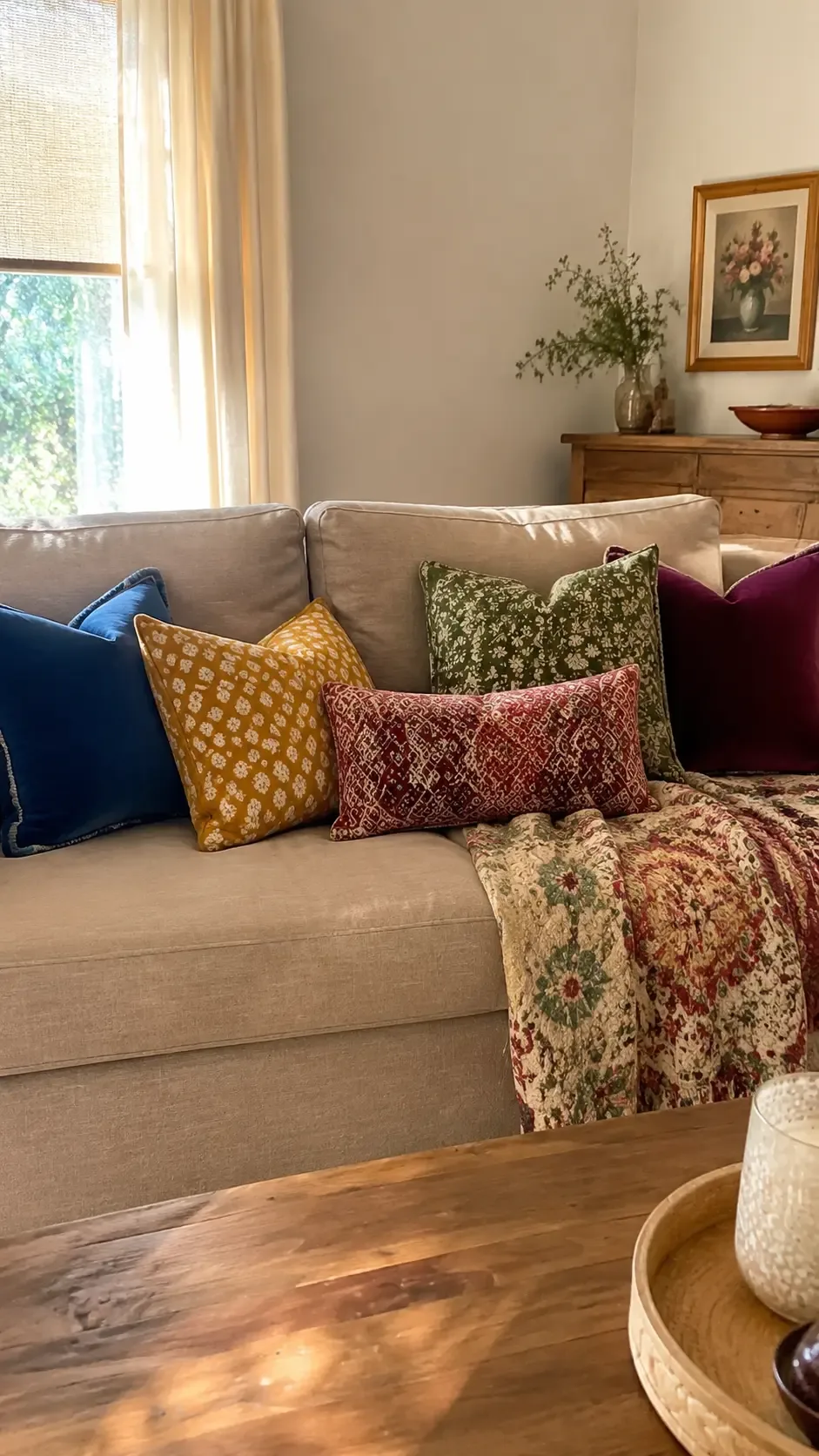
Image credit: homedishy.com
11. Plan a small-space sofa layout
In a compact room, a beige couch is actually an advantage: it visually recedes and makes the layout feel more open. But the bigger improvement in my old apartment came from spacing, not the sofa itself.
I swapped my rectangular coffee table for a narrow oval one (no more bruised shins, and walking past it became possible), added one lightweight chair instead of two bulky ones, and moved storage up with wall-mounted shelves. Measure your main walking route before arranging anything — I didn’t, and I spent a month sidestepping around my own coffee table. Float the sofa slightly off the wall if you can, and pick pieces with visible legs: exposed floor underneath makes a small room feel less crowded.
12. Let a vintage rug anchor the color
If choosing a color palette feels paralyzing, let a vintage rug do it for you. Muted red, navy, and brown in the rug give you a complete, proven color plan below eye level, and then you just repeat two or three of those shades in cushions and art.
Size matters more than color here: get the rug large enough that at least the sofa’s front legs rest on it. I keep a navy-and-rust cushion combo on the couch that pulls straight from the rug’s palette, plus an old wood trunk as a coffee table. One practical tip that saved me real money: photograph the rug in your own room before shopping for pillows. Store lighting lies. Two throws I bought under harsh showroom lights looked completely different at home.
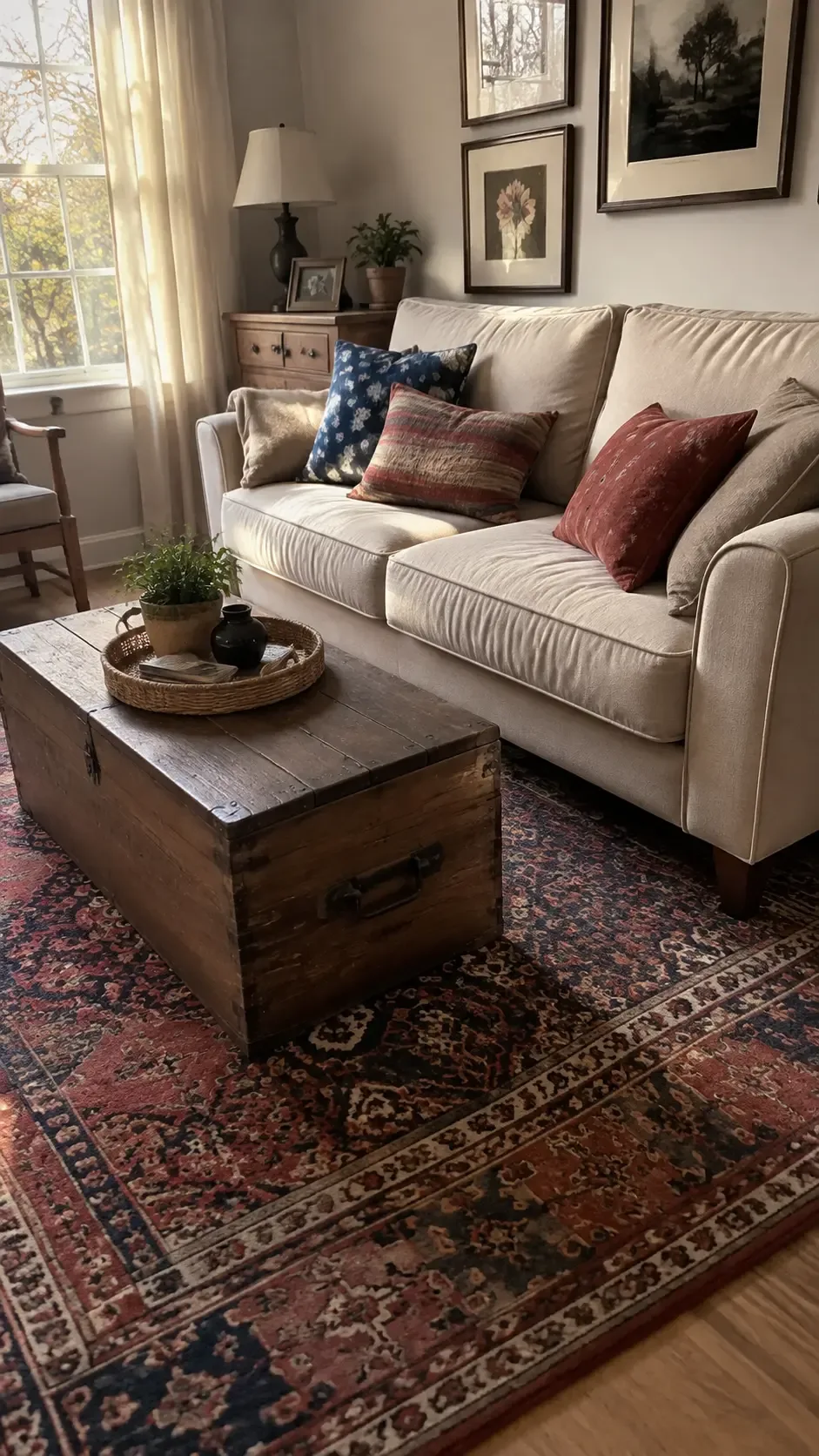
Image credit: homedishy.com
13. Create a personal gallery wall
A gallery wall gives a neutral sofa something money can’t buy: a sense of history and personality. Above my beige couch hangs a mix of framed prints, a sketch my daughter made, and a photo from a trip to the coast. It cost almost nothing and it’s the thing guests always ask about.
The method that saved my walls: trace every frame on paper, cut out the templates, and tape them above the sofa. Rearrange freely until it feels right, keep a safe gap above the back cushions, then hang the largest piece first. Mixed wood and black frames connect easily to the rest of the room, and using similar mat colors unifies artwork from completely different sources and decades.
14. Warm it up with brass and warm lighting
Beige can read cold under cool white bulbs — I lived with this problem for months before I figured it out. Swapping my bulbs to warm white (2700K) and adding a brushed-brass table lamp changed the sofa’s color in the evening from grayish to honeyed.
Brass and warm metals bridge beautifully between beige upholstery and wood tones. I added a brass floor lamp, switched the pendant shade, and noticed the room finally felt like itself after dark. It’s a cheap fix — bulbs cost a few dollars — and it’s the one change I’d make first if I were starting over.
15. Rotate textiles with the seasons
The last idea is less a look and more a habit, but it’s what keeps a beige couch from ever getting stale: treat it as a seasonal canvas. In summer I run light linen pillows and a thin cotton throw. In October the chunky knits and rust velvets come out of storage, and the room feels completely different without a single furniture purchase.
I keep two baskets in a closet — one for warm-weather textiles, one for cold-weather — and the swap takes twenty minutes. A beige sofa makes this easy because it never fights the new colors. Honestly, this little ritual is why I’d choose beige again: the couch stays the same while the room gets to change its mind.
Common mistakes to avoid
Before you go shopping, here are the pitfalls I fell into so you don’t have to. First: buying everything in the exact same beige. One shade repeated everywhere is the fastest way to make the room look flat and lifeless. Mix ivory, oatmeal, sand, and tan.
Second: skipping contrast. If every piece in the room is light and soft, the sofa melts into the background. One dark object — black, walnut, deep green — anchors everything. Third: pillows as an afterthought. The pillows are where the personality lives; a $40 cushion swap does more than most people expect.
And the big one: not testing in your own light. Paint swatches, fabric samples, and rug photos all shift between the store and your living room. I now bring samples home and look at them morning, noon, and evening before committing. It takes an extra day and saves a lot of return trips.
FAQs about beige couch living rooms
What colors look best with a beige couch?
Black, olive, rust, terracotta, dusty blue, navy, and warm brown all work well. The key is checking whether your beige leans warm (creamy, sandy) or cool (grayish) and choosing accents that agree with that undertone — then repeat each accent color more than once around the room.
How do I stop a beige living room from looking boring?
Introduce contrast through a darker table or frames, then layer at least three textures — linen, wool, wood, woven fiber. Personal art and one patterned rug add far more character than a dozen small neutral accessories.
What color rug works with a beige sofa?
A vintage red-and-navy rug adds warmth and depth, dusty blue provides freshness, and a textured cream rug supports a tonal, layered room. Honestly, size and placement matter more than the exact color: front legs on the rug, generous proportions.
Should curtains match a beige couch?
They can be similar, but they shouldn’t look identical. Linen curtains in ivory, oatmeal, or one of your accent colors create subtle separation and make the upholstery feel more layered instead of like the whole room was dipped in one dye.
Is a beige couch hard to keep clean?
A slipcover changed everything for me. Removable, washable slipcovers — linen or a performance fabric — make a beige sofa genuinely practical. Toss the cover in the wash a few times a year, spot-treat stains quickly, and rotate cushions so wear evens out. It’s more work than a dark sofa, but not nearly as scary as people make it sound.
Final thoughts
My beige couch is still the same sofa that panicked me on that first Tuesday evening. The couch didn’t change — everything around it did. Treat it as a calm foundation, pick one strong direction (dark contrast, earthy color, collected pattern, natural texture, or a smarter layout), and build gradually with pieces that fit your real life.
If there’s one thing to take from my year of restyling, it’s this: beige rewards confidence. Stop trying to match it perfectly and start giving it things to play against. I’d love to hear which of these you try in your own living room.