

Winter can be hard on your hair. Cold air outside, dry heated air inside, wool hats, and hot showers all pull moisture out of your strands. The result is familiar: static, frizz, split ends, a dry itchy scalp, and breakage that seems to show up overnight.
The good news is that winter hair damage is mostly preventable. You do not need an expensive salon routine or a shelf full of new products. Small changes to how you wash, dry, brush, and protect your hair can keep it soft and strong all season long.
These 15 winter hair care tips cover washing, moisture, styling, and protection. Pick the ones that fit your hair type and start this week. Your hair will thank you by spring.
Why Winter Is So Hard on Hair
Hair is at its weakest when it is dry. Cold winter air holds very little moisture, so it pulls water out of the hair shaft every time you step outside. Then you walk into a heated room, and the warm dry air pulls out even more.
This constant moisture loss lifts the hair cuticle, the outer layer that keeps strands smooth. Once the cuticle is raised, hair looks dull, tangles easily, and snaps under gentle pressure. Add friction from scarves, hats, and heavy coats, and breakage becomes almost certain.
Your scalp suffers too. Dry indoor heat can leave it tight, flaky, and itchy. Many people mistake winter scalp dryness for dandruff and reach for harsh anti-dandruff shampoos, which only dry the scalp further. Gentle care works better than aggressive treatment.
Washing Tips for Winter Hair
1. Wash Less Often
Every wash strips away some of your scalp’s natural oils. In winter, when moisture is already scarce, washing every day leaves hair parched. Try stretching washes to every two or three days instead.
If your roots get oily between washes, use a dry shampoo on the roots only. Brush it through well so no white residue shows. On non-wash days, a simple rinse with water or a quick refresh with a light leave-in spray is often enough.
2. Turn Down the Water Temperature
A steaming hot shower feels wonderful on a cold morning, but hot water strips oils from both your hair and scalp. It also roughs up the cuticle, which leads to frizz once hair dries.
Wash with lukewarm water instead, and finish with a cool rinse if you can stand it. The cooler water helps the cuticle lie flat, which makes hair look smoother and shinier. Your skin will feel better too.
3. Switch to a Gentle, Moisturizing Shampoo
Winter is the time to put clarifying and volumizing shampoos aside. These formulas are designed to remove buildup, but they also remove moisture your hair cannot afford to lose right now.
Look for a sulfate-free shampoo labeled moisturizing, hydrating, or for dry hair. Use a small amount and focus on the scalp, where oil and buildup collect. The lengths of your hair get clean enough as the shampoo rinses through.
4. Never Skip Conditioner
Conditioner is not optional in winter. It replaces the moisture shampoo removes and smooths the cuticle so strands slide past each other instead of snagging.
Apply conditioner from the mid-lengths to the ends, where hair is oldest and driest. Leave it on for two to three minutes before rinsing. If your hair is very dry or curly, try a richer formula or leave a small amount in the ends instead of rinsing it all out.
Deep Moisture: The Winter Game Changer
5. Use a Hair Mask Once a Week
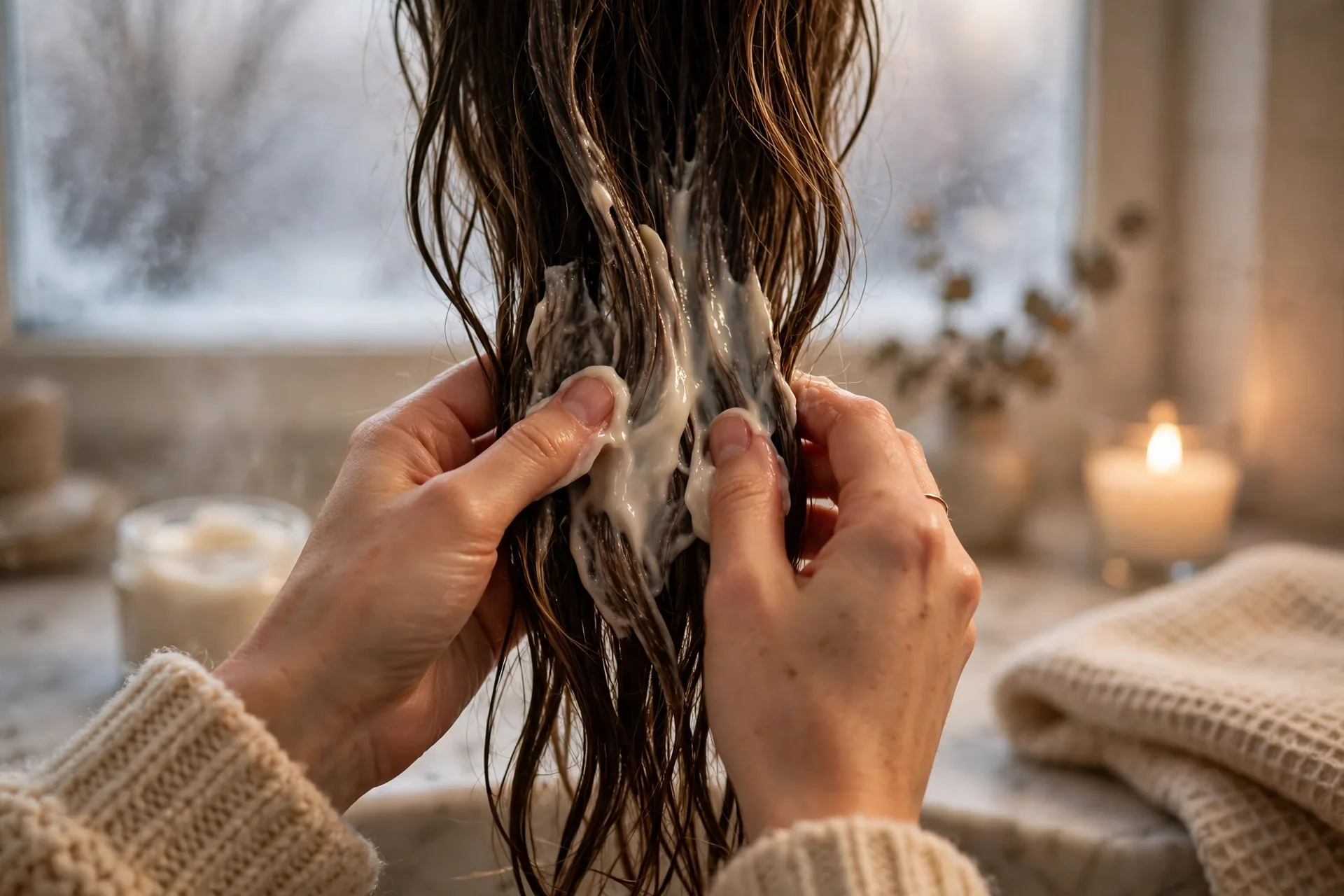
A weekly deep conditioning mask is the single most effective winter hair habit. Masks contain heavier moisturizing ingredients than regular conditioner, and they get time to soak in.
Apply the mask to damp hair after shampooing, focusing on the ends. Leave it on for 10 to 20 minutes. For an extra boost, wrap your hair in a warm towel while the mask works. Rinse well with lukewarm water. Once a week is enough for most hair types; very dry or coarse hair may benefit from twice a week.
6. Try a Pre-Wash Oil Treatment
Oiling your hair before washing protects it from losing too much moisture during the wash itself. Warm a small amount of coconut oil, argan oil, or olive oil between your palms and work it through the lengths of your hair.
Leave the oil on for at least 30 minutes, or overnight if your hair is very dry. Shampoo as usual afterwards. You may need two gentle shampoo passes to remove all the oil. The result is softer, more flexible hair that breaks less when you brush it.
7. Seal in Moisture With a Leave-In Product
Leave-in conditioner or a light hair cream acts like a winter coat for your strands. It locks in the moisture from your wash and shields hair from dry air throughout the day.
Apply a small amount to damp hair, from the mid-lengths down. Fine hair needs only a pea-sized amount to avoid looking flat. Thicker or curlier hair can take more. Focus on the ends, which are the most fragile part of every strand.
Protecting Hair From Cold, Hats, and Friction
8. Cover Your Hair When You Go Outside
Cold wind is one of the biggest causes of winter breakage. It dries hair out and whips strands around, causing tangles and snapped ends. A hat or a hood is simple protection.
Before you put a hat on, tuck your hair inside your coat or loosely braid it. This keeps the ends from rubbing against your coat collar and scarf, which is where much of the damage happens. A loose braid also prevents the tangled mess that wind creates.
9. Choose Hats That Are Kind to Hair
Wool and acrylic hats create friction and static. Every time you pull one on or off, it roughs up the cuticle and can snap fine strands. The fix is simple: wear a silk or satin lining under your hat.
You can buy a satin-lined beanie, or wear a thin silk scarf under a regular hat. Your hair will slide instead of catching, and you will notice far less static and frizz when you take the hat off indoors.
10. Switch to a Silk or Satin Pillowcase
You spend about eight hours a night with your hair pressed against your pillow. Cotton pillowcases absorb moisture from your hair and create friction as you move in your sleep.
A silk or satin pillowcase lets hair glide instead of catching. It helps your hair hold onto moisture overnight and reduces morning tangles and frizz. It is a small change that pays off every single night.
Styling and Drying Without Damage
11. Be Gentle When Brushing
Wet hair is stretchy and fragile, and winter hair is drier and weaker than usual. Brushing wet hair roughly is a fast route to breakage.
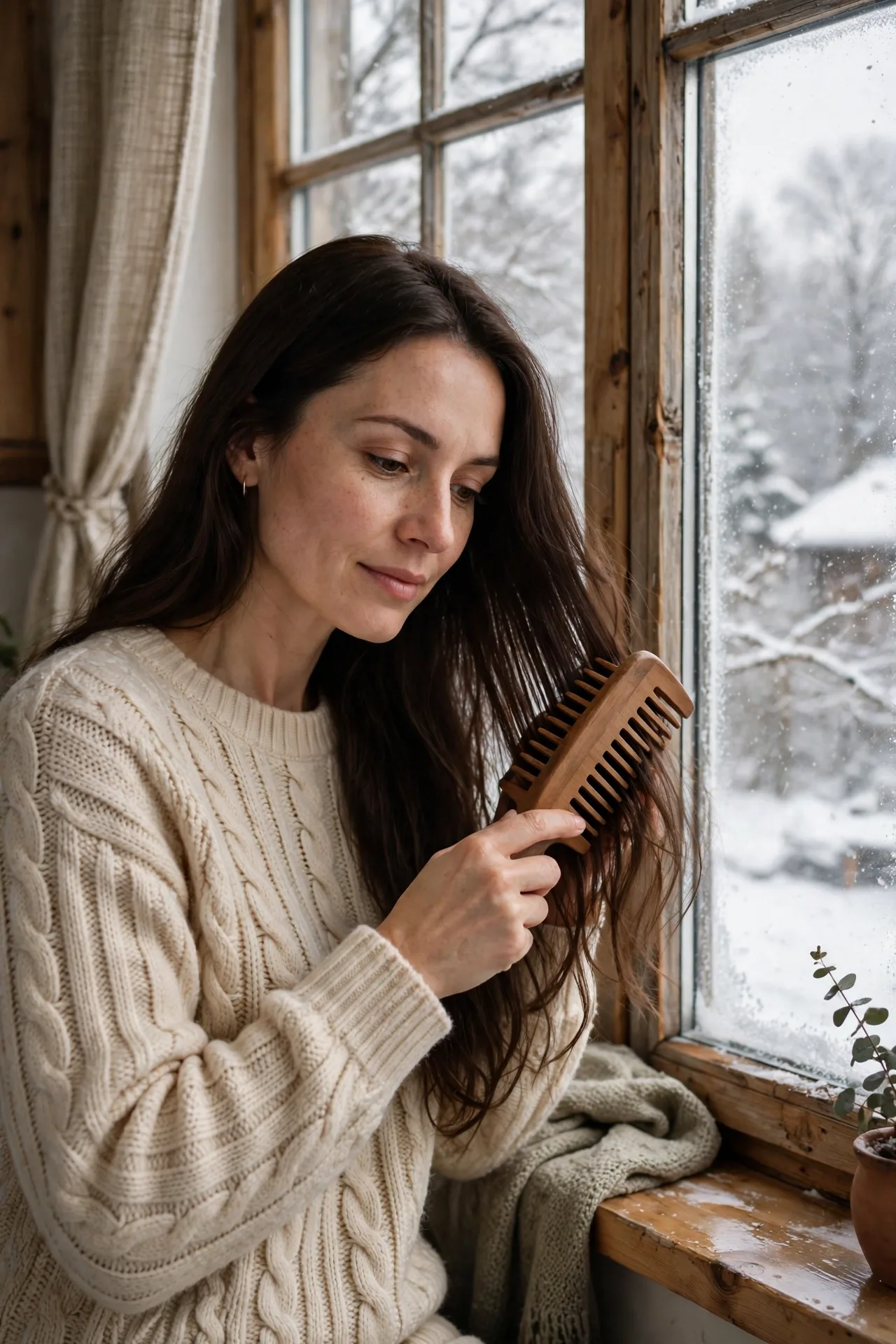
Detangle with a wide-tooth comb or a brush made for wet hair, starting at the ends and working upward in short sections. Never rip through a knot from the roots down. If a section is stubborn, add a little leave-in conditioner and work through it slowly.
12. Cut Back on Heat Styling
Flat irons, curling wands, and high-heat blow drying remove moisture and weaken the hair shaft. In winter, when hair is already dry, heat damage shows up faster and takes longer to recover from.
Try to air dry when you can, and save hot tools for special occasions. When you do use heat, always apply a heat protectant first, and use the lowest temperature that gets the job done. Letting hair air dry 80 percent of the way before blow drying also cuts heat exposure a lot.
13. Dry Hair the Right Way
Rubbing wet hair hard with a towel roughs up the cuticle and causes frizz and breakage. Instead, gently squeeze out excess water with a microfiber towel or an old cotton t-shirt.
Press and squeeze in sections rather than rubbing back and forth. If you blow dry, use a medium heat setting and keep the dryer moving. Hold it at least six inches from your hair and point the nozzle downward so the cuticle lies flat.
Scalp Care and Smart Winter Habits
14. Take Care of Your Scalp
A healthy scalp grows healthy hair. Winter dryness can leave the scalp tight and flaky, so give it some attention. Once a week, massage your scalp for a few minutes with your fingertips. This boosts blood flow and helps distribute natural oils.
If flakes appear, try a gentle moisturizing shampoo and a scalp oil before assuming you need a medicated product. Drink enough water through the day too. Hair health starts from the inside, and winter dehydration shows up in your strands.
15. Get Regular Trims
It sounds counterintuitive when you are trying to grow your hair, but regular trims protect your length. Split ends travel upward if left alone, forcing you to cut off far more later.
A small trim every eight to ten weeks removes damaged ends before they split further. Your hair will look thicker and healthier, and it will hold styles better. Winter is the perfect time to keep up with trims, since ends take the most punishment this season.

Your Simple Winter Hair Routine
You do not need to adopt all 15 tips at once. Start with a simple weekly rhythm and build from there:
- Wash days (2 to 3 times a week): lukewarm water, gentle shampoo on the scalp, conditioner on the lengths, and a leave-in product on damp hair.
- Once a week: a deep conditioning mask, plus a scalp massage.
- Every day: gentle detangling from the ends up, a silk-lined hat or scarf outdoors, and a silk pillowcase at night.
- Every 8 to 10 weeks: a trim to keep split ends from spreading.
Consistency matters more than perfection. A few minutes of care a few times a week will keep your hair noticeably softer, shinier, and stronger until warmer weather returns.
Common Winter Hair Mistakes to Avoid
Going outside with wet hair is one of the worst winter habits. Wet strands can freeze in very cold weather, making them stiff and far more likely to snap. Always dry your hair fully before heading out on a freezing day.
Skipping conditioner to save time, washing with very hot water, and wearing tight wool hats every day are other common mistakes. Each one seems small, but together they add up to a season of damage. Swap them for the gentler habits above and you will see the difference within a few weeks.
Frequently Asked Questions
Should I wash my hair less in winter?
Yes, for most people. Washing every two to three days instead of daily lets your scalp’s natural oils protect your hair. If your hair gets oily fast, dry shampoo on the roots can stretch the time between washes.
Does cold weather itself damage hair?
Cold air alone does not break healthy hair, but it dries it out. Dry hair is weaker and more likely to snap. The real damage comes from the combination of cold outdoor air, dry indoor heat, friction from hats and scarves, and hot showers.
What is the best oil for winter hair care?
Argan oil is light and works well for fine hair. Coconut oil is richer and suits thick or coarse hair. Jojoba oil closely matches your scalp’s natural oils and works for most hair types. Use a small amount and focus on the lengths and ends.
Can I still use heat tools in winter?
Yes, but less often and with protection. Always use a heat protectant, choose the lowest effective temperature, and let hair air dry partway first. Giving your hair heat-free days in between styling sessions helps it recover.
Winter does not have to mean months of dry, frizzy, breaking hair. With gentler washing, regular deep moisture, and simple protection from cold and friction, you can come out of winter with hair that looks and feels better than when the season started. Start with one or two tips this week, add more as they become habits, and enjoy healthy hair all winter long.


Pingback: 17 Hair Growth Tips That Actually Work - Beautifully Curated Life
Pingback: The Only Hair Care Checklist You Need for Healthy, Shiny Hair - Beautifully Curated Life
Pingback: 12 Hair Products for Frizz That Keep Hair Smooth in Humidity - Beautifully Curated Life
Pingback: 15 Affordable Hair Care Products That Work Like Salon Brands - Beautifully Curated Life
Pingback: 18 Easy Hairstyles for Beginners That Take Under 5 Minutes - Beautifully Curated Life
Pingback: How to Curl Hair for Beginners: Soft Waves That Last All Day - Beautifully Curated Life
Pingback: 14 Heatless Hairstyles to Try This Week (No Heat, No Damage) - Beautifully Curated Life