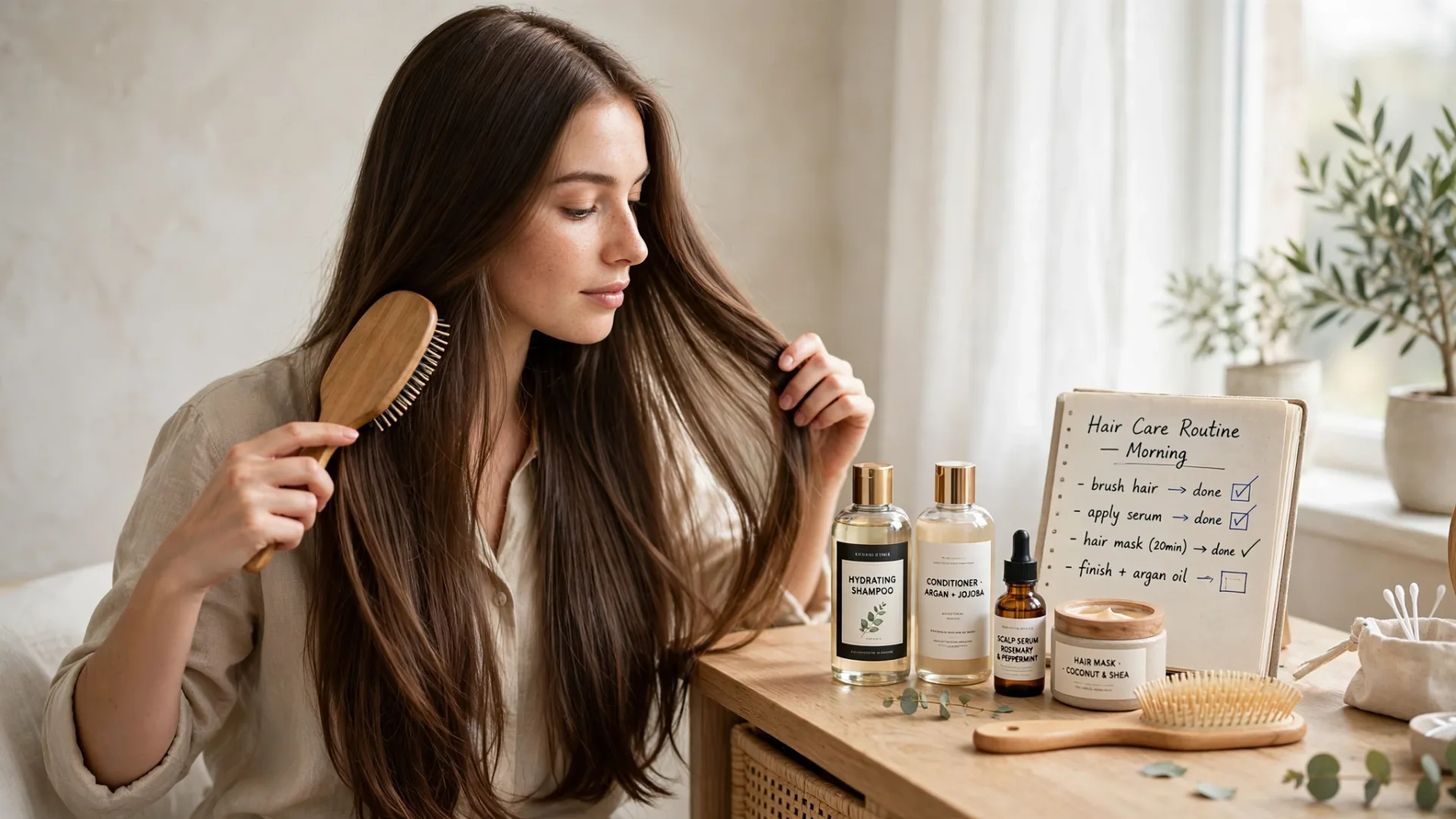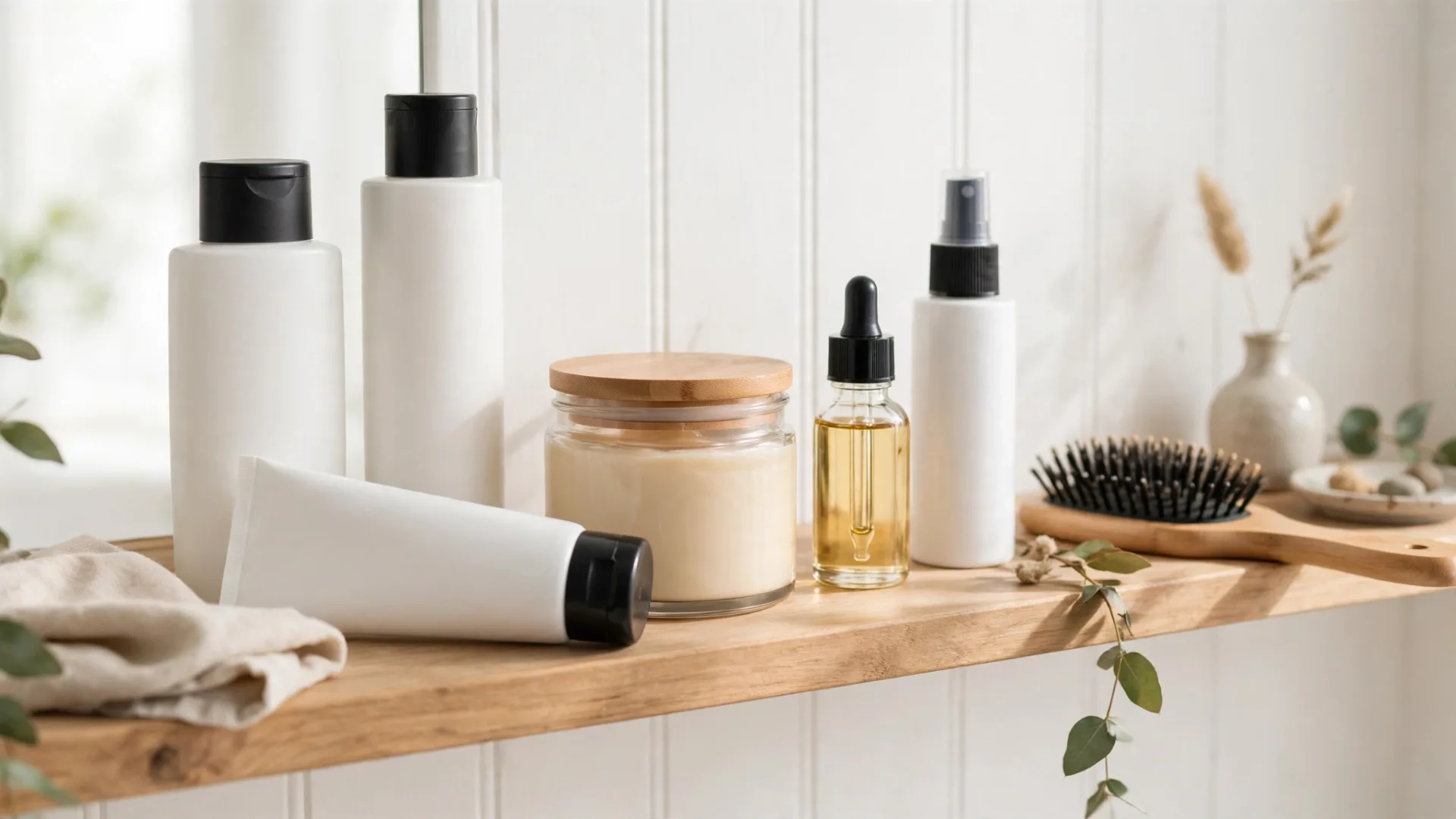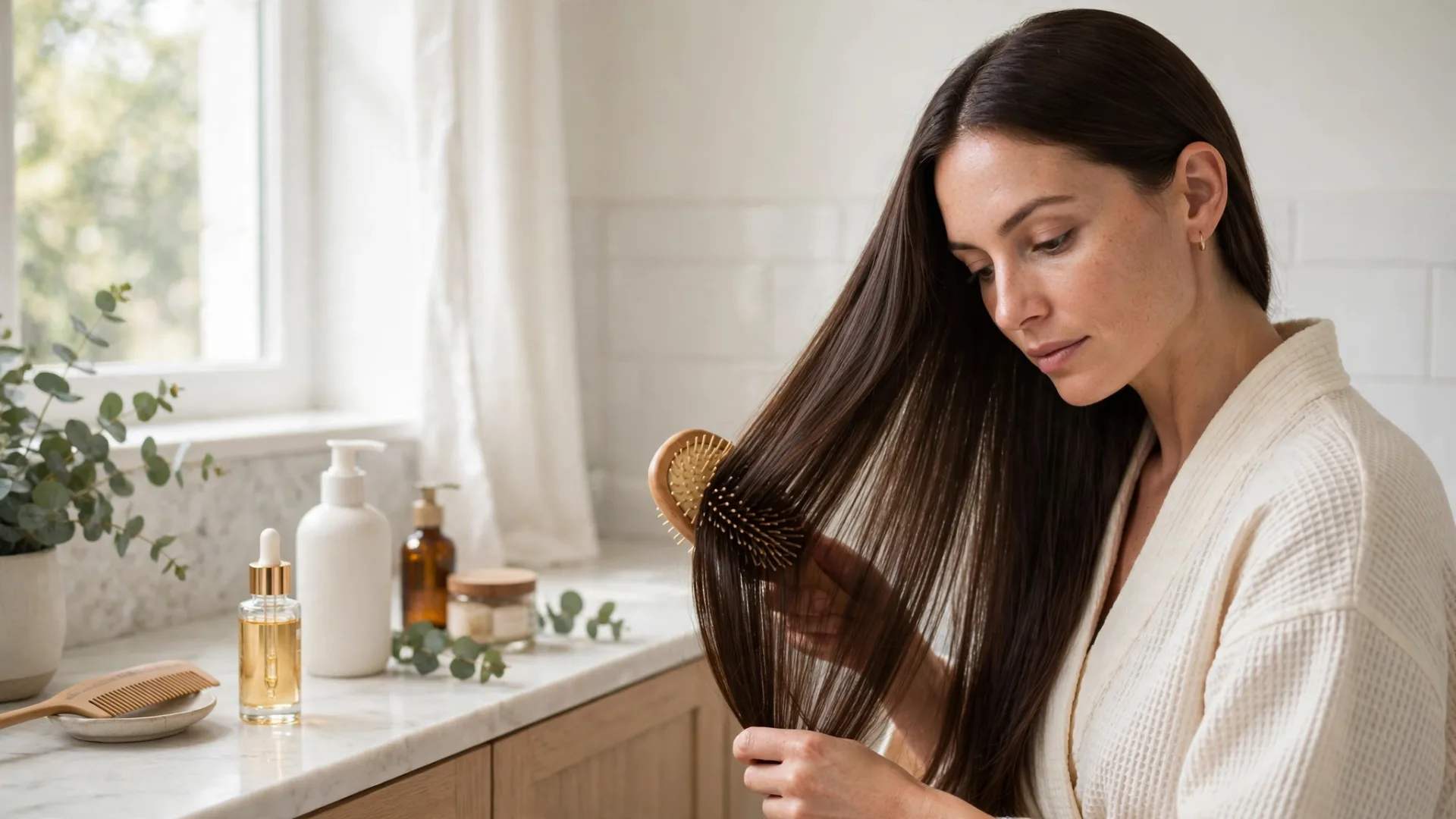

Humidity has a way of undoing even the best hair day. You can leave the house with smooth, polished strands and step outside to find your hair swelling, fuzzing up at the crown, and losing all definition within an hour. The problem is not your styling skills. Frizz happens when dry, porous hair soaks up moisture from the air, and each strand swells unevenly, lifting the cuticle and breaking up your style.
The good news is that the right products can change this completely. A good anti-frizz routine works in layers: it fills gaps in damaged cuticles, seals moisture in, and builds a light barrier that keeps humid air out. No single product does all of that alone, which is why a small, well-chosen set beats a shelf full of random ones.
This guide walks through 12 types of hair products for frizz, what each one actually does, who it suits best, and how to use it so it helps rather than weighs your hair down. No brand hype, no miracle claims — just practical buying guidance you can use on your next shopping trip.
Why Frizz Happens in the First Place
Think of each hair strand as a roof covered in tiny overlapping shingles. When those shingles, called the cuticle, lie flat, hair looks smooth and reflects light. When they are raised by damage, dryness, or chemical treatments, moisture from the air slips underneath and the strand swells. That swelling is frizz.
Some hair types are more prone to it. Curly and wavy hair frizzes more because its bends stop natural oils reaching the ends, leaving them dry. Fine hair frizzes at the hairline and crown, while thick hair frizzes into volume. The product that tames coarse frizz will flatten fine hair, and the light mist that suits fine hair will barely touch coarse frizz.
Heat styling, rough towel drying, harsh shampoos, and skipping conditioner all lift the cuticle further. Products help most alongside gentle habits, so treat the products below as one half of the fix and your routine as the other.
1. Sulfate-Free Smoothing Shampoo
Everything starts in the shower. A sulfate-free shampoo cleans without stripping away the natural oils that keep the cuticle lying flat. Look for formulas labelled smoothing, hydrating, or moisture-rich, and check the ingredient list for gentle cleansers rather than sodium lauryl sulfate.
This suits almost everyone with frizz, but it matters most for curly, color-treated, or dry hair. Use a small amount, focus on the scalp, and let the lather run down the lengths rather than scrubbing the ends. Wash with lukewarm water, since very hot water roughs up the cuticle. If your hair is fine and gets oily fast, alternate with a lighter clarifying wash once a week.
2. Deep Conditioning Mask
A weekly deep conditioning mask is the single most effective frizz fighter for dry or damaged hair. Masks contain a higher dose of conditioning agents and nourishing oils than regular conditioner, and they are left on long enough to sink into the hair shaft, softening roughness from the inside out.
Apply it from mid-length to ends, never on the roots, and leave it for 10 to 20 minutes. For very coarse or thick hair, a shower cap adds gentle warmth that helps it absorb. Rinse with cool water to help seal the cuticle. Fine hair needs a mask only once every two weeks, kept strictly off the roots.
3. Leave-In Conditioner
Leave-in conditioner is the base layer of any anti-frizz routine. It adds a light coat of moisture and slip after washing, making hair easier to detangle and less likely to snag and break. Detangling gently matters because every broken strand becomes a future flyaway.
Sprays suit fine or wavy hair, creams suit thicker or curlier hair. Apply to damp hair, comb through with a wide-tooth comb, then style as usual. A leave-in with built-in heat protection covers two jobs if you blow-dry.
4. Hair Serum
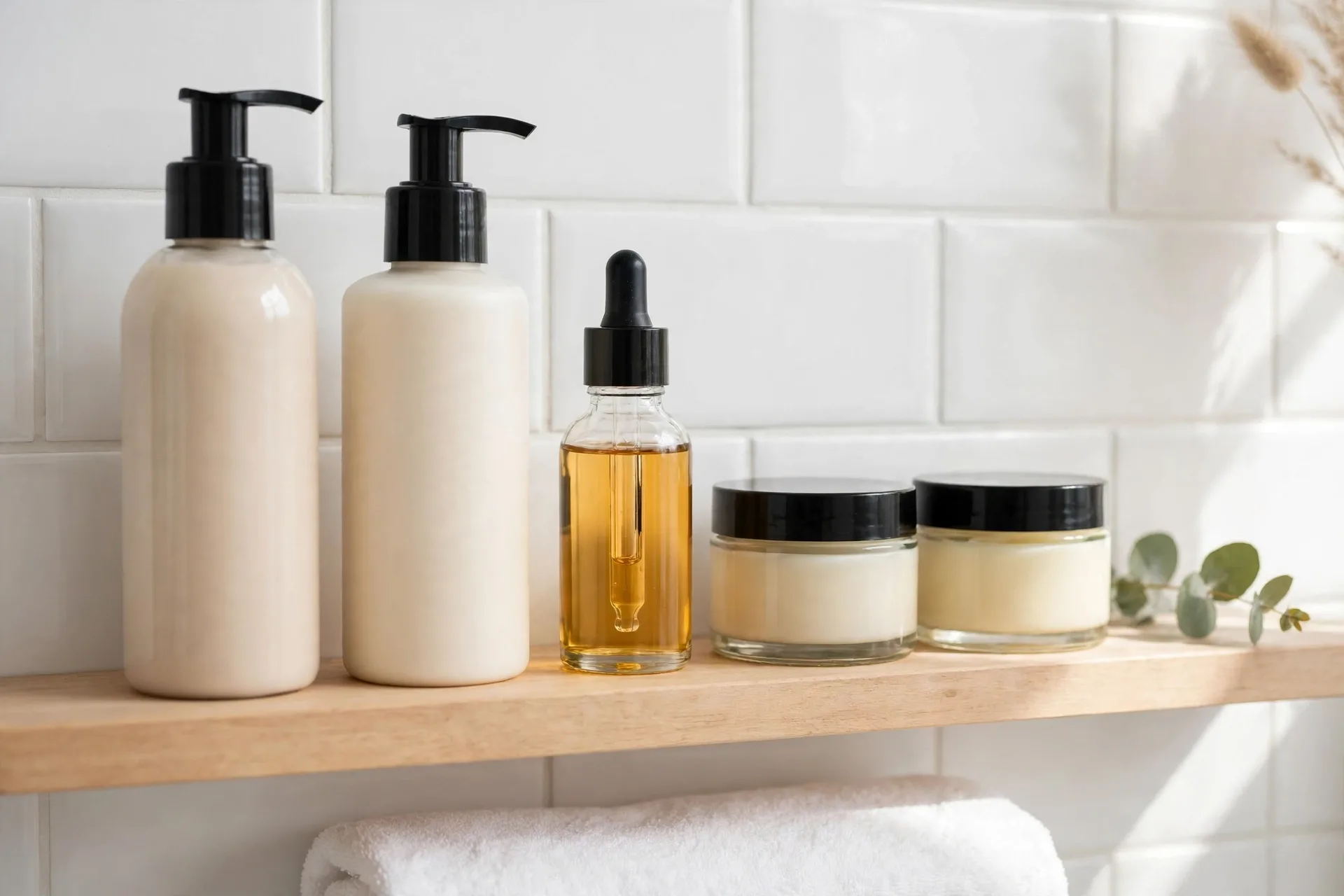
Serum is the classic frizz product for a reason. Most serums are silicone-based, and silicones coat the strand with a thin, water-repelling film that smooths the cuticle and blocks humidity. The result is instant shine and noticeably calmer hair.
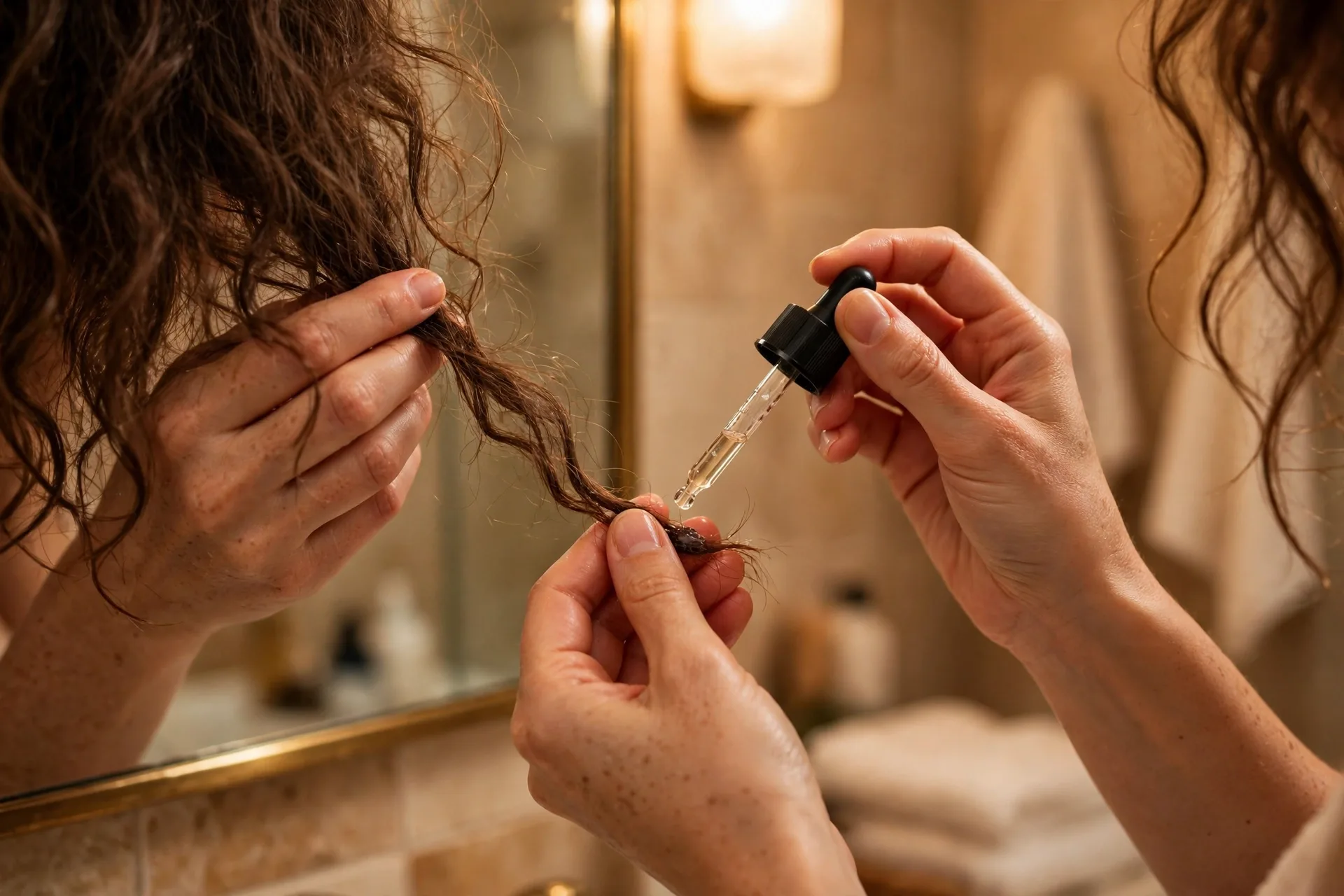
Warm two to three drops between your palms and smooth them over the mid-lengths and ends of damp or dry hair. Fine hair needs only one drop. Avoid the roots or hair will look greasy. Plant-oil serums suit silicone avoiders, but give a softer, less humidity-proof finish.
5. Hair Oil
Hair oils such as argan, jojoba, and camellia oil nourish the strand and add weight that helps gravity pull frizz down. They work best as a finishing step or as a pre-wash treatment rather than as a styling product on their own.
As a finishing oil, use a few drops on dry ends to add shine and calm flyaways. As a pre-wash treatment, work oil through dry hair an hour before shampooing to limit swelling during washing. Coarse, thick, and curly hair gets the most from oils, while fine hair should stick to the lightest oils in the smallest amounts.
6. Anti-Frizz Cream
Anti-frizz creams sit between a leave-in conditioner and a serum. They are richer than a spray but lighter than a heavy oil, and they give you some hold as well as smoothness, which makes them ideal for air-drying. They are a favorite for wavy hair because they define waves while keeping the surface smooth.
Work a coin-sized amount through damp hair, scrunching gently for waves or curls, then leave hair alone while it dries. Touching drying hair is one of the fastest ways to create frizz. Choose light hold for everyday use and stronger hold for humid days.
7. Heat Protectant Spray
Heat is one of the biggest frizz triggers, yet most people with frizz rely on blow-drying or straightening to smooth their hair. A heat protectant spray solves this tension by coating the strand with ingredients that slow moisture loss and reduce heat damage during styling.
Spray it evenly over damp hair before any hot tool touches it, even on a low setting. Damage builds up over time, and heat-damaged hair frizzes more easily. Many heat protectants also contain light smoothing agents, so they double as a frizz product.
8. Blow-Dry Cream or Lotion
Blow-dry creams are made to be activated by heat. Applied to damp hair before blow-drying, they help the dryer produce a smoother, shinier finish with less effort, and they cut drying time for thick hair. Many also offer humidity resistance that lasts until the next wash.
Apply from mid-length to ends, then blow-dry in sections with a round brush, nozzle pointing downward so air flows along the cuticle. This technique matters as much as the product. Blow-dry cream suits straight and wavy hair best.
9. Curl Cream or Defining Cream
Curly hair frizzes differently from straight hair. The goal is not flat smoothness but defined, clumped curls with a smooth surface. Curl creams coat each curl, encourage it to form a neat shape, and reduce the halo of fuzz that appears as curls dry.
Apply to soaking wet hair in sections, smoothing the cream down each section between your palms, then scrunch gently upward. Air-dry or diffuse on low heat. Never brush dry curls — it breaks the pattern and creates instant frizz. Pair with a light gel if your curls fall flat.
10. Lightweight Gel or Styling Gel
Gel has a bad reputation from the crunchy styles of the past, but modern lightweight gels are one of the best humidity defenses available. They form a flexible cast around the hair as it dries, locking the style in place and blocking moisture from the air. Once hair is fully dry, scrunching out the crunch leaves soft, defined, frizz-free hair.
Gel suits curly and wavy hair best, but a small amount smoothed over the crown also tames flyaways on straight hair. Use it on wet hair, and be patient — breaking the cast before hair is dry defeats the purpose. Choose alcohol-free gels so the hold does not bring dryness.
11. Anti-Humidity Finishing Spray
A finishing spray is your last line of defense. Anti-humidity sprays mist a fine, flexible shield over your finished style, helping it survive a humid commute, a rainy day, or a long event. They are lighter than old-fashioned hairspray and should not leave hair stiff or sticky.
Hold the can about 30 centimeters away and mist lightly over the finished style, especially the crown and hairline where frizz shows first. Ideal for special occasions and humid climates, it also works as a daytime top-up when a style starts to fuzz.
12. Silk Pillowcase or Hair Wrap
Not every frizz product comes in a bottle. Cotton pillowcases create friction while you sleep, roughing up the cuticle and leaving morning frizz, especially at the back of the head. A silk or satin pillowcase lets hair slide instead of catching, so you wake up with your style far more intact.
Pair it with a loose braid or silk scarf wrap for curly hair to protect definition overnight. A low-effort, one-time purchase that pays off nightly, it pairs well with every product here. A satin scarf gives much of the same benefit for less.
How to Build Your Frizz-Fighting Routine
Most people do well with four or five: a gentle shampoo, a conditioner or mask, a leave-in, one styling product matched to their hair type, and a finishing product for humid days. Adding everything at once leads to buildup, which makes hair dull and heavy rather than smooth.
Start with your wash routine and one styling product, use them for two weeks, then add one product at a time so you can tell what is helping. Washing every two to three days, with dry shampoo in between if needed, also keeps hair calmer than daily washing.
Your drying method counts too. Rough towel drying lifts the cuticle, so blot gently with a microfiber towel or an old cotton T-shirt. If you blow-dry, keep the nozzle pointing down and finish with cool air.

Common Mistakes That Make Frizz Worse
Using too much product is the most common mistake. Heavy layers coat the hair, attract dust, and make strands look limp and greasy rather than smooth. Start with less than you think you need and add more only if your hair still feels dry.
Skipping conditioner to avoid weighed-down hair is another trap. Conditioner is what keeps the cuticle flat, and skipping it leaves hair rougher and more frizz-prone. If your hair feels heavy, switch to a lighter conditioner rather than dropping it altogether.
Finally, brushing dry hair is a fast route to frizz, especially for wavy and curly types. Detangle when hair is wet and coated with conditioner or leave-in, using a wide-tooth comb or your fingers.
Choosing Products for Your Hair Type
Fine hair needs light formulas: sprays, light serums, and a small amount of cream. Anything heavy will flatten it and make roots look oily by midday. Thick or coarse hair can handle richer creams, oils, and masks, and usually needs a larger amount to coat every strand.
Curly hair benefits most from curl creams and gels that define the pattern while sealing out humidity. Straight hair benefits most from serums, blow-dry creams, and finishing sprays that add polish and hold. Color-treated hair should favor sulfate-free, hydrating formulas across the board, since damage from coloring raises the cuticle and invites frizz.
When shopping, read the label for your hair concern rather than chasing a single famous ingredient. A product that matches your hair type and climate will outperform a trendy one that does not. Seasonal changes matter too — richer products suit dry winter air, while summer calls for lighter, stronger humidity protection.
Frequently Asked Questions
Can one product alone stop frizz?
One good product can reduce frizz noticeably, but lasting smoothness usually comes from a small routine: gentle washing, conditioning, and one or two styling products that seal the cuticle. Humidity protection works best in layers.
Do silicones damage hair?
Silicones themselves do not damage hair, but they can build up over time, especially on fine hair. A clarifying wash once in a while removes buildup, so you can enjoy the smoothing benefit without the dull, heavy feeling.