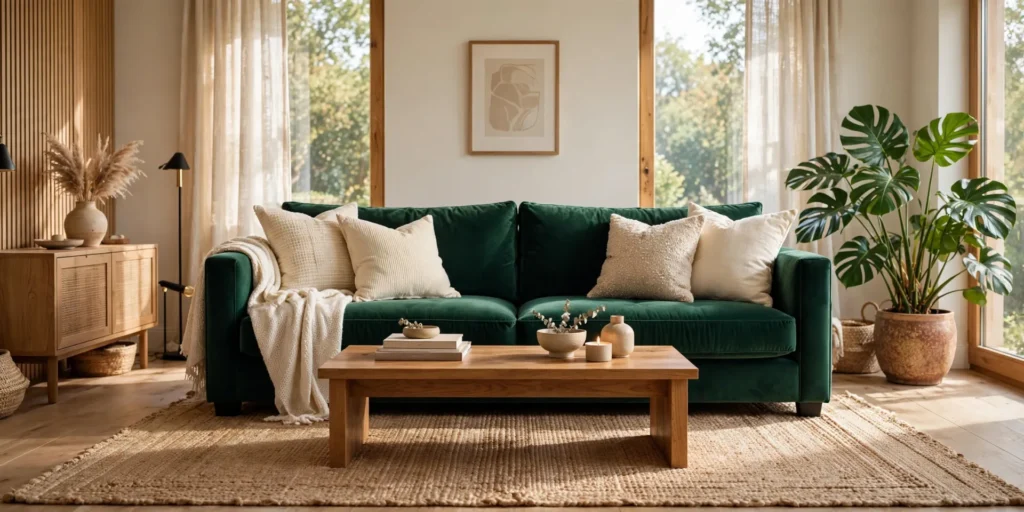

My sister called me last spring, slightly panicked. She had fallen hard for a deep green velvet sofa at a floor model sale — the kind of price you don’t walk away from — and now she was standing in her beige living room wondering if she’d just made a terrible mistake. “Is it going to look like a forest exploded in here?”
Six months later, her living room is the one every guest photographs. That green couch turned out to be the best decorating decision she’s ever made, and the reason is simple: a green sofa is one of the most forgiving statement pieces you can buy. It reads as a neutral with personality — it works with warm woods, creams, blacks, brass, and just about every natural texture out there.
I helped her style it, and in the process I picked up a lot of practical lessons — including a few expensive mistakes you can avoid. Here are 13 green couch living room ideas, from cozy and classic to bold and moody, with the exact styling tricks that make each one work in a real home.
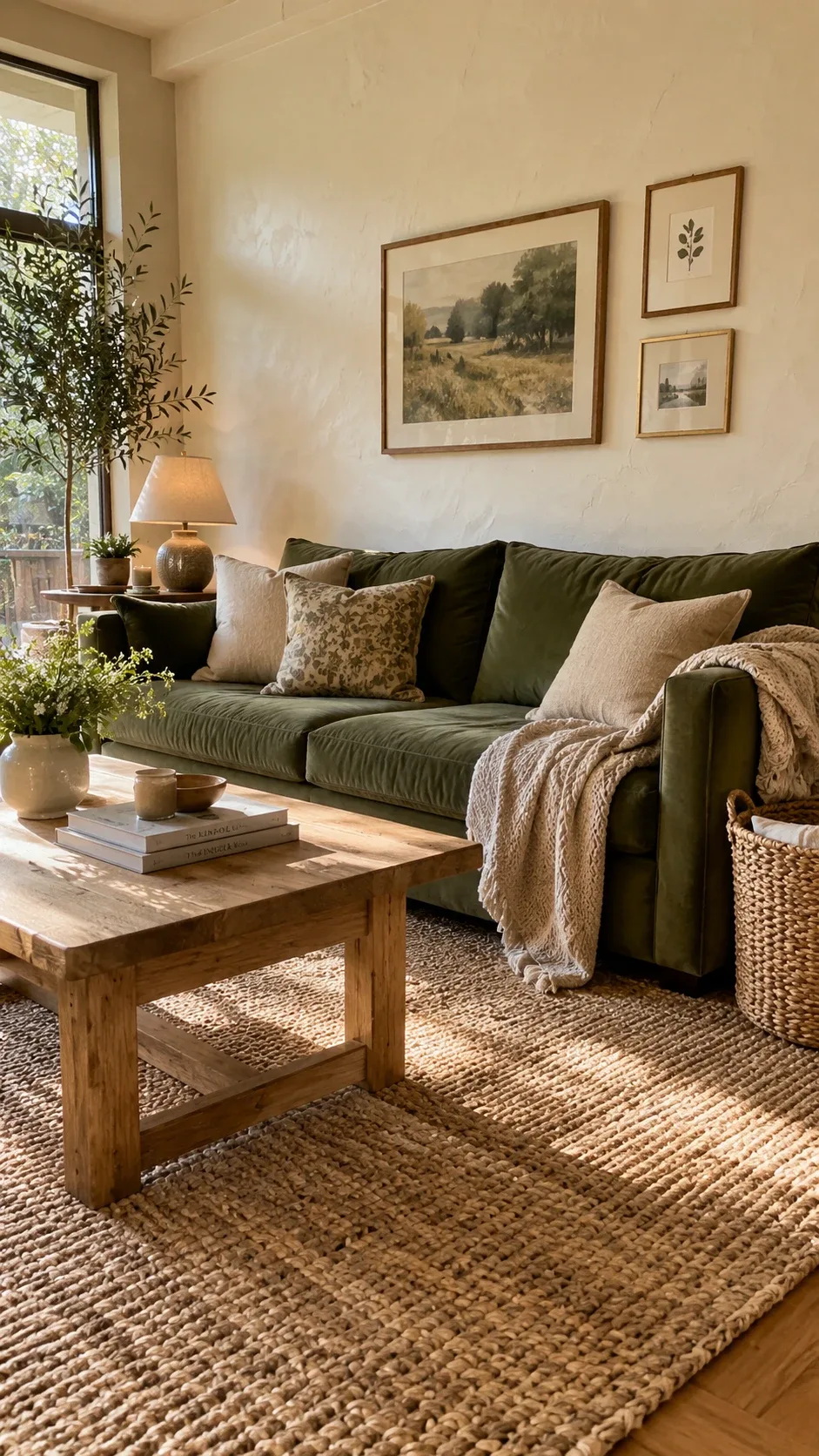
1. Pair an Olive Green Couch With Warm Wood
This is the combination I recommend to anyone who feels nervous about a colored sofa. Olive green and warm wood (think oak, walnut, or rattan) share earthy undertones, so they blend instead of competing. In my sister’s case, swapping her old gray-laminate coffee table for a warm oak one was the single change that made the green sofa stop looking “loud” and start looking intentional.
Keep the wood tones warm rather than gray — cool gray wood can drain the life out of olive upholstery and make it look dull and flat. Let the couch stay the hero of the room and repeat the warmth through smaller pieces: a woven basket by the arm, wooden picture frames, a rattan side table.
2. Go Moody With an Emerald Green Sofa
If you love dramatic interiors, emerald green was practically made for moody rooms. The trick is contrast: put the deep green sofa against darker surroundings — charcoal walls, deep brown wood, aged brass lighting — and then keep it readable with lighter textiles. A cream throw draped over one arm and a pale rug underneath stop the whole thing from collapsing into a dark cave.
One mistake people make here is using cool white bulbs. Swap them for warm-toned bulbs (2700K or lower) and the emerald velvet suddenly looks richer and more expensive. Lighting is doing half the work in a moody green room, so don’t treat it as an afterthought.
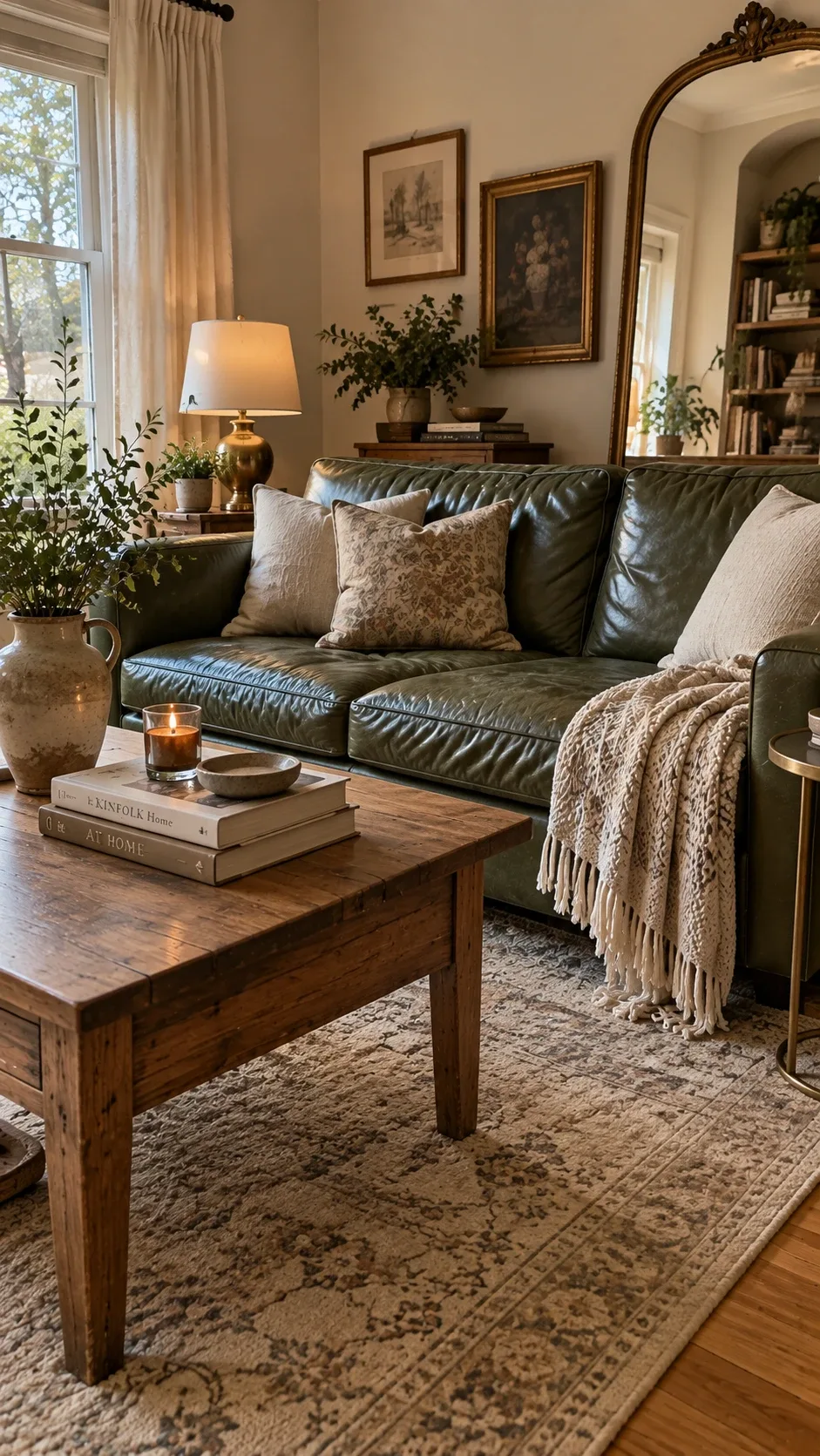
3. Style a Green Leather Couch With Vintage Pieces
Green leather has real character — it wears beautifully and only looks better with age. Surround it with vintage-inspired pieces: a distressed wood coffee table, an antique-style mirror, a faded patterned rug, aged metal accents. The leather already carries a lot of visual weight, so balance it with lighter curtains and soft linen cushions.
Don’t overdo the distressed finishes, though. Two or three vintage elements give you the collected-over-time look; ten makes the room feel like a prop warehouse. I learned this the hard way helping a friend — we pulled three items back out and the room instantly breathed again.
4. Brighten It Up With Cream and Ivory
This is the safest high-reward pairing in the book. Cream and ivory brighten a green sofa without competing with it, which makes this combo perfect for smaller living rooms where a dark couch could otherwise feel heavy. Layer at least three different neutral textures — boucle, linen, wool, woven jute — because a room built entirely from smooth cream fabrics can look oddly unfinished.
Center the green sofa over a pale rug, pile on cream cushions in different textures, and keep the curtains in a light linen so the windows stay bright. Light wood furniture reinforces the airy palette without adding another color to juggle.
5. Add Terracotta Accents for an Earthy Contrast
Green and terracotta sit opposite each other on the color wheel, which is exactly why they look so good together — but only in the right dose. The mistake is scattering terracotta everywhere. Instead, concentrate it in two or three intentional pieces: a pair of cushions, a ceramic planter, one piece of artwork, or a rug pattern that includes the tone.
Choose dusty terracotta over bright orange for a more grown-up result. This pairing shines with olive, moss, and muted forest greens — the earthier your sofa shade, the more natural the terracotta will feel.
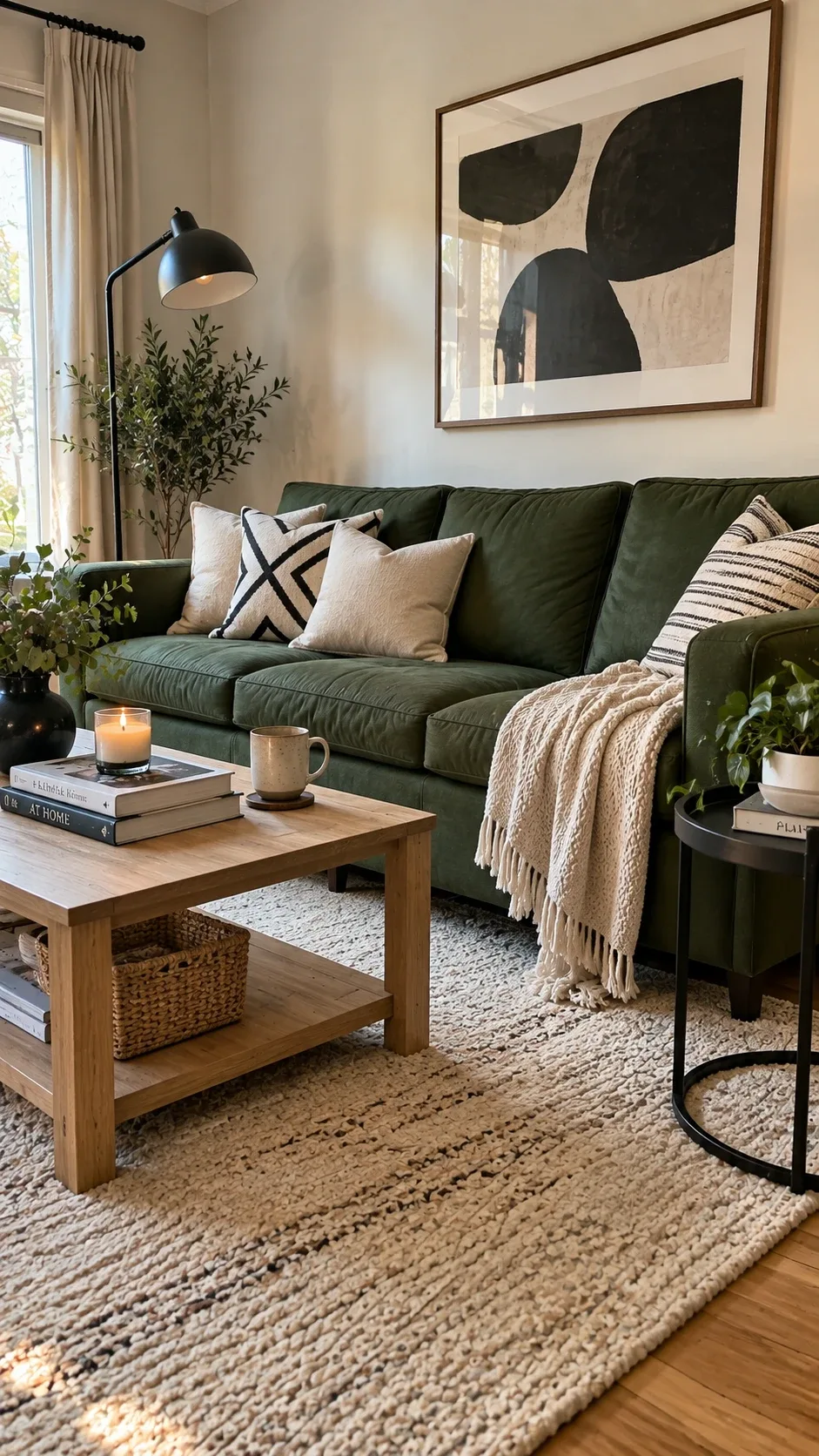
6. Try a Modern Black-and-White Setting
For a cleaner, more contemporary feel, let a green couch be the single pop of color in a black-and-white room. Pale rug, light walls, and then black introduced through lighting, side tables, picture frames, or hardware. The green becomes a deliberate focal point instead of fighting a rainbow of accessories.
The key is repeating black in several small places rather than one oversized black item — a floor lamp here, a side table there, a frame on the wall. That rhythm is what keeps the room balanced. Keep patterns limited to one rug or one artwork so the look stays crisp.
7. Build a Cozy Reading Corner Around It
Not every living room needs to orbit the television. If your green couch is a comfortable three-seater or loveseat, try floating it near a window with a floor lamp, a small side table, and a stack of books. It instantly becomes the reading spot everyone fights over.
Position the couch where it gets good natural light without blocking the main walking path — measure the path, because this is where people trip up. The side table should be big enough for a mug and a book but small enough not to crowd the couch. Layer a soft throw over the arm and you’re done. My sister’s version of this has claimed her Sunday mornings permanently.
8. Soften It With Dusty Pink Accents
This one surprises people, but muted blush or dusty pink against green is a genuinely refined combination — think of a garden in late spring. The rule is to keep the pink subdued (dusty rose, blush, mauve), never bubblegum, and to use it in small doses — roughly 10 to 15 percent of your visible accessories.
Balance both colors with cream, natural wood, and warm metallics so the room feels layered rather than colorful. Two dusty pink cushions and one small piece of artwork are plenty; the green sofa should still clearly be in charge.
9. Match Olive Leather With Vintage Brass
Olive green leather and vintage brass is a combination that just feels expensive. Brass lamps, framed mirrors, and a few small decorative objects warm up the leather and keep the room from tipping too rustic. Anchor the couch on a neutral rug, add one substantial wood table, and repeat the brass finish in one smaller accent — a tray, a picture frame, a candle holder.
Choose aged or brushed brass over highly polished gold for a relaxed, lived-in feel. Polished gold can push the whole room toward formal; brushed brass keeps it inviting.
10. Echo the Green With Botanical Prints
Botanical artwork is the easiest way to tie a green couch into the rest of the room without buying matching accessories. Hang a large botanical print — or a small gallery of them — above a console or on the wall opposite the sofa. Choose prints with several natural shades rather than ones that match your sofa color exactly; that variation is what makes the room feel designed instead of decorated-by-numbers.
One caveat: don’t repeat the same leaf print on the cushions, the curtains, and the wall art. One botanical focal point is plenty. Natural wood, linen cushions, and a woven basket complete the organic feel.
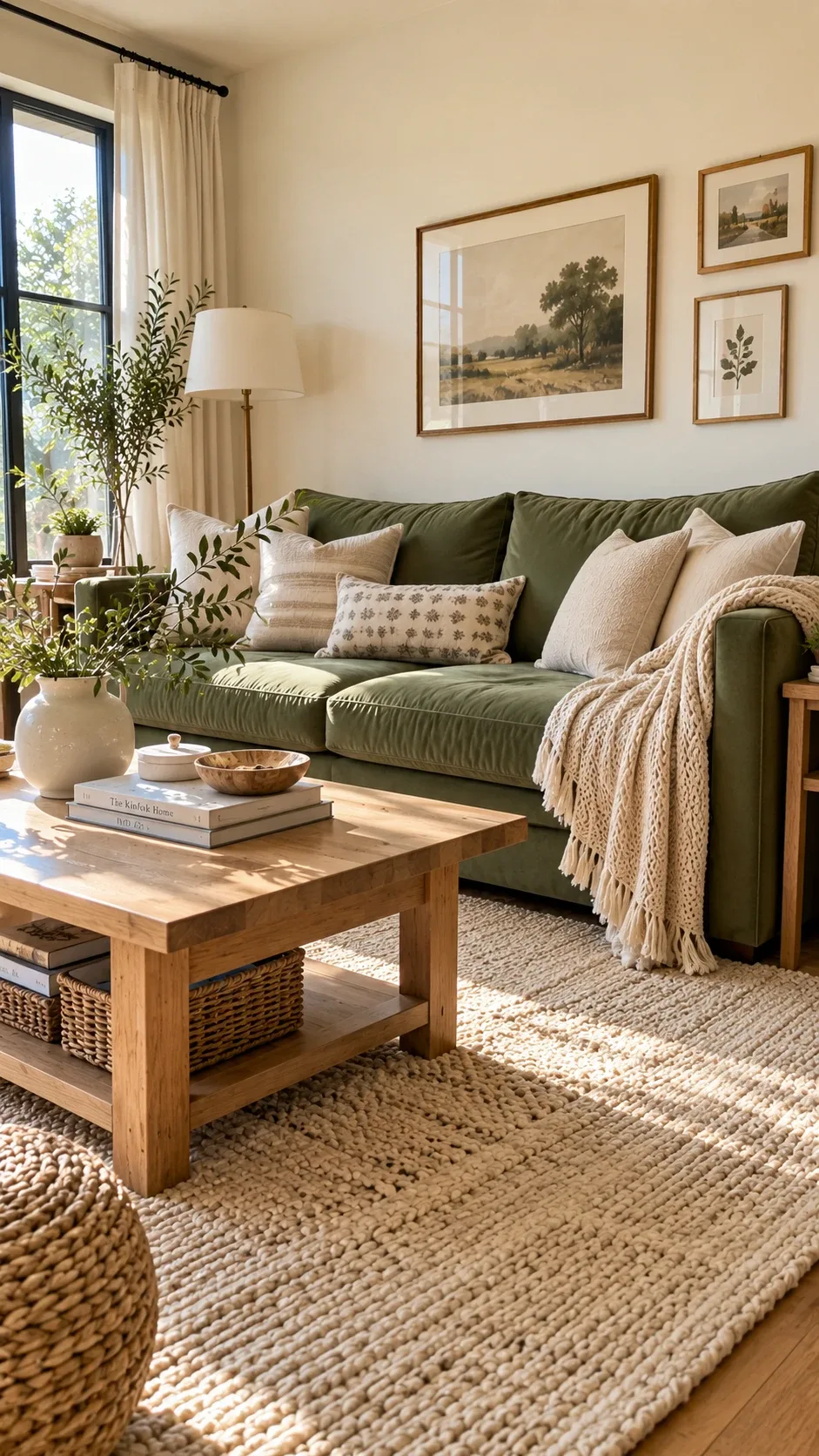
11. Make It Work in a Small Living Room
Yes, a green couch can absolutely work in a small living room — you just have to be more deliberate. Choose a sofa with exposed legs, a slim profile, and moderate seat depth. Pair it with a glass or narrow coffee table, pale walls, and a rug that’s large enough to connect the seating area but doesn’t swallow the floor.
The biggest mistake is buying too deep. Measure every piece before it comes home — in a small room, a few extra inches of sofa depth can eat your entire walking path. A wall mirror placed to reflect natural light will double the sense of space for the price of one frame.
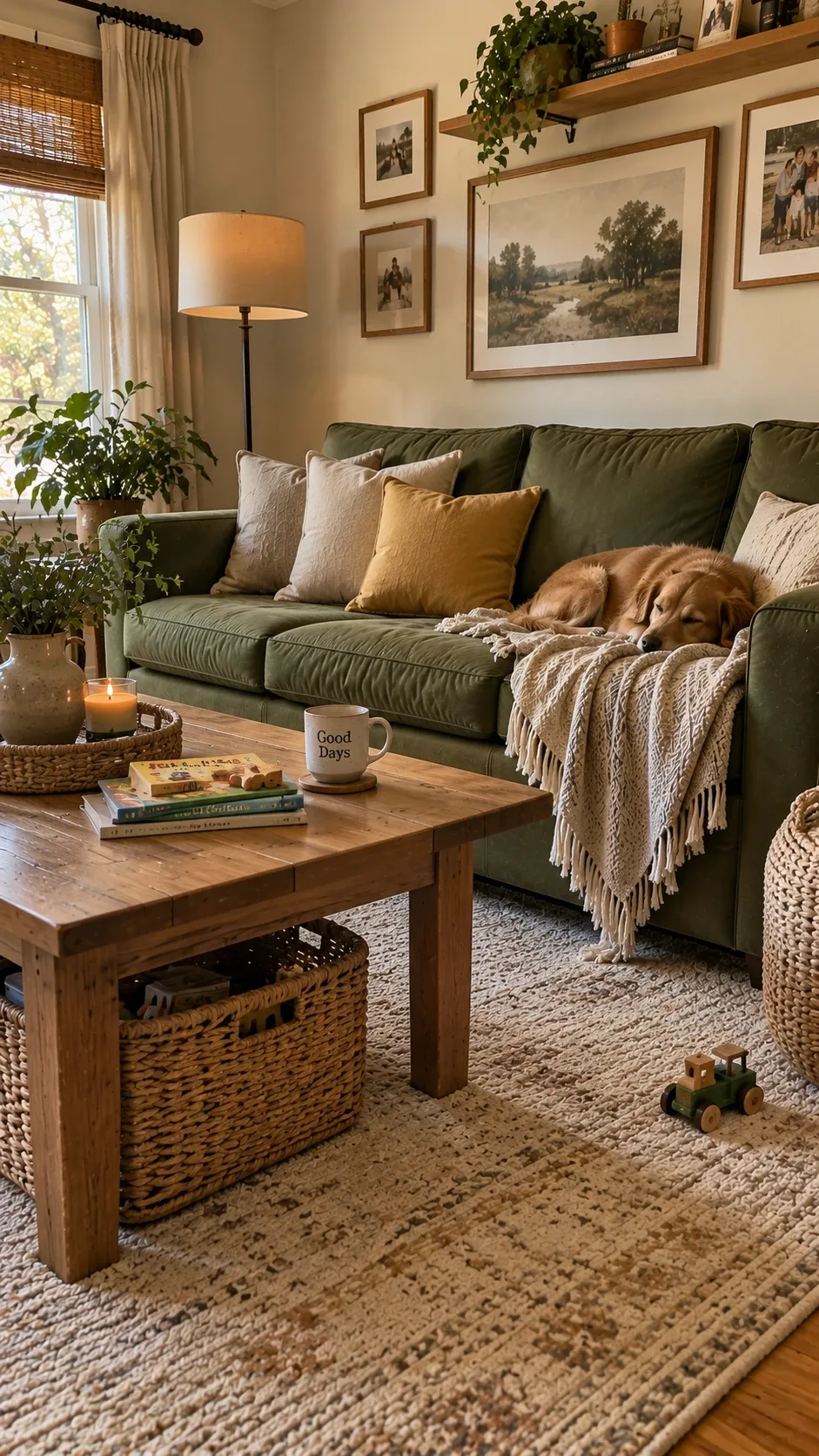
12. Create a Relaxed Green and Beige Family Room
For a room that actually gets lived in, combine a durable green couch with beige, tan, and natural textures. These colors hide everyday wear far better than an all-white palette while keeping the room bright. This is the setup to choose if you have kids, pets, or a dog who believes the couch is his (speaking from my sister’s experience).
Layer washable throws, practical woven baskets, and sturdy wood tables. Prioritize textiles you can throw in the washing machine — beautiful styling is so much easier to maintain when the everyday materials are practical. Leave enough open space around the coffee table for comfortable movement.
13. Keep It Soft and Scandinavian
If you like the calm of Scandinavian design but find all-white rooms a bit cold, a soft green couch is your answer. Surround it with pale wood, warm white walls, clean-lined furniture, and restrained decoration. The green becomes a gentle focal point rather than a dramatic statement.
Use several soft neutrals and natural textures — linen, wool, light oak — to add warmth, and choose warm white over icy white for the walls. It works so much better with green upholstery and keeps the Scandinavian look comfortable rather than clinical. One or two plants or a simple piece of artwork provide all the visual interest you need.
Common Mistakes to Avoid With a Green Couch
After styling around green sofas in a few different homes now, here are the mistakes I see most often. First, matching everything to the couch — buying green cushions, green curtains, and green art turns the room into a theme park. Let the sofa be the green and keep everything else complementary. Second, ignoring undertones: a blue-green emerald and a yellow-green olive want different partners, so check your fabric in natural daylight before choosing paint or rugs. Third, going too dark everywhere — even in a moody room, you need light textiles and warm lighting or the green disappears into the shadows. And finally, forgetting texture. Green velvet next to cream velvet next to silk looks flat; mix in jute, wood, linen, and knit and the whole room comes alive.
Final Thoughts
My sister’s panic over her impulse-buy green sofa turned into the room everyone wants to copy, and the lesson I took from it is this: a green couch isn’t a risky choice, it’s a shortcut. It gives you a focal point, a color story, and a personality for the room in one purchase — you just have to style around it instead of against it. Start with one of the ideas above, keep the supporting palette simple, and don’t be afraid to move things around until it clicks. The best version of your living room is usually one furniture shuffle away.


Pingback: 15 Beige Couch Living Room Ideas for a Cozy Home (2026)