
Walk into any salon and ask for lighter hair, and you will hear two words again and again: balayage and highlights. They both add lightness and dimension, but they are not the same technique, they do not cost the same, and they do not grow out the same way. Pick the wrong one and you can end up with more salon visits, more upkeep, and a result that does not suit your hair at all.
This guide compares balayage, traditional highlights, and foilyage side by side, so you can walk into your appointment knowing exactly what to ask for. We cover how each technique works, what it costs, how often you will need to return, how it grows out, and which option suits your hair type, natural colour, and budget.
What Is Balayage?
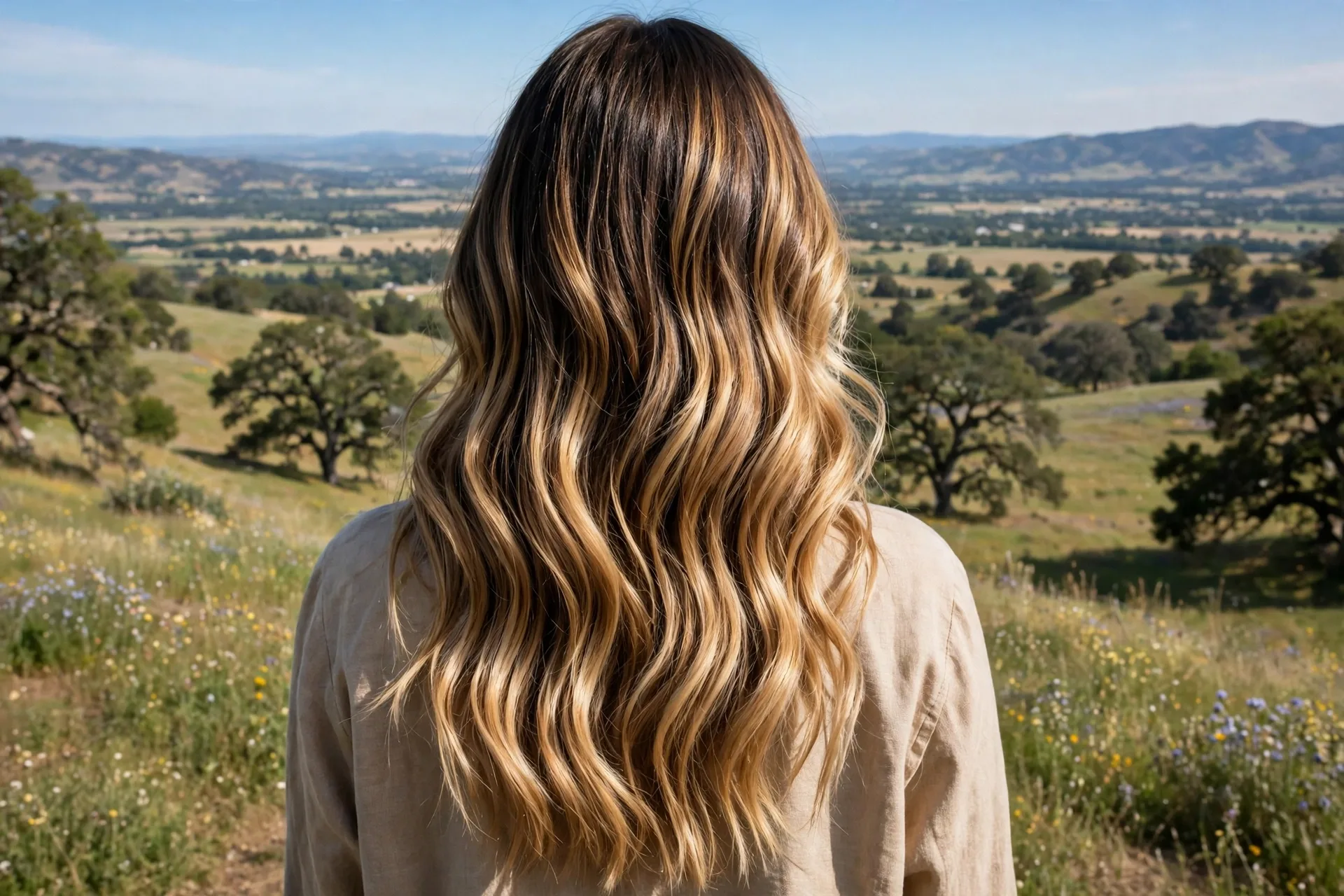
Balayage is a freehand painting technique. The word comes from the French verb meaning “to sweep”, and that is exactly what your colourist does: they sweep lightener onto selected sections of hair by hand, usually keeping the colour softer near the roots and brighter towards the ends.
Because there is no foil and no harsh line at the root, balayage grows out softly. The result looks sun-kissed and natural, as though your hair lightened gradually over a summer outdoors. It works best when you want a soft, blended finish rather than a sharp contrast.
Balayage suits most hair lengths, but it truly shines on medium to long hair, where there is enough length for the colour to melt from dark to light. On very short hair, there is less room for that gradient, so the effect can be harder to see.
What Are Traditional Highlights?
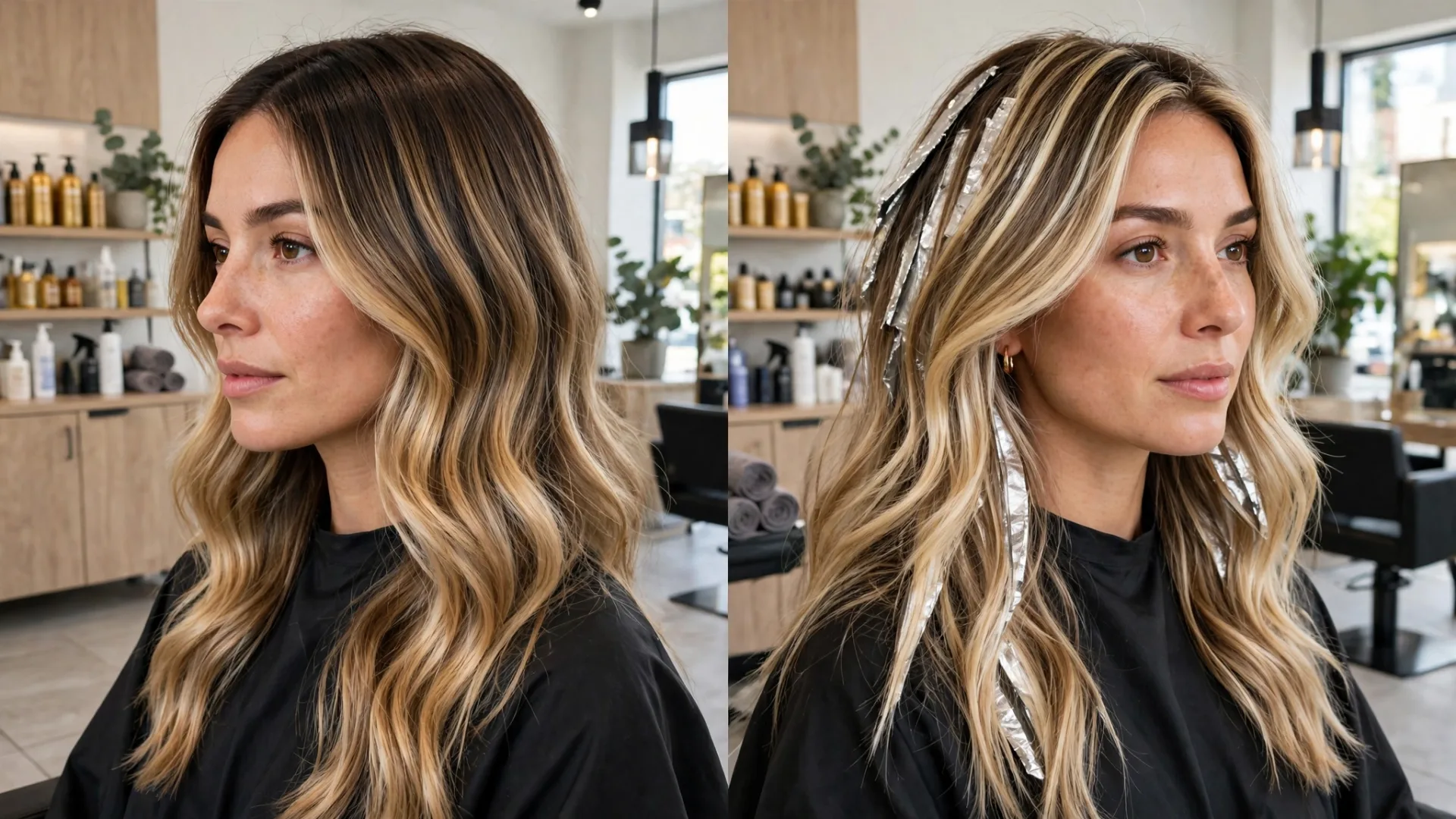
Traditional highlights use foils. Your colourist weaves out fine sections of hair, paints them with lightener or colour, and wraps each section in foil. The foil traps heat, which helps the lightener lift the hair further and more evenly.
The result is more uniform and more defined than balayage. Highlights tend to start closer to the root, so the lightness is visible right from the top of the head, and the contrast between light and dark strands is clearer. If you want noticeably lighter hair all over, or a bright blonde finish, foils usually get you there faster.
Highlights also give your colourist more control. They can place lightness exactly where it frames your face, add brightness around the parting, or keep the underneath darker for depth. That precision is why highlights remain the go-to choice for a classic blonde look.

What Is Foilyage?
Foilyage sits between the two. It uses the freehand, sweeping placement of balayage, but the painted sections are wrapped in foil afterwards. The foil gives extra lift, so foilyage can take hair much lighter than open-air balayage while keeping that soft, lived-in root.
Think of it as balayage with more power. It is a good middle ground if you love the soft grow-out of balayage but your hair is dark, or you want a brighter blonde than balayage alone can reach in one session.
Balayage vs Highlights: The Key Differences
Here is how the three techniques compare at a glance:
| Feature | Balayage | Traditional Highlights | Foilyage |
|---|---|---|---|
| Application | Painted freehand, no foil | Painted and wrapped in foil | Painted freehand, then wrapped in foil |
| Root finish | Soft, diffused, no harsh line | Closer to the root, more defined | Soft root with brighter ends |
| How light it goes | Moderate lift, usually 2 to 3 levels | Strong lift, can go very blonde | Strong lift with a blended root |
| Grow-out | Very gentle, no obvious line | Visible regrowth line after 6 to 8 weeks | Gentle, similar to balayage |
| Salon visits | Every 3 to 4 months | Every 6 to 8 weeks | Every 3 to 4 months |
| Best for | Natural, low upkeep lightness | Bright, even, all-over lightness | Dark hair going blonde, softly |
Cost Comparison: What Should You Expect to Pay?
Prices vary a lot by salon, city, and hair length, but the pattern is fairly steady. A full head of traditional highlights is often priced per head or per hour, and because foiling takes time, a full head can be one of the pricier colour services. Balayage is usually priced similarly, sometimes slightly higher per session, because it is a skilled freehand technique that cannot be rushed.
The real cost difference shows up over a year, not in a single visit. Highlights need touching up every six to eight weeks to keep the regrowth line under control, so you may pay for six or more appointments a year. Balayage clients often return only three or four times a year, with a toner or gloss in between. Even if one balayage session costs a little more, the yearly total is often lower.
Foilyage tends to sit at the higher end per session, since it combines two steps, but its appointment rhythm matches balayage, so the yearly cost lands in a similar range. Always ask whether toner, gloss, and a bond-building treatment are included in the quoted price, or charged on top, so you are not surprised at the till.
Upkeep and Grow-Out: The Part Most People Forget
Grow-out is where balayage wins for most people. Because the colour starts softly away from the root, new growth blends in rather than drawing a line across your head. Many balayage clients stretch appointments to four months without the grow-out looking untidy.
Highlights grow out with a visible line. That is not a flaw, it is simply how the technique works, but it does mean more frequent appointments if you like a tidy finish. If you wear your hair parted in the same place every day, regrowth shows there first.
Between appointments, all three techniques benefit from the same basics: a purple shampoo once a week if you are blonde and fighting brassiness, a deep conditioning mask every week or two, and heat protection before styling. Toner refreshes every six to eight weeks can keep balayage and foilyage looking fresh without a full colour session.
Which Technique Suits Your Hair Type?
Fine hair
Fine hair can look fuller with well-placed lightness, because the contrast between tones creates the illusion of depth. Highlights placed through the top layers work well, but keep them fine rather than chunky, so the result looks soft rather than stripey. Balayage also works, especially if you want movement without an obvious colour change at the root.
Thick or coarse hair
Thick hair takes colour well and shows off the balayage gradient beautifully, because there is plenty of hair for the blend to travel through. Foilyage is often the smarter pick for thick, dark hair that needs real lift, since open-air balayage alone may not lift far enough in one sitting.
Curly and wavy hair
Curls break up colour naturally, so balayage tends to look especially soft and natural on curly hair. Highlights can work too, but the placement matters more: colour painted onto curls in their natural pattern avoids harsh lines when the hair moves. Ask your colourist to cut and colour with your curl pattern in mind, not against it.
Short hair
On a pixie or short bob, there is less length for a gradient, so traditional highlights or a partial highlight placement often show up better than balayage. A skilled colourist can still paint a soft balayage onto a bob, but expect a subtler effect.
Which Suits Your Natural Colour?
Dark brown or black hair
Going from dark to light takes patience. Balayage gives a soft caramel or honey result in one session, while a bright blonde usually needs foilyage or full highlights, sometimes over two sessions. Going lighter in stages protects the hair and avoids orange tones.
Medium brown hair
Medium brown is the sweet spot for balayage, because the lift needed for a honey or golden blonde is modest. Highlights also lift easily from this base, so the choice comes down to the finish you prefer: soft and sun-kissed, or brighter and more even.
Blonde or light brown hair
Lighter bases can reach bright blonde with any of the three techniques. Balayage adds dimension without losing your natural depth, while highlights give that classic all-over blonde brightness. If your hair is already light, ask about a partial highlight or a half head of balayage to keep costs and upkeep down.
Red hair
Red hair lifts warm, so a colourist will usually aim for copper, strawberry, or golden tones rather than ash blonde. Balayage keeps the warmth looking natural, while foils can push the lightness further if you want a brighter copper-blonde blend.
Balayage vs Highlights by Budget
If your budget is tight and you want the lowest yearly spend, balayage usually wins, because fewer appointments are needed. A partial balayage, focused on the face-framing pieces and the ends, costs less than a full head and still gives a visible refresh.
If you want maximum lightness and do not mind regular appointments, highlights are worth the spend, since they deliver the brightest result most reliably. Ask about a half head or a “top-up” appointment between full sessions, which many salons offer at a lower price.
Foilyage sits in the middle on yearly cost and at the top on single-session price. It is worth it when you want blonde brightness with a soft grow-out and you would rather pay more per visit than visit more often.
Questions to Ask Your Colourist
Take these questions to your appointment, and you will get a result that matches what you pictured:
- How many levels lighter can my hair safely go in one session?
- Will the result be warm, neutral, or cool, and what toner will you use?
- How will this grow out, and when should I book my next visit?
- Is toner or gloss included in the price, and how often will I need it?
- What should I use at home to stop brassiness and keep the hair healthy?
- Can you show me photos of this technique on hair like mine, not just on models?
Bring reference photos too, but pick photos of people with a similar skin tone and natural hair colour to yours. A balayage that looks golden on one person can look brassy on another, and your colourist can adjust the toner to suit you.

Common Mistakes to Avoid
The most common mistake is asking for balayage but expecting a bright, root-to-tip blonde. Balayage is designed to be soft, so if brightness is your goal, say so clearly, and let your colourist steer you towards foils or foilyage.
Another mistake is skipping the toner. Freshly lightened hair often pulls warm, and toner is what shifts it to the shade you actually wanted. If your colour looks too orange or yellow after a session, a toner appointment usually fixes it without more lightening.
Finally, do not bleach at home to save money and then ask a salon to fix it. Corrective colour costs more than the original service would have, and over-processed hair may not lift evenly again for months. If budget is tight, a partial service done well beats a full service done badly.
So, Which One Is Right for You?
Choose balayage if you want a natural, low upkeep look with a gentle grow-out and you are happy with soft, sun-kissed lightness. Choose traditional highlights if you want bright, even lightness from the root, a classic blonde finish, and you do not mind visiting the salon every six to eight weeks. Choose foilyage if you have darker hair, want real blonde brightness, but still want that soft, lived-in root.
There is no single winner here. The right technique is the one that fits your hair, your colour goal, your budget, and how often you honestly want to sit in a salon chair. Talk it through with your colourist, agree on the grow-out plan before the first foil or brush stroke, and you will leave with colour you still love three months later.