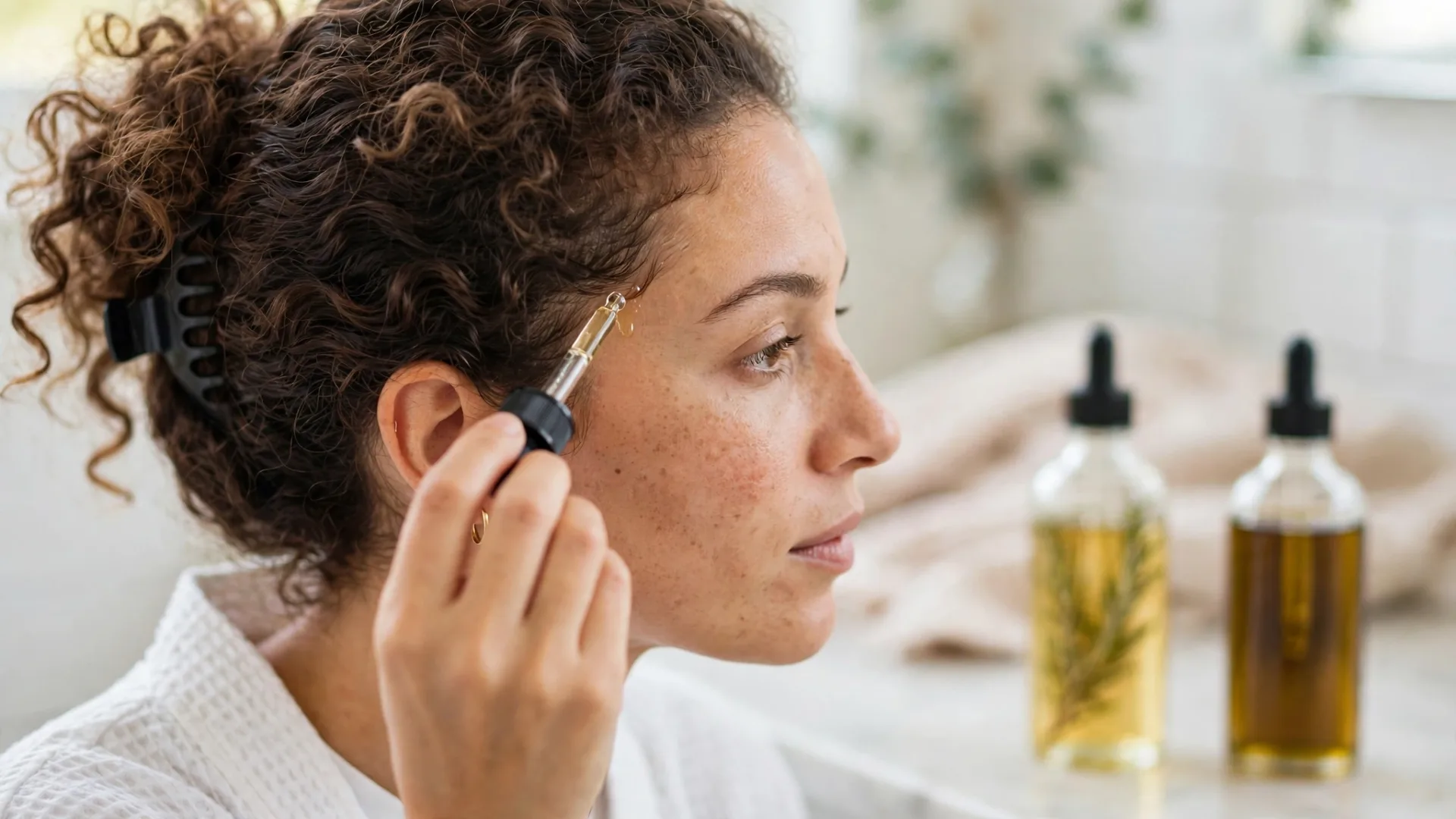

Batana oil has quietly become one of the most talked-about hair oils for growth, and for good reason. This rich, golden oil from the American palm nut has been used for generations in Honduras to keep hair thick, shiny, and strong.
If you have been wondering how to use batana oil for hair growth the right way, this guide walks you through the full routine, step by step, with exact amounts and timing so you can start tonight.
Quick Answer Box: How to Use Batana Oil for Hair Growth
- Warm 1 to 2 tablespoons of batana oil until it turns liquid, then massage it into your scalp for 5 minutes with your fingertips.
- Work the remaining oil through the lengths and ends, leave it on for 30 minutes to overnight, then wash it out with a gentle shampoo.
- Repeat 2 to 3 times a week for at least 8 to 12 weeks to see fuller, stronger, shinier hair.
What Is Batana Oil and Why It Works for Hair Growth
Batana oil comes from the nuts of the American palm tree, which grows wild in the rainforests of Honduras. The Miskito people, who live in that region, have pressed this oil by hand for hundreds of years and are famous for their long, thick hair.
The oil is packed with oleic acid, a fatty acid that helps the oil sink into the hair shaft instead of sitting on top of it. It also carries vitamin E and natural antioxidants that help protect the scalp and the hair from daily wear. Together, these nutrients soften dry strands, calm a flaky scalp, and make breakage less likely.
Here is the honest part: no oil can force your hair to grow faster than your body allows. Hair grows about half an inch a month on average. What batana oil does is create the best conditions for that growth. A healthy, moisturized scalp sheds less hair, and stronger strands break less, so more of the length you grow actually stays on your head. That is how people see real thickness and length over time.
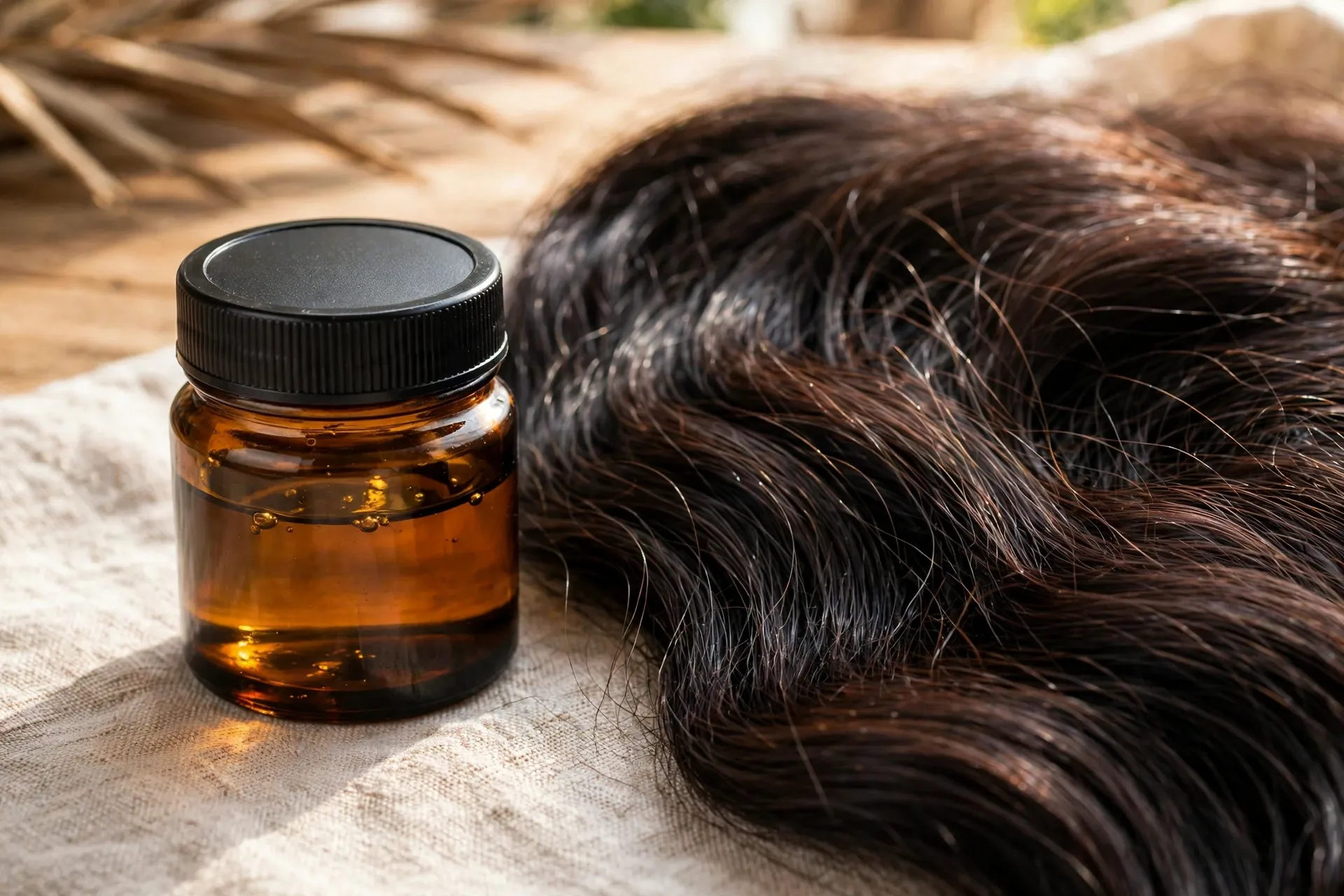
Batana oil is solid at room temperature, a bit like coconut oil or shea butter. It melts into a golden liquid with a little warmth, and it has a mild, nutty smell that most people find pleasant. Pure, unrefined batana oil has a deep amber color. If the oil you bought is pale or almost clear, it may be refined or mixed with another oil, so look for a brand that lists 100% batana oil as the only ingredient.
What You Will Need
You do not need a drawer full of tools to use batana oil. Gather these items before you start so the routine stays simple:
- 100% pure batana oil — 1 to 2 tablespoons per treatment, depending on your hair length and thickness.
- A small glass bowl — for warming the oil in a hot water bath.
- A wide-tooth comb — for spreading the oil evenly without snapping strands.
- A soft towel or an old t-shirt — to protect your clothes and pillow if you leave the oil in overnight.
- A shower cap — optional, but helpful for locking in warmth while the oil works.
- A gentle, sulfate-free shampoo — for washing the oil out without stripping your hair.
- A hair clip — to keep oiled sections out of your face.
That is everything. No special brushes, no expensive devices. The oil and your fingertips do most of the work.
How to Use Batana Oil for Hair Growth: The Step-by-Step Routine
Follow these seven steps in order. The whole routine takes about 15 minutes of hands-on time, plus the time the oil sits on your hair.
Step 1: Do a Quick Patch Test First
If this is your first time using batana oil, test it on a small patch of skin before you put it all over your scalp. Rub a pea-sized amount on the inside of your wrist or behind your ear and wait 24 hours.
Redness, itching, or a rash means your skin does not like it, and you should skip it. Most people have no reaction at all, but nut-based oils can bother people with tree nut allergies, so this quick check is worth the wait. If you have a known nut allergy, talk to your doctor before trying batana oil.
Step 2: Warm the Oil Until It Melts
Scoop 1 tablespoon of batana oil into a small glass bowl if your hair is short to medium length. Use 2 tablespoons if your hair is long or very thick. Place the bowl in a larger bowl of hot water for 2 to 3 minutes until the oil turns fully liquid and golden.
Do not microwave the oil. A microwave heats unevenly and can create hot spots that burn your scalp. The warm water bath keeps the temperature gentle and even. The oil should feel warm on your wrist, never hot. If it feels too warm, let it cool for a minute before you use it.
Pro tip: Warm oil spreads much more easily than cold oil, and the gentle heat helps open the hair cuticle slightly so the oil can sink in. This one small step makes the whole treatment work better.

Step 3: Massage the Oil Into Your Scalp for 5 Minutes
Pour a small amount of the warm oil into your palms and rub them together. Then use your fingertips, not your nails, to massage the oil into your scalp in slow, small circles. Start at the front hairline and work your way back to the nape of your neck.
Keep the massage going for a full 5 minutes. This step matters more than most people think. Massaging boosts blood flow to the hair follicles, which brings oxygen and nutrients right where new hair grows. It also makes sure the oil reaches the scalp instead of just coating the top layer of hair.
Use about half of your oil for the scalp. Add more to your palms as needed, a few drops at a time. You want the scalp lightly coated, not dripping. If oil is running down your forehead, you have used too much.
Pro tip: A scalp massage also feels wonderful after a long day. Do it slowly, breathe, and treat it as a small moment of self-care rather than a chore you rush through.
Step 4: Work the Oil Through the Lengths and Ends
Once your scalp is covered, take the rest of the warm oil and smooth it down the lengths of your hair, from the middle to the ends. The ends are the oldest and driest part of your hair, so give them a little extra attention.
Run a wide-tooth comb gently through your hair to spread the oil evenly. Start from the ends and work upward in short strokes so you do not pull or snap tangled strands. Then gather your hair into a loose bun or braid and clip it up.
If your hair is very dry or damaged, add an extra half teaspoon of oil to the last 2 inches of your ends. This is the part that splits first, and a little extra moisture helps protect it between trims.
Step 5: Let the Oil Sit for 30 Minutes to Overnight
For a quick treatment, leave the oil on for at least 30 minutes. This is enough time for the fatty acids to coat and soften the hair. Cover your hair with a shower cap to keep the warmth in and protect your clothes.
For a deeper treatment, leave the oil on for 2 to 4 hours. For the deepest result, leave it overnight. Wrap your hair in a soft towel or sleep on an old pillowcase you do not mind staining. Batana oil can mark fabric, so use a towel you keep just for hair treatments.
More time is better, but only up to a point. There is no added benefit in leaving it on for more than one night, and your hair will not absorb more oil after about 8 hours.
Step 6: Wash It Out With a Gentle Shampoo
When your time is up, wet your hair and work a gentle, sulfate-free shampoo into your scalp before you add a lot of water. Shampooing oiled hair while it is still fairly dry helps the shampoo grab the oil and lift it away.
Rinse well, then shampoo a second time if your hair still feels heavy or coated. Two light washes are better than one harsh wash. Follow with your usual conditioner, focusing on the lengths and ends.
Skip the extra conditioner on your scalp. Your scalp has just had a rich oil treatment, and adding conditioner there can leave it feeling greasy. Let your hair air dry when you can, or use the lowest heat setting on your dryer.
Step 7: Dry, Style, and Enjoy the Shine
Once your hair is dry, you should notice the difference right away. Hair treated with batana oil feels softer, looks shinier, and is easier to comb. Flyaways settle down, and the ends look smoother.
You can also use a tiny amount of batana oil as a finishing touch. Rub 2 to 3 drops between your palms and smooth them over the surface of dry hair to tame frizz and add shine. Do not use more than a few drops for this, or your hair will look greasy instead of glossy.
That is the full routine. Seven steps, about 15 minutes of hands-on time, and a result you can feel the same day.
How Often Should You Use Batana Oil for Hair Growth?
For most people, 2 to 3 times a week is the sweet spot. This gives your scalp regular nourishment without overloading your hair with oil.
If your hair is very dry, curly, or damaged from heat styling or color, start with 3 times a week. If your hair is fine or gets oily fast, start with once a week and see how your hair responds. You can always add a session later.
Use it less often if your scalp feels itchy or your hair looks limp and heavy. That usually means oil is building up, and your hair needs a break. A clarifying shampoo once every two weeks helps wash away any buildup so the oil can keep working.
Here is a simple weekly plan to follow:
- Monday: Full batana oil treatment, leave on for 2 hours, wash out.
- Thursday: Scalp-only massage with 1 teaspoon of oil, leave on for 30 minutes, wash out.
- Saturday or Sunday: Overnight treatment before your regular wash day.
Stick to a plan like this for 8 to 12 weeks before you judge the results. Hair grows slowly, and consistency is what turns a good oil into visible growth.
Batana Oil Routine for Different Hair Types
Batana oil works for most hair types, but the amount and the timing change a little depending on your hair.
Fine Hair
Fine hair gets weighed down fast, so use less oil. Start with 1 teaspoon for the scalp and 1 teaspoon for the lengths. Keep the oil on for 30 to 60 minutes only, and always shampoo twice. Skip the overnight treatment unless your ends are very dry, and keep the oil away from your roots on the second day if you plan to style it.
Thick or Coarse Hair
Thick hair drinks up oil, so use the full 2 tablespoons and do not be shy about the ends. Leave the oil on for 2 to 4 hours or overnight. Thick hair can handle 3 treatments a week without looking greasy, and it often shows the biggest change in softness.
Curly and Coily Hair
Curly hair tends to be drier because natural oils from the scalp travel slowly down the curls. Batana oil is a great match here. Use 1 to 2 tablespoons, focus on the lengths and ends, and leave it on for at least 2 hours. Many people with curly hair use it as a pre-shampoo treatment before wash day, and a few drops as a curl refresher on dry hair between washes.
Color-Treated or Heat-Damaged Hair
Color and heat leave the hair cuticle rough and open, which is why damaged hair feels dry and looks dull. Batana oil smooths that surface and seals in moisture. Use it 2 to 3 times a week, leave it on for at least an hour, and always pair it with a heat protectant when you style. You should see the shine come back within a few weeks.

Common Mistakes to Avoid
Batana oil is simple to use, but a few common mistakes can waste the oil or leave your hair looking flat.
Using too much oil. More is not better. Two tablespoons is plenty for most people. Extra oil just makes washing harder and leaves hair limp.
Skipping the wash-out. Batana oil is a treatment, not a leave-in for most hair types. Leaving a full treatment in for days can clog the scalp and cause itching. Wash it out after your chosen time.
Rubbing with your nails. Scratching the scalp with nails can cause tiny cuts and irritation. Fingertips only, in soft circles.
Expecting overnight growth. Hair grows about half an inch a month. Anyone who promises inches in a week is not being honest. Give the routine 8 to 12 weeks of steady use.
Buying fake or mixed oil. Real batana oil is amber-colored and solid at room temperature. If the label lists other oils first, or the price seems far too low, it is probably not pure batana oil. Pure oil costs more because it is pressed by hand in small batches.
Heating the oil in the microwave. A microwave can overheat the oil and damage its nutrients. Use a warm water bath instead.
How Long Before You See Results?
Most people notice softer, shinier hair after the very first treatment. That is the instant effect of the oil coating and smoothing the hair.
Real growth results take longer. After 4 weeks of steady use, you may notice less breakage and fewer split ends. After 8 weeks, your hair may feel thicker at the roots, and your ponytail may feel a little fuller. After 12 weeks, the new length is easier to see, and the shine is hard to miss.
Take a photo of your hair from the back on the day you start, and take another one every 4 weeks in the same light. Hair grows so slowly that you will not notice the change day to day, but the photos will show it clearly. Keep notes on how often you used the oil, too, so you can see what schedule works best for you.
Pair the oil routine with the basics: a balanced diet with enough protein, plenty of water, gentle brushing, and less heat styling. Oil helps a lot, but healthy hair grows from a healthy routine, not from one product alone.
Frequently Asked Questions
Can I leave batana oil in my hair overnight?
Yes, leaving batana oil in overnight is safe for most people and gives the deepest moisture. Protect your pillow with an old towel or a shower cap, and wash it out with a gentle shampoo in the morning. If you have fine hair or an oily scalp, start with 30 to 60 minutes instead and see how your hair feels.
Can I use batana oil on my hair every day?
You can use a few drops on the ends every day as a finishing oil, but a full scalp treatment every day is too much for most people. It can build up on the scalp, weigh hair down, and make it look greasy. Stick to 2 to 3 full treatments a week, and use only 2 to 3 drops as a daily finisher if you like extra shine.
Does batana oil help with hair loss?
Batana oil can help reduce hair loss caused by breakage and a dry, irritated scalp. It strengthens the hair shaft, moisturizes the scalp, and lowers the chance of strands snapping. It is not a treatment for medical hair loss, such as hair loss from hormones, illness, or medication. If you are losing hair in patches or shedding heavily for more than a few weeks, see a doctor or a dermatologist to find the cause.