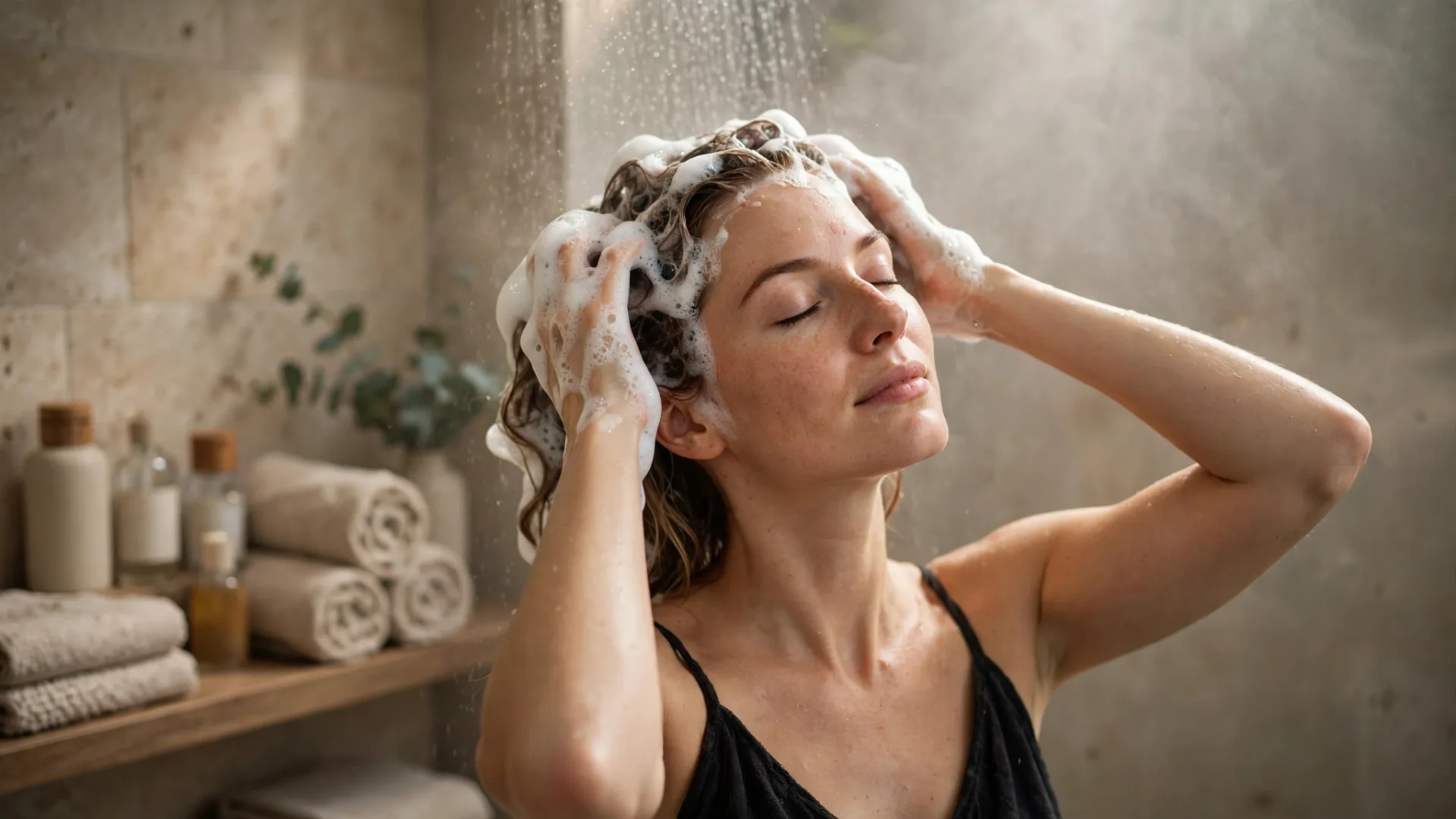

Wavy hair that falls between straight and curly has a personality of its own. Type 2A and 2B waves can look soft, bouncy, and full of movement one day, then fall flat and frizzy the next — and the difference usually comes down to how much product you use, not how little effort you put in.
This routine is built for 2A and 2B hair specifically. It keeps things light, skips the heavy creams and oils that pull waves down, and gives you a simple wash-day method plus a two-minute refresh for day two and three.
Quick Answer Box
- The core routine: Wash with a sulfate-free shampoo, condition only the ends, apply a pea-sized amount of lightweight leave-in, then a golf-ball-sized amount of mousse, scrunch, and diffuse on low heat or air-dry without touching.
- Mousse beats gel for 2A/2B hair: Mousse gives soft hold and volume without weight, while most gels are too heavy for fine waves and leave them stringy or stiff.
- Next-day refresh: Mist waves lightly with water, smooth a tiny drop of leave-in over the frizzy spots, scrunch once, and let it dry — no full rewash needed.
What 2A and 2B Hair Actually Look Like
Before you pick products, it helps to know exactly what kind of waves you have. Type 2A hair is fine, loose, and almost straight at the roots, with a soft S-shape that starts around mid-length. It is the easiest wave type to flatten, because the wave pattern is so gentle that even a small amount of heavy product can pull it straight.
Type 2B hair has a clearer S-shape from the roots down, with more body and a bit more texture. It holds a wave better than 2A, but it is also more likely to frizz, especially at the crown and around the face. Both types share one thing: they are usually fine to medium in thickness, which means weight is the enemy.
A lot of wavy-haired people make the mistake of following curly hair routines. Curly routines are made for hair that needs a lot of moisture and heavy hold to keep its shape. Your waves need the opposite. They need just enough moisture to stay smooth, just enough hold to keep the S-shape, and nothing extra sitting on the strands.
If you are not sure whether you are 2A or 2B, wash your hair, let it air-dry without brushing it, and look at the shape once it is fully dry. Loose bends that start halfway down point to 2A. A clear S-shape that starts closer to the roots points to 2B. Most people have a mix of both, and this routine works for that mix.
Why Most Routines Flatten Waves
Waves fall flat for a handful of reasons, and almost all of them come down to weight or friction. Heavy conditioners, thick curl creams, and rich oils coat fine strands and pull the wave pattern straight while the hair dries. That is why your hair can look great in the shower and limp an hour later.
Brushing dry waves is another common cause. A brush breaks up the wave clumps and turns them into a soft, puffy cloud with no shape. If you want your waves to hold, a wide-tooth comb on wet hair is the only tool you need.
Touching your hair while it dries is the third problem. Every time you run your fingers through damp waves, you break the cast that your styling product is forming. The waves lose their shape before they have a chance to set. The fix is simple: once you scrunch, leave your hair alone until it is fully dry.
Using too much product is the last piece. With 2A and 2B hair, a pea-sized amount of leave-in and a golf-ball-sized amount of mousse is usually enough for shoulder-length hair. If your hair is longer, add a little more mousse, not more leave-in. More product rarely means more waves — it usually means flatter, greasier-looking waves.
The No-Frizz Lightweight Routine, Step by Step
This is the full wash-day routine. It takes about fifteen minutes of hands-on time, plus drying time. Follow the steps in order, and resist the urge to add extra products the first few times — you need to see what the basic routine does before you change anything.
Step 1: Wash With a Light Shampoo
Start with a sulfate-free shampoo that is labeled lightweight, volumizing, or clarifying for fine hair. Massage it into your scalp with your fingertips for a full minute, then rinse well. You do not need to shampoo the lengths — the rinse water running down is enough to clean them.
If your hair feels coated or dull, use a clarifying shampoo once every two to three weeks. Product build-up is one of the quietest wave killers. A single clarifying wash can bring back bounce you thought you had lost.
Skip the idea of co-washing for now. Washing with conditioner alone leaves too much residue on fine wavy hair, and most 2A and 2B hair looks stringy and flat after a few co-wash days in a row.
Step 2: Condition Only the Ends
Apply a lightweight conditioner from the mid-lengths to the ends, and keep it away from your roots. Leave it on for two to three minutes, then rinse with cool water. Cool water helps the hair cuticle lie flat, which means less frizz once your hair dries.
Choose a conditioner that feels light when you rub it between your fingers. If it feels thick and buttery, it will probably weigh your waves down. A good test: if your hair still feels slippery after rinsing, you have used too much or picked a formula that is too rich.
Once a week, swap your regular conditioner for a light protein treatment or a lightweight hair mask. Wavy hair benefits from a little protein, because protein helps the wave pattern hold its shape. Leave the mask on for five to ten minutes and rinse it out fully.
Step 3: Apply a Lightweight Leave-In
While your hair is still dripping wet, squeeze out the extra water gently with your hands — do not rub with a towel yet. Then take a pea-sized amount of lightweight leave-in conditioner and smooth it over your palms. Apply it to the mid-lengths and ends only.
The leave-in is there to smooth frizz and protect your hair from heat, not to add hold. If you use too much, your waves will look greasy at the roots by the afternoon. Start with less than you think you need. You can always add a tiny bit more next wash day.
A good lightweight leave-in feels like a thin lotion or a milky spray, not a thick cream. Spray leave-ins are often the easiest option for fine waves, because they spread evenly and are hard to over-apply.

Step 4: Mousse, Then Scrunch
Mousse is the star of this routine. Take a golf-ball-sized amount of lightweight volumizing mousse and spread it across your palms. Flip your head upside down and smooth it through your hair from roots to ends, then scrunch upward in sections. Scrunching means gathering a section of hair in your palm and squeezing it up toward your scalp, then releasing.
Work in four or five sections so every part of your hair gets product. If you only scrunch the outside layer, the underneath layers will dry straight and your waves will look uneven.
For extra volume at the roots, add a small extra puff of mousse right at the crown and scrunch upward. This is the one spot where a little more product helps, because the crown is where 2A and 2B hair tends to fall flat first.
Step 5: Scrunch With a Microfiber Towel
After the mousse is in, take a microfiber towel or an old cotton t-shirt and scrunch out the extra water. Press the towel up into your hair in sections and hold for a few seconds, then release. Never rub — rubbing creates frizz instantly.
A regular bath towel is too rough for wavy hair. The loops in terry cloth catch on the hair cuticle and rough it up, which is a fast route to frizz. A microfiber towel or a soft t-shirt absorbs water without that friction.
This step also removes some of the product, which sounds bad but actually helps. It takes away the excess so only a thin, even layer stays on your hair. That thin layer is what gives you soft, touchable waves instead of a stiff, crunchy cast.
Step 6: Diffuse or Air-Dry — Do Not Touch
Now you have two options. If you have time, let your hair air-dry completely without touching it. Air-drying gives the softest, most natural-looking waves, but it takes longer and the waves can fall a little flatter.
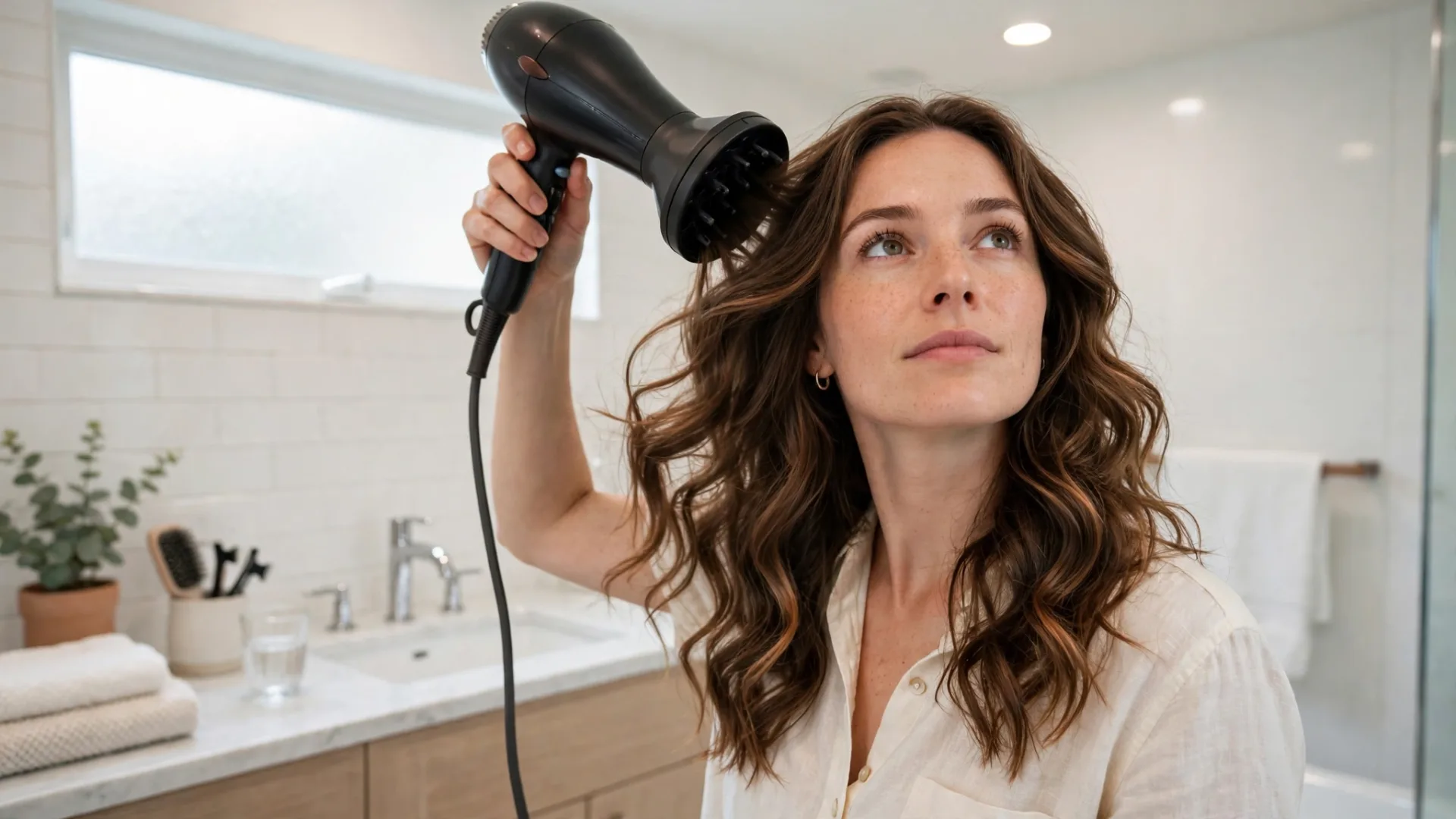
If you want more volume and a stronger wave pattern, diffuse on low heat and low speed. Cup a section of hair into the diffuser bowl, hold it near your scalp for thirty seconds, then move to the next section. Keep the dryer still while each section dries — moving it around blows the waves apart.
Stop diffusing when your hair is about eighty percent dry, then let the rest air-dry. This protects your hair from heat damage and lets the wave pattern settle naturally. Once your hair is fully dry, scrunch out any stiffness with your hands, using a tiny drop of lightweight hair oil on your palms if the ends feel dry.
Mousse vs Gel: Which One Wins for 2A/2B Hair?
This is the question almost every wavy-haired person asks, and the answer is clear for most 2A and 2B hair: mousse wins. Mousse is mostly air, so it adds hold and volume without adding weight. It spreads easily, dries soft, and rarely leaves a sticky feeling behind.
Gel can work, but only if you pick a lightweight gel and use a very small amount. A pea-sized amount of light-hold gel smoothed over the ends can help lock in the wave pattern on humid days. The problem is that most gels are made for curly hair, so they are thick, heavy, and leave a hard cast that fine waves cannot support.
If you love gel and want to keep using it, try this: apply your mousse first, then smooth a tiny amount of gel only over the canopy — the top layer of hair that frizzes first. Scrunch it in gently and let it dry. You get the frizz control of gel without the weight of a full application.
For most people, though, the simplest answer is to skip gel entirely. A good mousse plus a lightweight leave-in gives 2A and 2B hair everything it needs: moisture, hold, and volume, with nothing extra to drag the waves down.
Product callout: Look for a volumizing mousse labeled for fine or wavy hair, alcohol-free if you can find one. For gel, choose a light-hold, water-based formula in a small tube — a little goes a long way, and a big tub will tempt you to use too much.
Product Layering That Does Not Weigh Waves Down
Layering is where most wavy routines go wrong. The rule is simple: thin products first, hold products last, and never more than three layers. For 2A and 2B hair, the three layers are leave-in, mousse, and — only if needed — a tiny amount of gel or oil at the very end.
Apply each layer to soaking wet hair. Wet hair spreads product evenly, so you use less of everything. If you wait until your hair is half dry, products sit on the surface instead of soaking in, and you end up using twice as much for a worse result.
Skip curl creams, butters, and thick styling milks. They are made for hair that needs heavy moisture to hold a curl, and they are the fastest way to turn 2A waves into straight hair. The same goes for most hair oils used as a styling step — a drop or two on dry ends is fine, but oil on wet hair will flatten your waves before they even form.
Here is a layering order that works:
- Leave-in conditioner — pea-sized amount, mid-lengths to ends, on soaking wet hair.
- Mousse — golf-ball-sized amount, roots to ends, scrunched in.
- Gel (optional) — pea-sized amount of light-hold gel on the canopy only, on humid days.
- Oil (optional) — one drop smoothed over dry ends after scrunching out the cast.
If your waves start looking limp after a few washes, cut one layer and see what happens. Most of the time, the leave-in is the layer to reduce first, because it is the easiest to over-apply.
Refreshing Next-Day Waves
Day-two waves are the best part of a wavy routine — if you refresh them right. The goal is to wake the wave pattern back up without starting over, and it takes about two minutes.
Start by misting your hair lightly with water from a spray bottle. You want it damp, not wet. If you soak it, you will have to re-style the whole thing, which defeats the point of a refresh.
Next, smooth a tiny drop of leave-in conditioner over your palms and gently smooth it over the frizzy spots, usually the crown and the pieces around your face. Do not rake your fingers through your hair — just smooth the surface.
Then scrunch each section once or twice, upward toward your scalp. If a few pieces have gone straight overnight, dampen them a little more, twirl them around your finger to reshape the wave, and let them dry. That finger-twirl trick works surprisingly well for stubborn straight pieces.
Let your hair dry for five minutes without touching it. If the ends still feel dry, rub a single drop of lightweight oil between your palms and smooth it over the ends only. Done — no rewash, no diffuser, no extra products.

Sleeping on Waves So They Last
How you sleep matters as much as how you refresh. The pineapple method works well for 2A and 2B hair: gather your hair loosely at the very top of your head with a silk scrunchie before bed. It keeps the waves from getting crushed flat against the pillow.
A silk or satin pillowcase helps too. Cotton pillowcases create friction while you sleep, which roughs up the hair cuticle and causes frizz by morning. Silk lets your hair slide instead of catching, so your waves hold their shape longer.
If your hair is short, try the pineapple with a smaller scrunchie, or sleep with your hair spread out above your head on the pillow. The goal is the same: keep the waves from being pressed flat for eight hours.
7 Mistakes That Flatten Waves
These are the most common mistakes people with 2A and 2B hair make. Fixing even two or three of them can change your wash days completely.
1. Using curly hair products. Curl creams and butters are too heavy for fine waves. Stick to products labeled for wavy or fine hair.
2. Brushing dry hair. A brush turns wave clumps into frizz. Use a wide-tooth comb on wet hair only, and your fingers on dry hair.
3. Applying conditioner to the roots. Conditioner at the roots weighs waves down and makes hair look greasy faster. Mid-lengths and ends only.
4. Touching hair while it dries. Every touch breaks the wave pattern before it sets. Scrunch, then hands off until it is dry.
5. Using a regular bath towel. Terry cloth creates frizz. Use a microfiber towel or a cotton t-shirt to scrunch out water.
6. Skipping the clarifying wash. Product build-up slowly flattens waves over weeks. A clarifying shampoo every two to three weeks resets everything.
7. Overloading on product. More product does not mean more waves. Start with the smallest amounts in this routine and add more only if your hair truly needs it.
A Simple Weekly Schedule for 2A/2B Hair
A routine is easier to stick to when you know what happens on which day. Here is a simple week that keeps waves light and bouncy without a lot of washing.
Wash day: Full routine — shampoo, condition the ends, leave-in, mousse, scrunch, diffuse or air-dry. This is the day your waves look their best.
Day two: Refresh with a water mist, a drop of leave-in, and a scrunch. No washing. Most 2A and 2B hair looks great on day two with a quick refresh.
Day three: Refresh again, or pull your hair into a loose low bun or braid if the waves have mostly dropped. A loose braid overnight can also give you soft waves for the next morning.
Wash again: Most wavy hair does best washing every two to three days. Washing daily strips natural oils and can make waves frizzier, not cleaner. If your scalp gets oily fast, try a dry shampoo at the roots on day two instead of washing early.
Once a week, add the light protein treatment or mask step after conditioning. Once every two to three weeks, use the clarifying shampoo. That is the whole schedule — nothing fancy, just the same light routine on repeat.
Tool callout: A diffuser attachment for your hair dryer, a microfiber towel or old t-shirt, a wide-tooth comb, a spray bottle for refresh days, and a silk scrunchie for sleeping. That small kit covers everything in this routine.
Frequently Asked Questions
Can I use this routine if my hair is 2A on top and 2B underneath?
Yes. Mixed wave patterns are very common, and this routine is made for that. The 2B sections underneath will hold their shape easily, while the looser 2A sections on top get enough hold from the mousse without being weighed down. If the top layers still fall flat, add a small extra puff of mousse at the crown and diffuse that section a little longer.
Why does my wavy hair look great wet but flat once it dries?
Wet hair always looks wavier because water adds weight and pulls the strands into clumps. The fix is hold: mousse applied to soaking wet hair, scrunched in, and left untouched while it dries. If your waves still drop, try diffusing instead of air-drying — the heat sets the wave pattern before gravity pulls it straight. Also check that your leave-in is not too heavy, since a rich leave-in is the most common reason waves disappear as they dry.
How do I stop frizz without weighing my waves down?
Frizz in wavy hair usually comes from dryness or friction, not from a lack of product. Use a lightweight leave-in on wet hair, dry with a microfiber towel instead of a bath towel, and do not touch your hair while it dries. On humid days, smooth a pea-sized amount of light-hold gel over the canopy only. If frizz is still a problem, check your pillowcase — a silk or satin pillowcase cuts overnight friction and makes a visible difference by morning.
You May Also Like
- Curly Hair Care Routine: A Simple Guide for Defined Curls
- Best Hair Products for Frizz: What Actually Works
- Hair Growth Tips That Actually Work
- Washing Schedule for Hair Types 1A to 4C: How Often to Wash
- How to Prevent Ingrown Hairs After Waxing: A Simple Routine
- At-Home Clear Hair Gloss Treatment for Frizz: A DIY Shine Guide
- Rosemary and Castor Hair Oil Routine for Edges: The Full Checklist