
Low porosity hair can feel like a puzzle. Products sit on the surface, water beads up and rolls off, and masks that promise soft, strong hair seem to do nothing at all — until you learn how this hair type actually absorbs care.
A protein hair mask can change that, but only when it is used the right way. The secret is not more protein or a stronger mask. It is the right kind of protein, the right amount, and a little gentle warmth that helps the hair take it in.
Quick Answer Box
- Low porosity hair has tightly closed cuticles, so use a light protein mask (hydrolyzed keratin, silk or wheat protein) once every 1–2 weeks, not a heavy treatment.
- Apply 2–3 tablespoons of mask to clean, damp hair, cover with a shower cap and a warm towel for 20–30 minutes, then rinse with lukewarm water.
- Always follow a protein mask with a light moisturizing conditioner, and watch for stiffness or dryness — those are signs to pause protein and add moisture.
What Low Porosity Hair Really Means
Every strand of hair is covered in tiny overlapping scales called cuticles. On low porosity hair, those scales lie very flat and tightly packed, almost like roof tiles pressed close together. That structure is a strength and a weakness at the same time. It keeps moisture locked inside the hair shaft, which is why low porosity hair often looks naturally shiny. But it also makes it hard for anything new — water, conditioner, masks — to get in.
You can usually spot low porosity hair by how it behaves in the shower. Water beads up on the surface instead of soaking in right away. It takes a long time for the hair to feel fully wet. After washing, it takes a long time to dry, because the water that did get in has trouble getting back out. Styling products tend to sit on top of the hair and leave a greasy or coated feeling, even when you only used a small amount.
Many people with this hair type assume their hair is “resistant” or “difficult.” It is neither. It simply needs a different approach. Heavy butters and thick oils are the most common mistake — they cannot pass through the tight cuticle layer, so they pile up on the surface and make the hair look dull and weighed down. Light, water-based products and ingredients with small molecules work far better, because they can slip through the tiny gaps in the cuticle.
Porosity is mostly set by genetics, though heat styling and chemical treatments can change it over time. A simple test can confirm it: drop a clean strand of shed hair into a glass of room-temperature water and watch it for two to four minutes. If it floats near the top, your hair is likely low porosity. If it sinks slowly to the middle, it is medium porosity. If it sinks quickly, it is high porosity. The float test is not perfect — product buildup can change the result — but it is a useful starting point, especially combined with how your hair behaves when wet.
Why Protein Helps Low Porosity Hair
Hair is mostly made of a protein called keratin. Daily life wears that protein down: brushing, heat styling, sun, friction from pillowcases, and even washing all create tiny gaps and weak spots in the hair shaft. Protein treatments patch those weak spots, filling in the gaps so the strand feels stronger, smoother, and less likely to snap.
For low porosity hair, this matters even more than for other hair types. Because the cuticle is so tightly closed, the hair can look healthy on the outside while the inside is quietly getting weaker. Breakage shows up slowly — a few extra hairs on the brush, ends that feel rough, styles that fall flat by midday. A well-chosen protein mask helps the hair hold its structure without adding the heavy coating that this hair type hates.
The catch is balance. Protein adds strength, but it does not add moisture. Too much protein, or protein used too often, makes hair feel stiff, dry, and straw-like. That is protein overload, and low porosity hair reaches it faster than other types because the protein that does get in tends to stay put. The goal of this routine is a steady, modest dose of protein, always paired with moisture, so the hair gets stronger without losing its softness.
Light Protein vs Heavy Protein: Picking the Right Mask
Not all protein is the same. The size of the protein molecule decides whether it can get past a tight cuticle at all. Hydrolyzed proteins — keratin, silk, wheat, soy, or oat protein that has been broken into smaller pieces — are small enough to slip in and do real work. These are the proteins to look for on a mask label when you have low porosity hair.
Heavy protein treatments are a different story. Thick reconstructors, hardcore bond-building treatments, and masks loaded with large, whole proteins are designed for hair that is badly damaged and highly porous. On low porosity hair they mostly sit on the surface, leaving a stiff film that is hard to rinse away. Save those for rare rescue moments — after a bleach session, for example — and use them only once in a while.
When you shop for a mask, read the ingredient list. A good light protein mask lists a hydrolyzed protein in the first half of the ingredients and pairs it with moisturizing ingredients such as glycerin, aloe vera, or a light oil like grapeseed or sweet almond oil. If the first ingredients are heavy butters such as shea butter or thick oils, the mask will probably coat rather than absorb. A texture test helps too: a light protein mask feels like a smooth cream, not a thick paste.
You can also make a simple mask at home. Plain Greek yogurt mixed with a teaspoon of honey is a classic light protein option, and an egg whisked with a tablespoon of olive oil works for a stronger, occasional treatment. Homemade masks are fine, but store-bought masks with hydrolyzed protein are more consistent, so they are the better choice if you want predictable results.
The Protein Hair Mask Routine, Step by Step
This routine takes about 40 minutes from start to finish, including the waiting time. Do it on wash day, once every one to two weeks. Set aside a calm block of time — rushing a mask defeats the purpose, because the waiting time is when the work happens.
Step 1: Start With Clean, Damp Hair
Wash your hair first with a gentle, sulfate-free shampoo, and rinse it well. Shampoo lifts away the buildup that blocks the cuticle, so the mask can actually reach the hair. Skip the regular conditioner at this stage — you will condition after the mask. Gently squeeze out the extra water with a microfiber towel or an old cotton t-shirt until the hair is damp, not dripping. Hair that is soaking wet dilutes the mask; hair that is too dry will not absorb it well. Damp is the sweet spot.
Step 2: Section and Apply the Mask
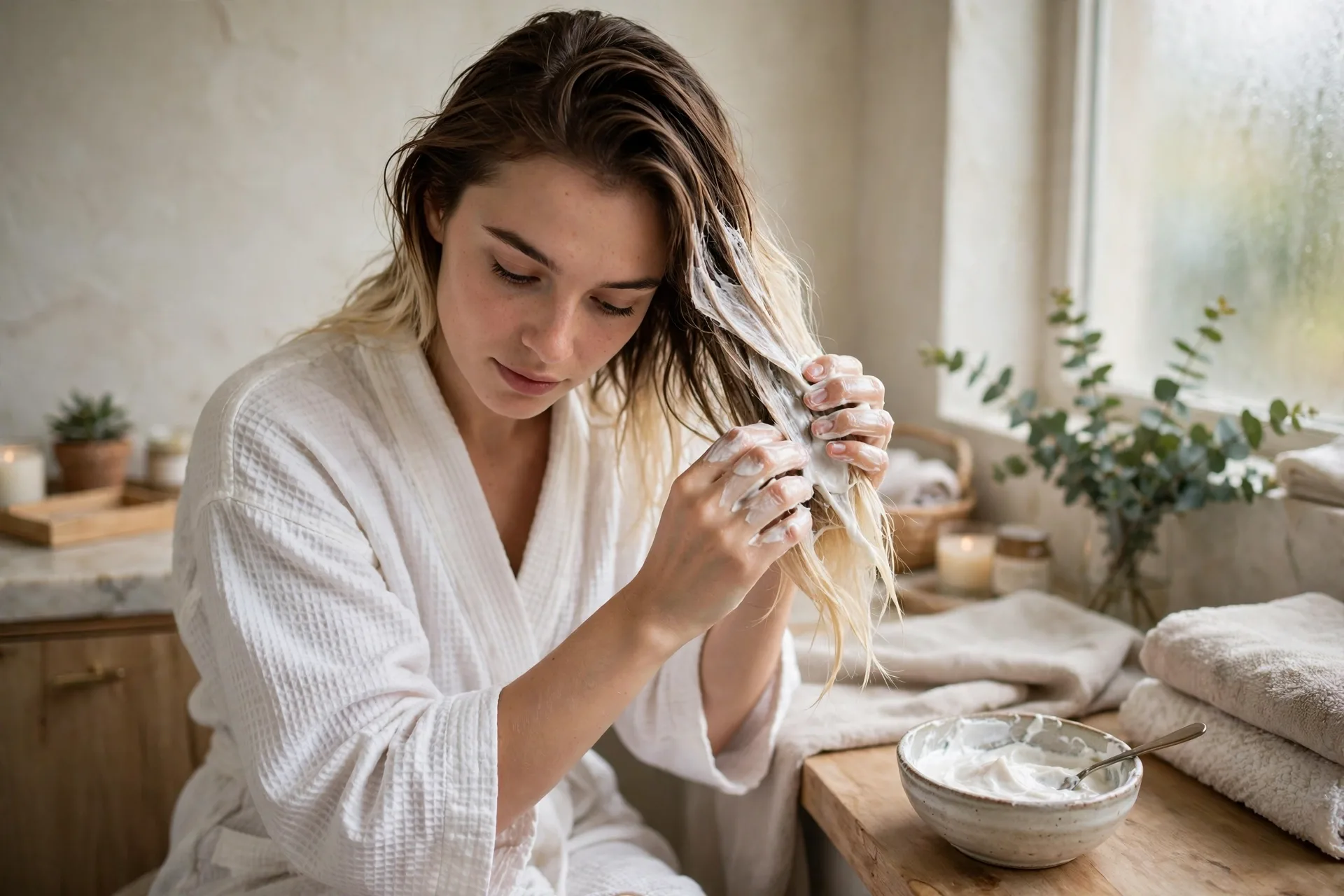
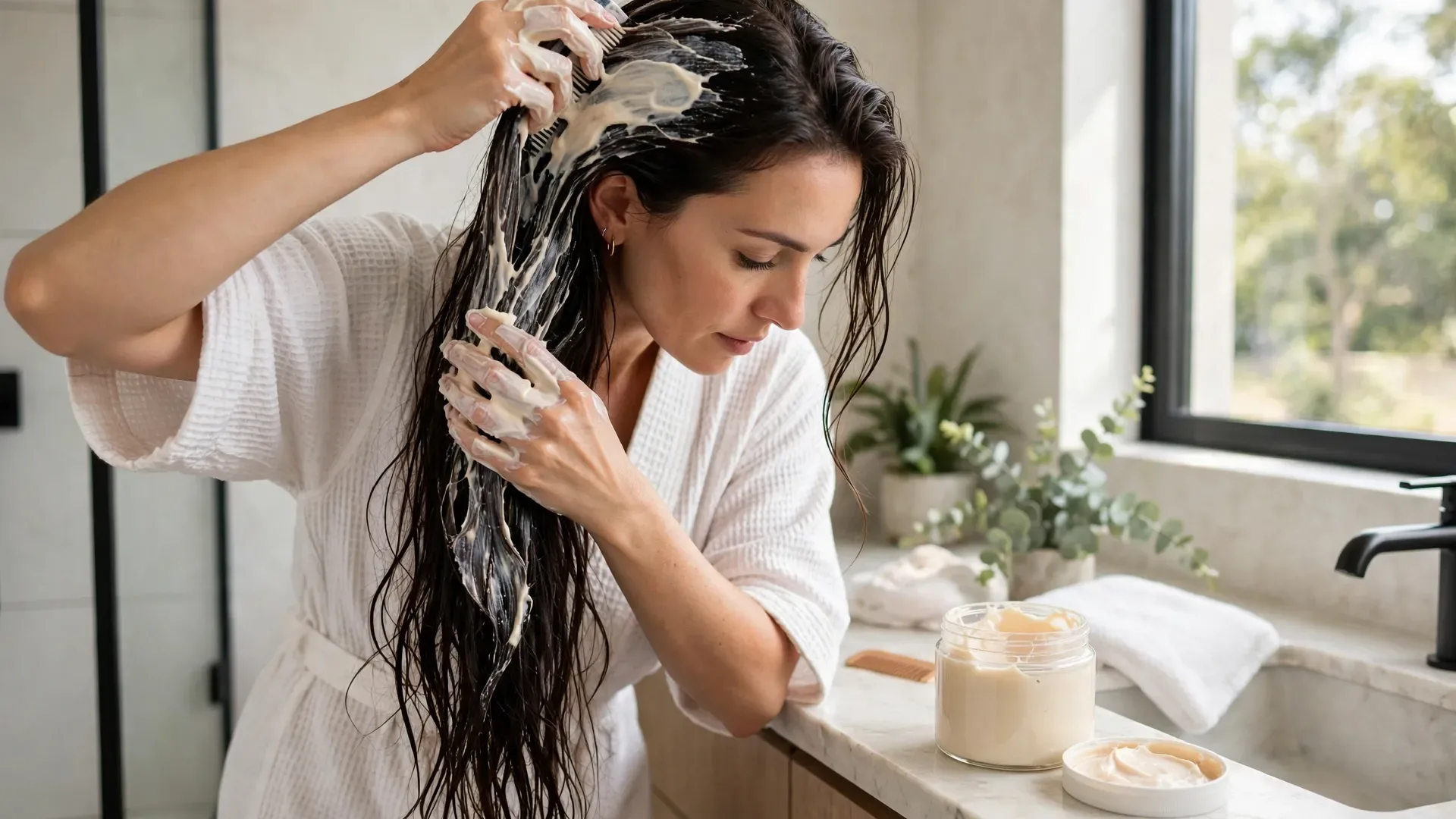
Divide your hair into four sections — two at the front, two at the back — and clip each one up. Working one section at a time, scoop out about half a tablespoon of mask for short hair, or 2 to 3 tablespoons total for medium to long hair. Smooth it over the lengths and ends first, where the hair is oldest and weakest, then work a thin layer over the roots only if your scalp feels dry. Keep the mask off the scalp if your scalp is oily.
Use your fingers or a wide-tooth comb to spread the mask evenly, strand by strand. Take your time here. Low porosity hair rewards even coverage, because any section you miss simply gets nothing. Once a section is coated, twist it loosely and clip it up before moving to the next.

Step 3: Add Gentle Heat
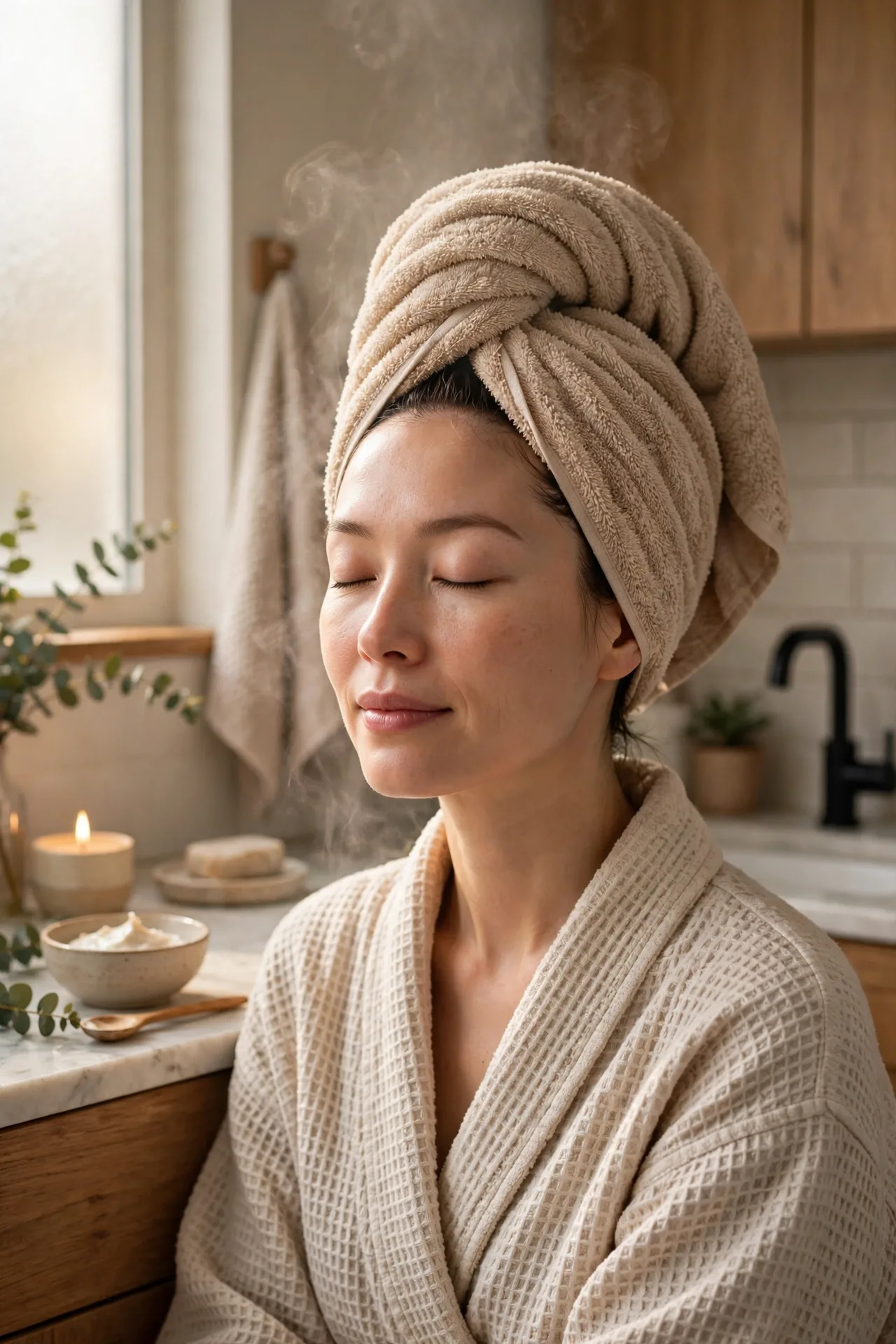
Cover your hair with a shower cap, then wrap a warm towel over the cap. The warmth is the key step for low porosity hair: heat gently lifts the cuticle scales just enough for the protein to slip inside. Without heat, much of the mask simply sits on the surface and rinses away unused.
To make the warm towel, soak a towel in hot water, wring it out, and wrap it around your head. It should feel warm and comfortable, never hot. Leave the towel on for 20 to 30 minutes. If it cools down, swap it for a freshly warmed one, or use a microwavable heat cap for 15 to 20 minutes instead. A heat cap is the easiest option if you plan to do this routine regularly, and it keeps the temperature steady without any fuss.
Step 4: Rinse With Lukewarm Water
After 20 to 30 minutes, rinse the mask out with lukewarm water — not hot. Hot water strips away the moisture you just added and roughs up the cuticle again. Rinse until the water runs clear and the hair no longer feels slippery. This usually takes two to three minutes of steady rinsing. Do not rush it; leftover mask residue is one of the main causes of that coated, heavy feeling.
Step 5: Seal With a Light Conditioner
Protein strengthens, but it does not moisturize, so always follow the mask with a light, water-based conditioner. Apply a coin-sized amount to the lengths and ends, leave it for 2 to 3 minutes, then rinse with cool water. The cool rinse helps the cuticle close again, locking the protein and the moisture inside. Finish with a pea-sized drop of a light leave-in or a few drops of grapeseed oil on the ends if they feel dry.
The Gentle Heat Method in Detail
Heat is what makes this routine work for low porosity hair, so it deserves a closer look. The cuticle scales on low porosity hair lie so flat that, at room temperature, a mask can barely get in. Gentle warmth softens and slightly lifts those scales, opening a narrow window for the protein to enter. Once the hair cools, the scales settle back down and hold the protein inside.
There are three easy ways to add heat. The warm towel method costs nothing: soak a towel in hot water, wring it out, wrap it over a shower cap, and replace it once it cools. A microwavable heat cap or a heated hair cap is the most consistent option, holding a steady gentle warmth for the full 20 minutes. A hair dryer on a low, warm setting, aimed at the shower cap for 5 to 10 minutes, works too — keep it moving and never let one spot get hot.
Keep the temperature gentle. You are warming the hair, not cooking it. If the towel or cap feels uncomfortably hot against your skin, it is too hot. Too much heat damages the cuticle and defeats the purpose. Twenty to 30 minutes of mild warmth is plenty; longer is not better, and it will not make the mask work harder.
How Often Should You Repeat It?
For most people with low porosity hair, once every two weeks is the right rhythm. If your hair is fine, color-treated, or heat-styled often, once a week may suit you better. If your hair is thick, coarse, or rarely styled with heat, once every three weeks can be enough. Start with every two weeks, watch how your hair responds for a month, and adjust from there.
A simple weekly schedule keeps the balance right. On mask week, do the protein routine on wash day and keep the rest of the week light: a gentle shampoo, a light conditioner, and a small amount of leave-in. On the off week, skip the protein and use a moisturizing deep conditioner instead. This alternating rhythm — protein one week, moisture the next — is what keeps low porosity hair both strong and soft.
Pay attention to the seasons as well. In dry winter air, lean toward moisture and stretch the protein gap to every three weeks. In humid summer months, when hair swells and weakens more easily, the every-two-week rhythm usually works well. Your hair will tell you what it needs if you watch it: springy, smooth strands mean the balance is right.
Signs of Protein Overload and What to Do
Protein overload happens when the hair has taken in more protein than it can use. The signs are easy to recognize once you know them. Hair feels stiff and straw-like instead of soft. It tangles more easily and snaps when you pull a strand gently. It looks dull, feels rough to the touch, and may even feel coated, as if a film is sitting on it. Curls lose their bounce and hang limp.
If you notice these signs, stop all protein for at least two to three weeks. That includes protein masks, protein leave-ins, and shampoos with keratin high on the ingredient list. Switch to moisture-only care: a hydrating deep conditioner once a week, a light leave-in, and a gentle shampoo. A clarifying shampoo used once can help lift any protein film sitting on the surface, but use it only once — clarifying too often dries the hair out further.
Most cases of overload clear up within two to four weeks of moisture-focused care. When the hair feels soft and flexible again, bring protein back slowly, starting with once every three weeks and a light mask only. Overload is not a reason to give up on protein. It is simply a signal that the dose or the timing needs adjusting, and once you find your rhythm, the problem rarely comes back.

Products and Tools Worth Keeping on Hand
A few simple items make this routine easy to repeat. A light protein mask with hydrolyzed keratin or silk protein is the core product — look for one that also lists glycerin or aloe vera among its ingredients. A gentle sulfate-free shampoo clears buildup without stripping the hair. A light, water-based conditioner seals in the protein after each mask.
For tools, a shower cap is essential for the heat step, and a microwavable heat cap is worth the small investment if you mask regularly. A wide-tooth comb spreads the mask evenly without snapping wet hair, and a microfiber towel or old cotton t-shirt dries hair with far less friction than a rough bath towel. None of these need to be expensive. The routine works because of the method — clean damp hair, even application, gentle heat, and a moisture finish — not because of any single brand.
Frequently Asked Questions
Can I use a protein mask on low porosity hair every week?
You can, but only if your hair is fine, color-treated, or heat-styled often — those hair types use protein faster. For most low porosity hair, every two weeks is safer. If your hair starts feeling stiff or dry, stretch the gap to three weeks and add a moisturizing mask in between.
Why does my hair feel worse after a protein mask?
That usually means the protein was too heavy, the mask was left on too long, or the moisture step was skipped. Heavy reconstructors and long leave-on times overload low porosity hair quickly. Next time, use a light hydrolyzed protein mask for 20 minutes with gentle heat, rinse well, and always follow with a light conditioner.
Do I need heat for a protein mask to work on low porosity hair?
Heat makes a real difference for this hair type. Without it, much of the mask stays on the surface and rinses away. A warm towel over a shower cap for 20 to 30 minutes is enough — you do not need special equipment. If you skip the heat, use a lighter mask and expect milder results.
You May Also Like
Hair Growth Tips That Actually Work
Curly Hair Care Routine for Beginners
The Ultimate Hair Care Checklist
How to Find Your Curl Pattern and Porosity: An Easy Visual Guide
7-Day Scalp Care Routine for Faster Hair Growth: A Weekly Plan
DIY Hydrating Hair Mask for Dry Bleached Ends: An Easy Recipe