
A good hair growth plan starts at the scalp, not at the ends. This 7-day routine gives you one small, clear task each day, so your scalp stays clean, calm, and ready to grow stronger hair.
Quick Answer Box
- A 7-day scalp care routine works because it spreads the work out: one clarifying wash, two massage days, one gentle exfoliation, and rest days in between.
- Spend 5 to 10 minutes a day on your scalp. Consistency beats long, heavy treatments done once in a while.
- Most people notice less shedding and a calmer scalp within two to three weeks, and visibly fuller growth takes about two to three months.
Why Scalp Care Drives Hair Growth
Hair grows from follicles that sit in the scalp. When the scalp is clogged with oil, styling product, and dead skin, those follicles cannot work the way they should. Growth slows down, strands come out thinner, and shedding looks worse than it is.
Think of the scalp like soil. You can buy the best seeds in the world, but nothing grows well in dry, compacted ground. A clean, well-nourished scalp gives each follicle the space and the blood flow it needs to produce a strong strand of hair.
Blood flow matters more than most people realise. Gentle massage brings fresh blood to the follicles, and that blood carries oxygen and nutrients. Studies on scalp massage show that regular, light pressure can improve hair thickness over time. The key word is regular. One intense session a week does less than five calm minutes a day.
Scalp care also protects the hair you already have. When the scalp is itchy or flaky, most people scratch, and scratching snaps fragile strands at the root. A calm scalp means less breakage, and less breakage means your hair actually keeps the length it grows.
What You Need for the Week
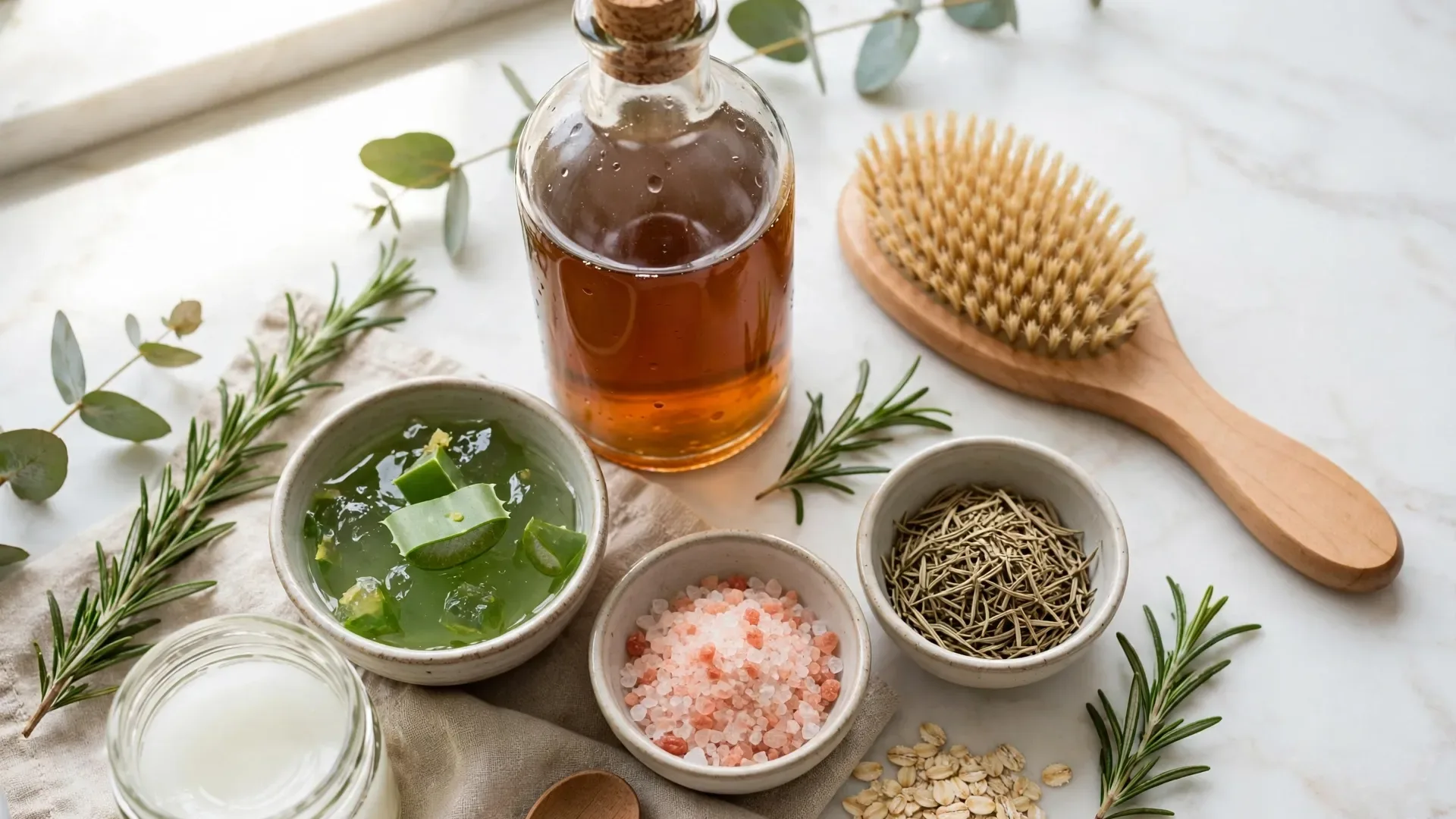
You do not need a shelf full of products to run this plan. Most of the routine uses things you probably already own, plus two or three targeted items. Gather everything before Day 1 so you never have to skip a step because something is missing.
Your weekly kit:
- A gentle, sulphate-free shampoo for everyday washing
- A clarifying shampoo, used once a week only
- A light scalp oil, such as rosemary oil diluted in a carrier oil like jojoba or sweet almond oil
- A scalp serum with niacinamide or peptides, if you already use one
- A soft silicone scalp massager or just your fingertips
- A wide-tooth comb and a microfibre towel or soft cotton t-shirt for drying
- A leave-in conditioner or a few drops of light hair oil for the ends
A note on oils: never put undiluted essential oil directly on your scalp. Rosemary oil should be mixed at about 3 to 5 drops per tablespoon of carrier oil. Patch test any new product on the inside of your wrist first, and wait 24 hours before using it on your scalp.
Keep a small notebook or a note on your phone for the week. Write down how your scalp feels each evening — itchy, tight, oily, calm. By Day 7 you will have a clear picture of what your scalp actually needs, instead of guessing.
Your 7-Day Scalp Care Plan
Each day below has its own focus, its own steps, and its own timing. Do the steps in order. The whole plan takes 5 to 15 minutes a day, and no day asks you to do everything at once. That is the point: small, steady care beats one exhausting spa day.
Day 1: Clarify and Reset
Day 1 clears the slate. Product build-up, hard-water minerals, and a week of dry shampoo all sit on the scalp and block the follicles. A clarifying wash removes that layer so the rest of the week can actually work.
Steps:
- Brush dry hair gently with a wide-tooth comb for 1 minute to loosen flakes and lift the roots.
- Wet your hair fully with lukewarm water for about 60 seconds. Hot water strips the scalp and makes it produce more oil later.
- Apply a coin-sized amount of clarifying shampoo — about 1 tablespoon for shoulder-length hair — and massage it into the scalp with your fingertips for 2 minutes. Focus on the scalp, not the lengths.
- Rinse well for at least 60 seconds until the water runs clear.
- Follow with your regular gentle shampoo if your hair still feels coated, then condition only the mid-lengths and ends. Keep conditioner off the scalp.
- Pat dry with a microfibre towel. Do not rub.
Pro tip: Clarifying shampoo is strong. Use it only on Day 1 of each weekly cycle. Using it every day dries the scalp out, and a dry scalp over-produces oil to compensate.

Day 2: Scalp Massage and Oil
Day 2 is about blood flow. With the scalp freshly clean from Day 1, oil and massage can reach the skin directly instead of sitting on top of build-up.
Steps:
- Mix 1 tablespoon of carrier oil with 3 to 5 drops of rosemary oil in a small bowl.
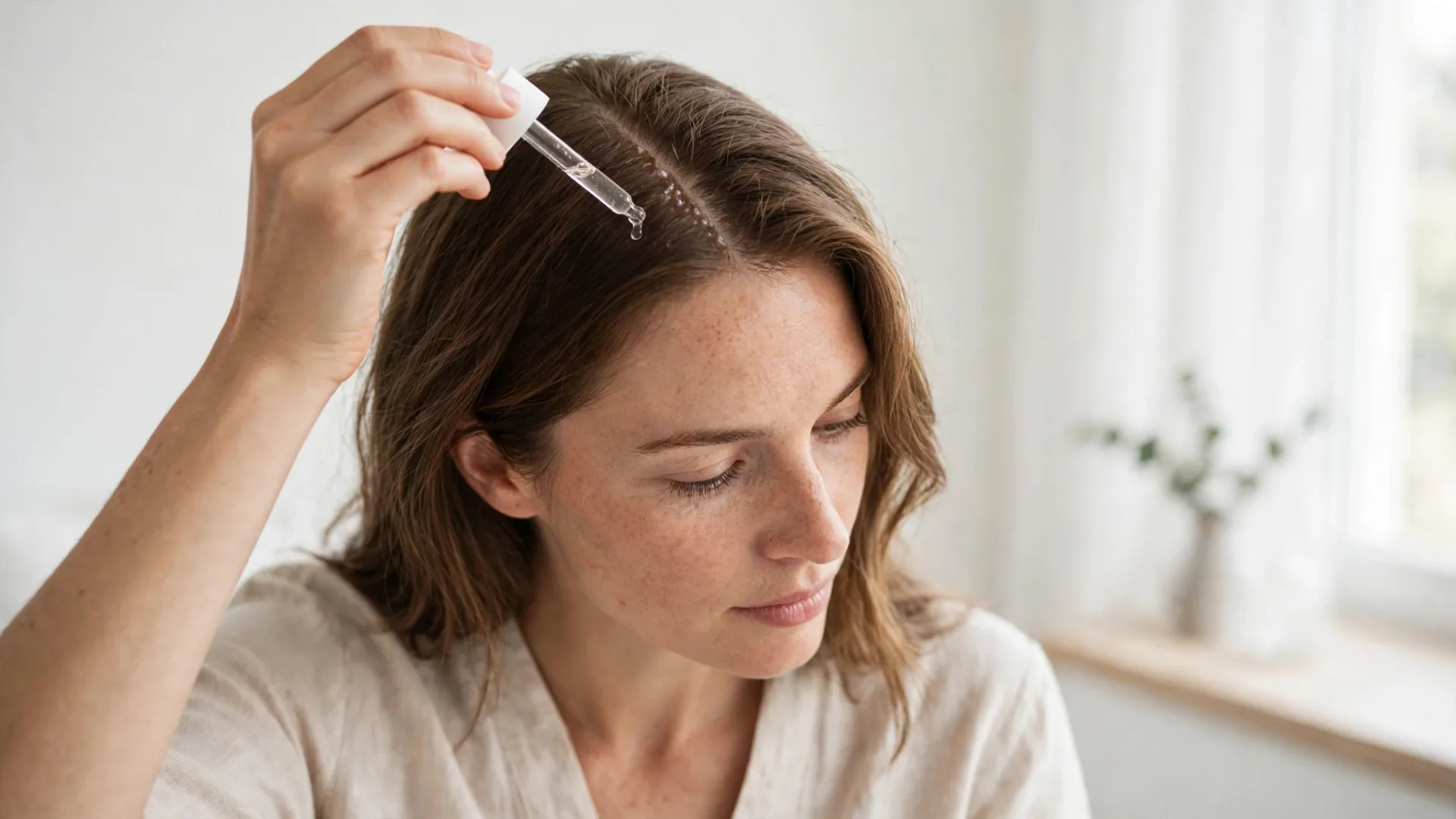
- Part your hair in 4 to 5 sections and apply 3 to 4 drops of the oil blend along each part line with a dropper or your fingertips.
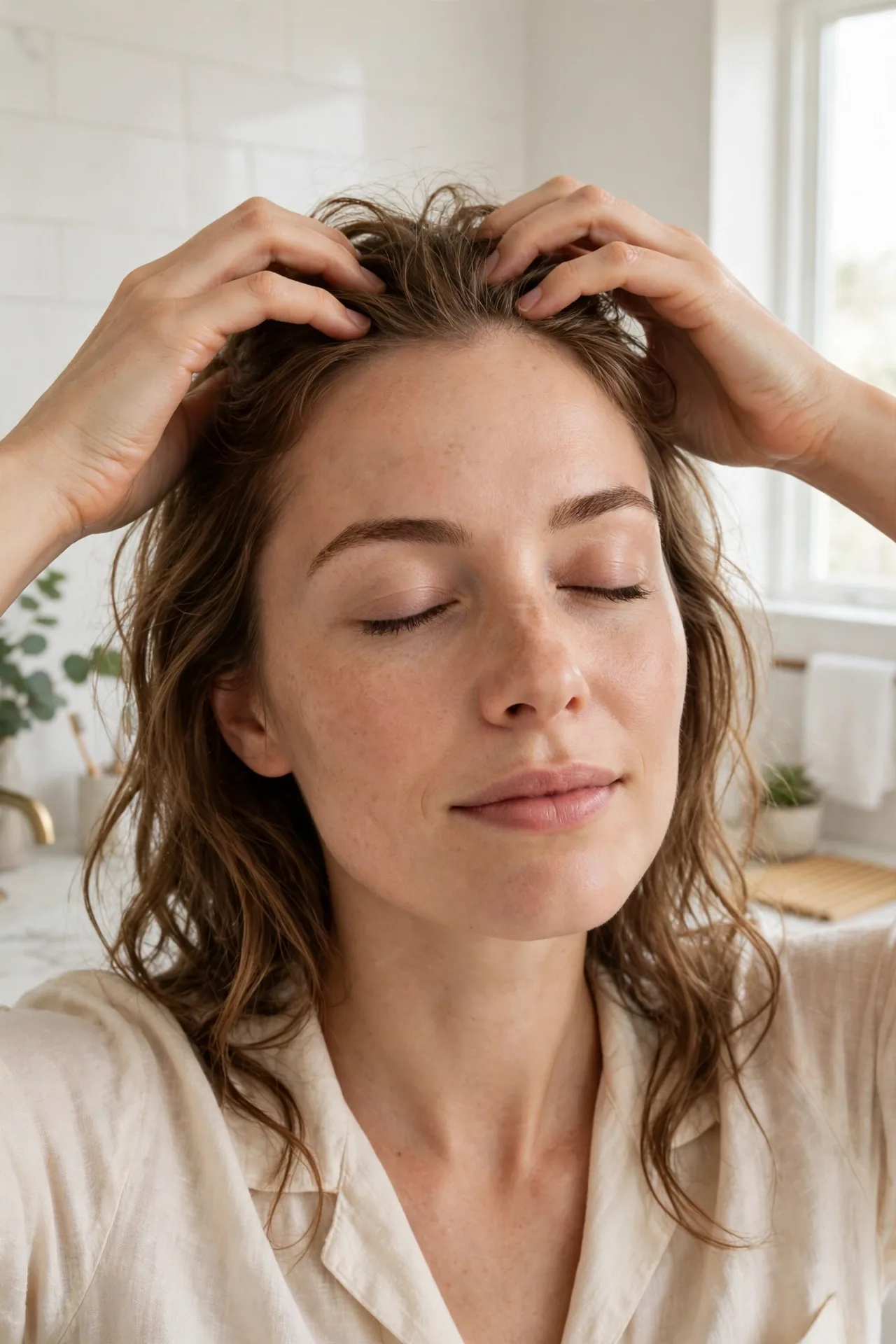
- Massage with your fingertips in small, slow circles for 5 minutes. Use light pressure — your fingertips should move the skin, not scratch it. Work from the hairline back to the crown, then down to the nape.
- If you own a silicone scalp massager, use it for the last 2 minutes with the same slow circles.
- Leave the oil on for at least 30 minutes. If you can, leave it for 2 hours while you go about your day. Cover your hair with a soft cap or an old t-shirt if you are worried about staining.
- Wash out with your gentle shampoo. You may need two light washes to remove all the oil — that is normal.
Pro tip: Do the massage in the evening if you can. Many people find it relaxing, and it pairs well with winding down before bed. Never massage with your nails. Nails create tiny scratches that can lead to irritation and flaking.
Day 3: Rest and Hydration
Day 3 is a rest day, and rest days are part of the plan, not a skipped day. Your scalp has had a clarifying wash and an oil treatment in two days. Today it needs nothing but water, moisture, and a break from handling.
Steps:
- Do not wash your hair today unless it is genuinely dirty or sweaty. Let the scalp’s natural oils settle.
- Drink a full glass of water with each meal — hydration shows up in the scalp just as it does in the skin.
- If your ends feel dry, smooth 2 to 3 drops of light hair oil over the lengths only. Keep it away from the roots.
- Wear your hair loose or in a very loose, low braid. Avoid tight ponytails, which pull on the follicles at the hairline.
- Before bed, spend 1 minute brushing gently with a soft-bristle brush to spread the scalp’s natural oils down the lengths.
Pro tip: If your scalp feels itchy today, do not scratch. Press a cool, damp cloth against the itchy spot for 30 seconds instead. Scratching on a clean scalp can undo two days of careful work.
Day 4: Exfoliate Gently
Day 4 removes the dead skin cells that a normal wash leaves behind. Gentle exfoliation keeps the follicle openings clear, which is exactly what growing hair needs. The word gentle matters here — this is not a scrub that leaves the scalp raw.
Steps:
- Start with dry or slightly damp hair. Apply a teaspoon of a scalp scrub, or a homemade mix of 1 tablespoon of fine sugar and 1 tablespoon of your gentle shampoo, to the scalp.
- Massage in slow circles with your fingertips for 3 minutes. Focus on areas where flakes gather, usually the crown and behind the ears. Use almost no pressure.
- Rinse thoroughly with lukewarm water for 60 seconds.
- Wash once with your gentle shampoo and condition the lengths only.
- While your hair is still damp, apply your scalp serum if you use one — 4 to 5 drops along the part lines, pressed in with your fingertips. No rubbing.
- Let your hair air-dry if possible. If you must use a dryer, keep it on the lowest heat setting and hold it at least 15 cm from your head.
Pro tip: Exfoliate once a week at most. If your scalp is sensitive, flaky, or sunburnt, skip the scrub this week and do a second rest day instead. Irritated skin does not grow hair well.
Day 5: Massage and Serum
Day 5 brings back the massage, this time paired with a leave-in serum instead of oil. Serums are lighter than oils, so they absorb faster and you do not need to wash them out. This makes Day 5 the easiest day of the week.
Steps:
- Part your hair into 4 sections.
- Apply 4 to 5 drops of scalp serum along each part line. If your serum has a dropper, that makes placement easy.
- Massage with your fingertips in slow circles for 5 minutes, covering the whole scalp — hairline, crown, sides, and nape.
- Use the silicone scalp massager for 2 extra minutes if you have one.
- Style as usual. There is nothing to rinse out.
- In the evening, take 30 seconds to check how your scalp feels and write it in your notebook. Is it calmer than Day 1? Less itchy? Oilier? This note decides what you adjust next week.
Pro tip: Apply serum to a clean or nearly clean scalp. If your hair is very oily by Day 5, do a quick gentle wash first and apply the serum to damp hair. Serum sitting on a layer of oil cannot reach the skin.
Day 6: Protective Style and Moisture
Day 6 protects everything the week has built. Constant friction — from pillowcases, tight elastics, and rough brushing — snaps the new, fine hairs that are just starting to grow. A protective style and a little moisture keep them safe.
Steps:
- Wash with your gentle shampoo only if your hair needs it. Many people can skip washing today.
- Apply a pea-sized amount of leave-in conditioner to the mid-lengths and ends — about a 5-cent-coin amount for medium-length hair.
- Choose a loose protective style: a low loose braid, a loose bun held with a silk scrunchie, or twists pinned softly at the back. The style should feel comfortable, never pulling at the hairline.
- If your hair is curly or coily, apply a small amount of a light cream or butter to the ends to seal in moisture.
- Before bed, switch to a satin or silk pillowcase, or wrap your hair in a silk scarf. Cotton pillowcases absorb moisture and create friction all night.
- Do a 1-minute fingertip massage before sleep — no product needed, just slow circles to keep blood moving.
Pro tip: A style is only protective if it is loose. If you feel pulling at your temples or your forehead, take it down and redo it softer. Traction over time can damage follicles at the hairline, which is the opposite of what this week is for.

Day 7: Assess and Repeat
Day 7 is your review day. You are not adding a new treatment today. You are looking at the week honestly and deciding what to repeat, what to change, and what your scalp is telling you.
Steps:
- Wash your hair with your gentle shampoo and condition the lengths as usual.
- After drying, look at your scalp in a mirror with a parting in a few places. Is it less flaky than Day 1? Are the part lines cleaner? Take a photo in the same light each week so you can compare honestly.
- Read your notebook from the week. Count the calm days and the itchy days. If oiliness was the main issue, keep the Day 1 clarifying wash and skip the Day 2 oil next week, using serum only. If dryness was the issue, keep the oil and drop the exfoliation to every second week.
- Trim any split ends if you have not done so in two months. Split ends travel upward and thin the hair, which makes growth look slower than it is.
- Set out your products for next week. The routine only works if starting Monday is easy.
- Give yourself credit for finishing the week. Hair growth is slow, but a full week of steady care is real progress.
Pro tip: Take the same photo every Day 7 — same mirror, same light, same parting. Weekly photos are the only honest way to see growth, because daily changes are too small for the eye to catch.
How to Repeat the Plan Week After Week
The plan is a cycle, not a one-week fix. Repeat the same seven days for at least eight weeks before judging the results. Hair grows about 1 to 1.5 cm a month, so real, visible change takes time. What changes first is usually the feel of the scalp: less itching, less flaking, less oil at the roots.
After four weeks, adjust one thing at a time based on your notes. If your scalp stays oily by Day 3, add a second gentle wash midweek. If it feels tight and dry, swap the Day 4 scrub for a hydrating scalp mask — plain aloe vera gel left on for 15 minutes works well for many people. If the oil on Day 2 leaves your hair greasy even after two washes, use half the amount next time.
Change only one thing per week. If you change three things at once and your scalp improves, you will not know which change helped. Slow, single changes are how you find the version of this routine that fits your scalp exactly.
Seasonal changes matter too. In winter, scalps tend to dry out, so the oil day becomes more valuable. In hot, humid months, sweat and oil build up faster, so the Day 1 clarifying wash does more of the work. Let the plan flex with the weather rather than fighting it.
Mistakes That Slow Growth Down
Most slow growth is not a mystery. It is usually one of a handful of habits that undo good care. Check this list honestly before buying another growth product.
Washing with very hot water. Hot water strips the scalp’s natural oils and leaves it dry and reactive. Lukewarm water cleans just as well and keeps the scalp calm.
Scrubbing with nails or harsh brushes. Scratches on the scalp lead to flakes, irritation, and sometimes small infections that shut follicles down for weeks. Fingertips and soft tools only.
Overdoing the clarifying shampoo or the scrub. Both are weekly tools, not daily ones. Used too often, they strip the scalp and trigger extra oil production, which looks like the problem getting worse.
Piling conditioner or heavy oils on the scalp. Conditioner belongs on the lengths. Heavy oils on the scalp trap dead skin and product against the follicles. Keep the scalp light and let the lengths carry the moisture.
Tight hairstyles every day. Constant tension at the hairline damages follicles over months. Rotate in loose styles, especially on rest days.
Quitting after two weeks. This is the most common mistake of all. Two weeks is not enough to see growth. Give the routine eight full weeks, track it with photos and notes, and then decide.
Frequently Asked Questions
Can I do this routine if I have dandruff?
Yes, with one change. If you have dandruff, swap the Day 4 scrub for a medicated anti-dandruff shampoo used exactly as its label directs, and skip the Day 2 oil until the flaking calms down. Oil can feed the yeast that causes dandruff, so clear the flakes first. If the flaking does not improve in three to four weeks, or if the scalp is red and sore, see a dermatologist.
Will this routine work on oily hair?
Yes, and oily hair often responds fastest. The Day 1 clarifying wash and the Day 4 exfoliation remove the oil and build-up that weigh oily hair down. The key is not to strip the scalp every day — that makes oiliness worse. Follow the plan as written, and if your hair is oily by Day 3, add one gentle wash on Day 3 rather than reaching for the clarifying shampoo again.
How long before I see faster hair growth?
Expect your scalp to feel better in two to three weeks: less itching, fewer flakes, and less shedding in the shower drain. Visible new growth — short baby hairs along the hairline — usually shows up around week six to eight. Measurable length takes two to three months because hair grows roughly 1 to 1.5 cm a month. Weekly photos are the best way to track it, since the change is too gradual to notice in the mirror.
You May Also Like
Hair Growth Tips That Actually Work
The Ultimate Hair Care Checklist for Healthy Hair
Curly Hair Care Routine for Beginners
How to Unclog Scalp Hair Follicles Naturally: A Scalp Detox Guide
Protein Hair Mask Routine for Low Porosity Hair: A Simple Care Plan
How to Use Batana Oil for Hair Growth: A Step-by-Step Routine