
If you are finding more hair on your pillow, in the shower drain, and wrapped around your brush than ever before, take a slow breath. You are not alone, and this shedding is one of the most common — and most temporary — changes new mothers go through.
Postpartum hair loss can feel alarming, especially when it arrives just as you are getting used to life with a new baby. The good news is that for most women it settles on its own, and a gentle daily scalp massage can make the waiting easier, support a healthy scalp, and give you five quiet minutes that belong only to you.
Quick Answer Box
- Postpartum shedding usually starts around 3 to 4 months after birth and eases by 6 to 12 months as hormone levels settle.
- A gentle 5-minute daily scalp massage with your fingertips can boost blood flow to the scalp and help you relax — use light pressure, never nails.
- Skip tight hairstyles, harsh brushing, and high heat while your hair recovers, and talk to your doctor if shedding is very heavy, you notice bald patches, or it continues past a year.
Why Postpartum Hair Loss Happens
During pregnancy, higher levels of estrogen keep more of your hair in its growth phase for longer. Many women notice their hair looking thicker and fuller in the second and third trimesters, and far fewer strands coming out in the brush. It feels like a gift, and in a way, it is — but it is a temporary one.
After birth, estrogen levels fall back to their usual range. The hairs that stayed put during pregnancy now move into the resting phase together, and then they shed together. That is why the hair loss can feel sudden and heavy. It is not that your hair is falling out because something is wrong. It is that months of normal shedding were paused, and now the pause has ended.
The Hormone Shift After Birth
Estrogen is the main hormone behind this change, but it is not the only one. Progesterone drops after delivery too, and your body is also adjusting to breastfeeding, broken sleep, and the physical recovery from birth. All of these shifts ask a lot of your body at once. Hair is not a priority for a body that is healing and feeding a baby, so the hair growth cycle is one of the first things to slow down.
This is worth remembering on the hard days: your body is not failing you. It is doing an enormous job, and hair is simply further down its list right now. As your hormones find their new normal, your hair cycle will follow.
What Telogen Effluvium Really Means
The medical name for this kind of shedding is telogen effluvium. Telogen is the resting phase of the hair growth cycle, and effluvium means shedding. In plain words, it means a larger share of your hairs than usual have entered the resting phase at the same time, so more of them fall out over a few months.
Telogen effluvium is not the same as hair loss that leaves permanent bald spots. The follicles themselves stay alive and healthy underneath the scalp. New hairs are already growing in to replace the ones you are losing — they are simply short, fine, and easy to miss at first. Those wispy little hairs around your hairline a few months in? Those are the baby hairs growing back, and they are a sign that recovery is already underway.

When Does Postpartum Shedding Start — and When Does It Settle?
For most women, shedding begins around 3 to 4 months after giving birth. Some notice it a little earlier, around 2 months, and some do not see it until 5 or 6 months. The timing varies, and none of these versions is a cause for worry on its own.
The heaviest shedding usually lasts for a few months. Many mothers say the worst of it is between months 4 and 6, and then it slowly eases. By 6 to 12 months after birth, most women find their shedding is back to what it was before pregnancy. Hair that grows back may feel different at first — softer, finer, or with a slightly different wave — and that is normal too. It usually returns to its usual texture over time.
It helps to keep a simple note of what you see. If you brush your hair once a day and count roughly how much comes out, you will have a real picture of whether things are improving. A slow, steady improvement over weeks is exactly what recovery looks like. A sudden change in the other direction is the only thing worth a call to your doctor, and we will come to that below.
A Gentle Daily Scalp Massage Routine
Scalp massage is one of the simplest things you can do for your hair after birth. It costs nothing, it takes five minutes, and it feels lovely. Gentle massage increases blood flow to the scalp, which brings oxygen and nutrients to the hair follicles. It also helps loosen flakes and product build-up, and it lowers stress — and stress itself can make shedding worse.
The best time is whenever you can reliably fit it in. Many new mothers do it in the morning while the baby naps, or in the evening before bed as part of winding down. Pick one slot and keep it. Five minutes a day, done most days, will do far more than a long session once in a while.
Your 5-Minute Scalp Massage, Step by Step
Follow these steps in order. Keep your touch light and slow throughout — your scalp after birth can be more sensitive than usual, and gentle is the whole point.
- Warm your hands (30 seconds). Rub your palms together briskly for about 30 seconds until they feel warm. Cold hands on a sensitive scalp feel unpleasant, and warm hands relax the skin.
- Start at the front hairline (1 minute). Place all ten fingertips — not your nails — just above your forehead. Press lightly and make small, slow circles, moving the skin of your scalp rather than sliding your fingers over the hair. Work from the centre of your forehead out toward your temples. Spend a full minute here.
- Move to the crown (1 minute). Slide your fingertips to the top of your head. Use the same small circles, with light to medium pressure, covering the whole crown. If you find a spot that feels tight or tender, stay there for a few extra seconds and let the pressure soften it.
- Work the sides and back (1 minute). Move to the sides of your head above your ears, then to the back of your head. Keep the circles small and slow. This is where many women hold tension without noticing it, so take your time.
- Finish with long strokes (1 minute). Place your fingertips at your hairline and draw them slowly back over your head toward the nape of your neck, as if you were smoothing your hair back. Repeat 8 to 10 times. This final minute should feel slow and calming.
- Rest for 30 seconds. Drop your hands, close your eyes, and take three slow breaths. You are done. If you used oil, leave it in for at least 30 minutes before washing, or overnight if that suits you.
A few details matter here. Always use the pads of your fingers, never your nails, because nails can scratch the scalp and break fragile new hairs. Keep your pressure light enough that it feels soothing — if it hurts, you are pressing too hard. And if your scalp feels sore or itchy on a particular day, skip the massage and try again tomorrow. Listening to your scalp is part of the routine.
If you only have two minutes, do steps 2 and 3 and skip the rest. A short massage done often beats a perfect massage done rarely. On days when the baby is fussy and you cannot find even two minutes, simply running your fingertips through your hair for a few seconds while you feed or rock the baby still counts. Small, regular care is the whole secret.
Safe Oils for a New Mum’s Scalp
You do not need oil for a scalp massage — dry massage works well on its own. But a little oil can make the massage smoother and leave your hair softer. If you choose to use one, keep it simple and gentle.
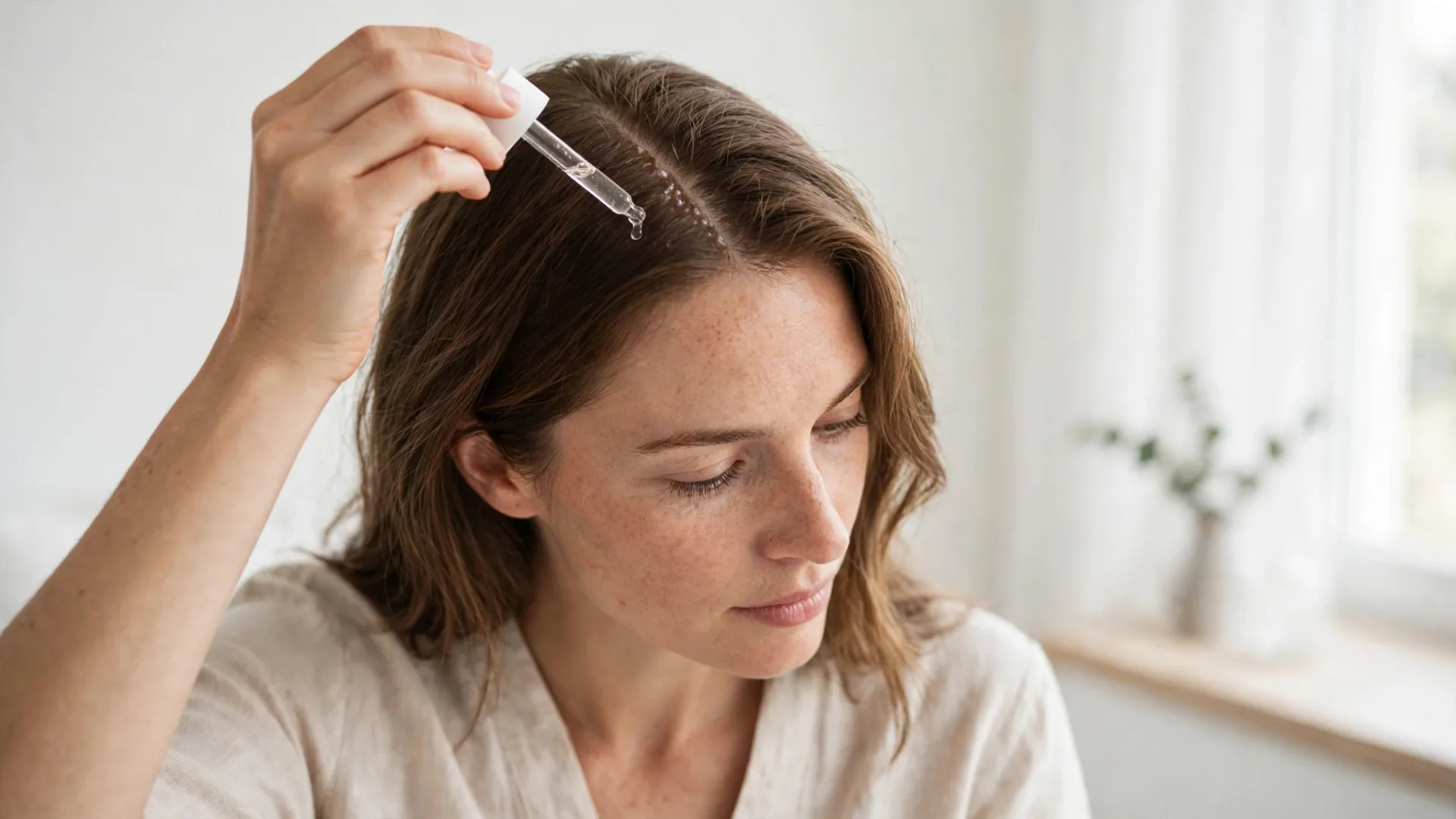
Coconut oil is a good everyday choice. Warm a teaspoon between your palms until it melts, then massage it in. It suits most hair types and washes out easily with a mild shampoo. Sweet almond oil is another gentle option, light and mild, and a good pick if coconut oil feels too heavy on your hair. Jojoba oil is the closest to your scalp’s own natural oils, so it absorbs well and rarely leaves a greasy feeling — a few drops go a long way.
Rosemary oil is popular for hair care, but use it with care. Always mix 2 to 3 drops into a tablespoon of a carrier oil like coconut or almond oil — never put undiluted essential oil directly on your scalp. If you are breastfeeding, keep the amount small and stop using it if your baby seems bothered by the scent. A plain carrier oil on its own is always a safe choice, and it does everything you need.
Do a patch test the first time you try any new oil. Rub a small amount behind your ear and wait 24 hours. If the skin stays calm, you are good to go. And remember that oil is a helper, not a cure — it makes massage nicer and keeps the scalp moisturised, but the massage itself and time are what do the real work.
What to Avoid While Your Hair Recovers
Recovery is not only about what you add — it is also about what you stop doing for a while. New hair is fine and fragile, and the hair you still have is under more stress than usual. A few small changes can protect both.
Tight hairstyles are the first thing to loosen. High ponytails, tight buns, and braids that pull at the hairline put steady tension on the follicles, and that tension can pull out hairs that would otherwise have stayed. Wear your hair loose when you can, or use a soft scrunchie in a low, loose ponytail. If a style hurts or pulls, it is too tight. A silk or satin scrunchie is a kind choice here — it grips far less than a plain elastic band.
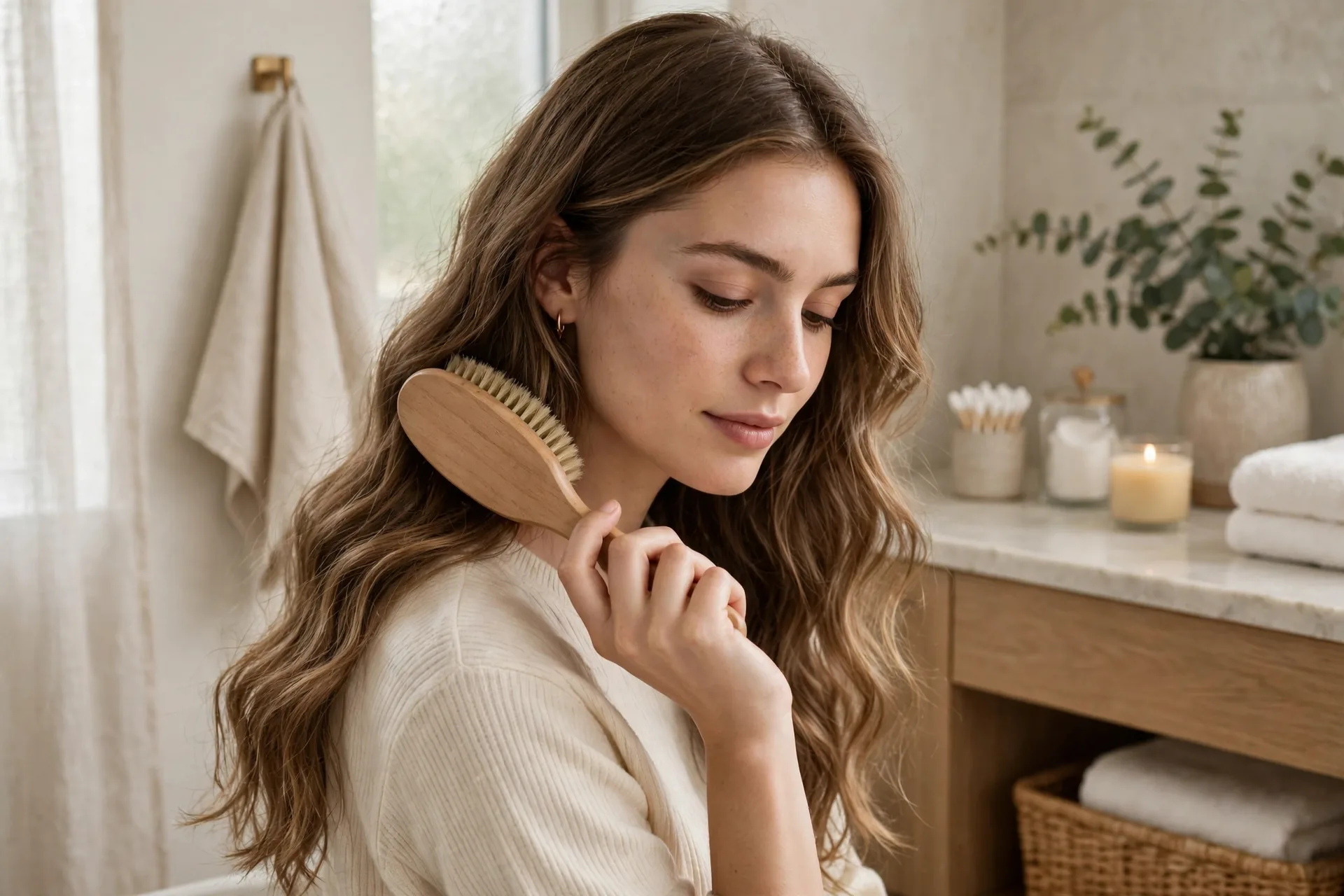
Harsh brushing is the second habit to soften. Wet hair stretches and snaps easily, so never brush it hard straight out of the shower. Pat it dry with a soft towel or an old cotton t-shirt instead of rubbing it, and wait until it is mostly dry before you pick up a brush. When you do brush, start at the ends and work your way up in short, gentle strokes. A wide-tooth comb is your best friend in this season — it moves through tangles with far less pulling than a fine brush.
Heat is the third thing to cut back. Flat irons, curling wands, and very hot blow-drying dry out hair that is already fragile. If you use heat, keep it on the lowest setting that works, always use a heat protectant spray first, and give your hair at least a few heat-free days each week. Air-drying is the gentlest option of all, and a simple braid or loose bun while it dries can give you a soft wave without any heat at all.
Finally, go easy on chemical treatments for now. Colour, bleach, perms, and keratin treatments can all wait a few months. If you do want colour, talk to your stylist about a gentle, ammonia-free option and a patch test first. Your hair will still be there when you are ready, and waiting a little now means stronger hair later.
Food and Sleep: The Quiet Helpers
Nobody expects a new mother to eat perfectly or sleep eight hours a night. That is not realistic, and this is not a lecture. But a few simple food and rest habits really do help your hair, and they are worth knowing about so you can grab them when you get the chance.
Hair is mostly made of protein, so your body needs enough of it to grow new strands. Eggs, lentils, beans, yoghurt, chicken, and fish are all easy, affordable sources. Iron matters too — low iron is common after birth and can make shedding worse, so include iron-rich foods like spinach, red meat, and beans when you can, and pair them with something rich in vitamin C, like tomatoes or citrus, to help your body absorb the iron. A small handful of nuts or seeds a day adds zinc and healthy fats that support the scalp as well.
Water helps too. Breastfeeding mothers need more fluids than usual, and a dry scalp is often a thirsty scalp. Keep a water bottle where you feed the baby and sip through the day rather than trying to drink a lot at once.

Sleep is harder to fix, and we will not pretend otherwise. A new baby wakes through the night, and that is simply how it is. But even small amounts of rest help: nap when the baby naps, even for twenty minutes, and let someone else take a night feed when that is possible. Stress hormones rise when you are exhausted, and those same hormones can push more hair into the resting phase. Rest is not a luxury in this season — it is part of the recovery, for your hair and for everything else.
If your doctor has suggested a postnatal vitamin, keep taking it as directed. Do not start a new supplement just for your hair without asking your doctor first, especially while breastfeeding. Food first, supplements only with medical advice.
Products and Tools Worth Having
You do not need a shelf full of products to get through postpartum shedding. A small set of gentle, well-chosen basics will do the job better than a dozen strong treatments. Look for products labelled gentle, sulfate-free, or for sensitive scalps, and keep your routine simple.
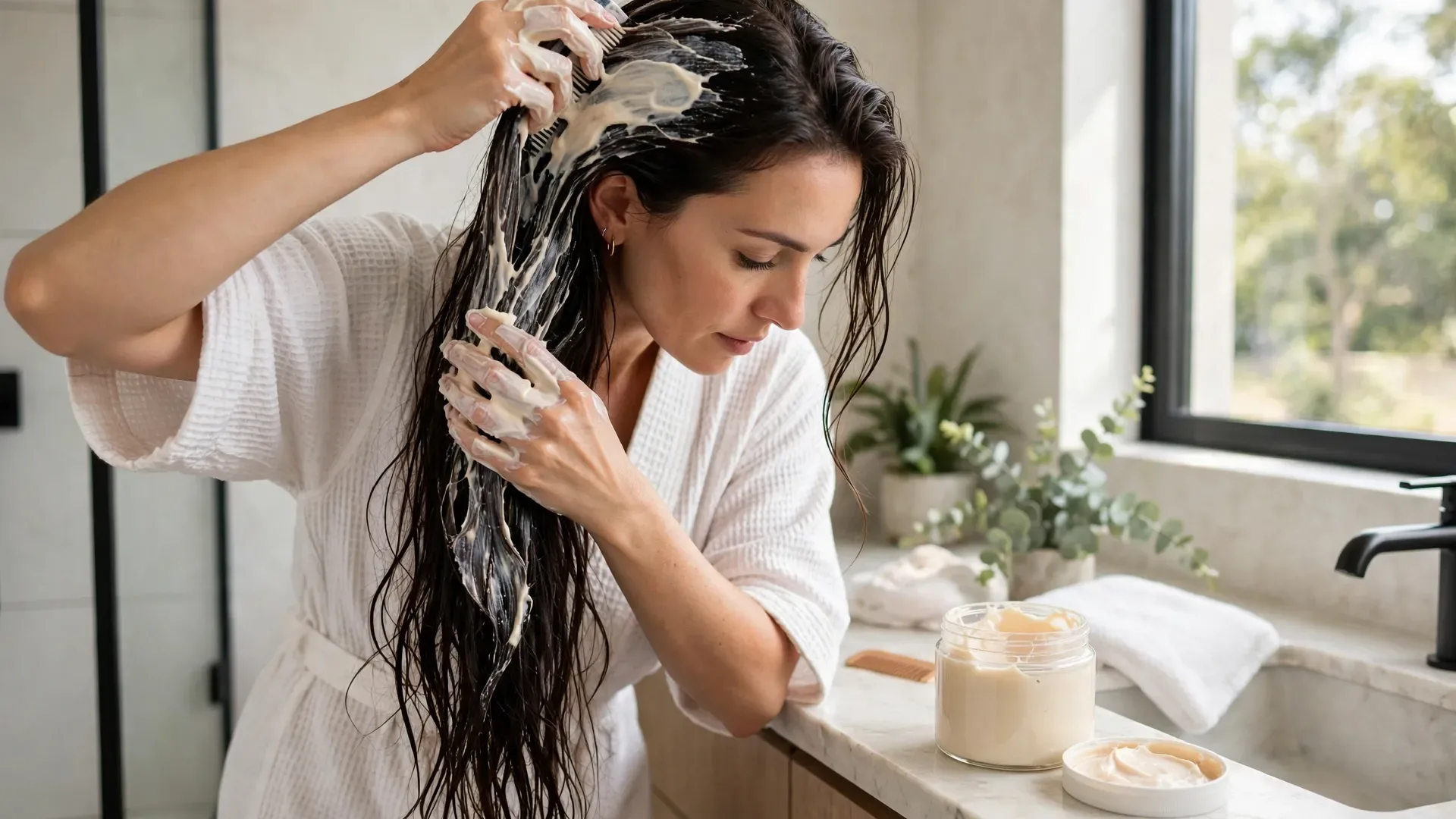
A mild, sulfate-free shampoo is the best place to start. It cleans without stripping the scalp’s natural oils, which matters when your scalp is already sensitive. Follow it with a light conditioner applied only to the mid-lengths and ends, never to the roots, so your hair does not look flat or greasy. A leave-in conditioner or a few drops of argan oil on the ends can add softness without weighing the hair down.
For tools, a wide-tooth comb is the single most useful thing you can own in this season. A soft bristle brush is a good second choice for smoothing the hair once it is dry. A scalp massager — the small handheld kind with soft silicone tips — can be a nice helper if your fingers get tired, but it is not essential. Your fingertips work just as well, and they cost nothing.
Be wary of any product that promises fast regrowth or dramatic results in days. Hair grows slowly, about half an inch a month, and no shampoo or serum can change that speed. What a good product can do is keep your scalp healthy and your existing hair strong while time does the rest. If a claim sounds too good to be true, it almost certainly is.
When to Talk to a Doctor
Most postpartum shedding is normal and settles on its own. But there are a few signs that deserve a proper medical check, and knowing them will help you worry less — because if none of them apply to you, you can relax and let time do its work.
Talk to your doctor if the shedding feels very heavy and does not slow down at all over several months, if you notice smooth bald patches rather than a general thinning all over, or if shedding is still going strong past a year after birth. It is also worth mentioning if you feel unusually tired, cold, or low in mood, since thyroid changes and low iron can both affect hair and are common after birth — and both can be checked with a simple blood test.
This is not a reason to panic. It is simply a sensible step. A doctor can check for things like thyroid levels and iron, and rule out anything that needs treatment. Most of the time the answer will be reassurance and a little more patience. But if something does need attention, catching it early makes all the difference.
Frequently Asked Questions
How long does postpartum hair loss last?
For most women, shedding starts around 3 to 4 months after birth, peaks around months 4 to 6, and eases by 6 to 12 months. Your hair should be back to its usual shedding pattern by your baby’s first birthday. New hairs growing in may look fine and wispy at first — those little hairs around your hairline are a good sign.
Does scalp massage really help with postpartum hair loss?
Scalp massage will not stop the shedding on its own, because the shedding is driven by hormones. What it does is improve blood flow to the scalp, keep the scalp healthy, and lower stress — all of which support the new hair that is already growing in. Think of it as helping the recovery along, not as a cure. Five gentle minutes a day is enough.
Can I use hair oil while breastfeeding?
Yes. Plain carrier oils like coconut oil, sweet almond oil, and jojoba oil are gentle and safe to use on your scalp while breastfeeding. If you want to add an essential oil like rosemary, mix only 2 to 3 drops into a tablespoon of carrier oil, keep the amount small, and stop if your baby seems bothered by the scent. When in doubt, ask your doctor — and plain oil on its own works perfectly well.