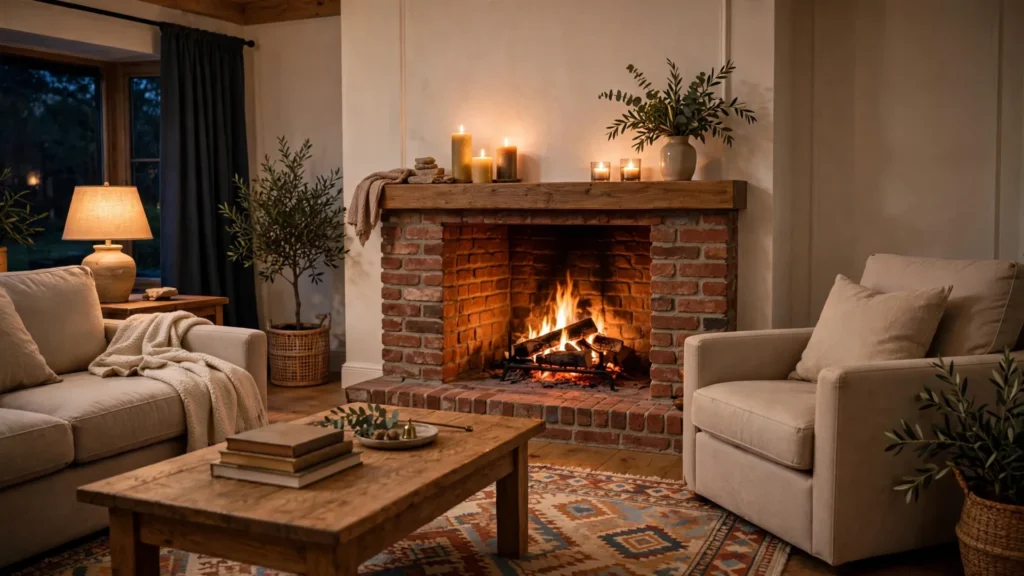

I spent the first six years of my adult life in apartments without a fireplace, and I thought about one constantly. Every fall, I’d watch friends post those perfect evenings-in photos — the fire crackling, blankets everywhere — and I’d be sitting in my living room with a space heater that smelled faintly like burning dust. When I finally rented a place with a real wood-burning fireplace, I was convinced it would instantly transform my life. It did. Just not the way I expected.
My first attempt at arranging furniture around it was a disaster. I pushed the couch straight against the fire like I was setting up a cinema, which meant nobody could see the mantel, the heat blasted one side of my legs, and the walkway behind the couch was about four inches wide. Then I swung the other way and stuffed the mantel so full of framed photos and candles that you couldn’t see the fireplace at all — I’d basically built a shrine to clutter. It took me a whole heating season to figure out that a fireplace isn’t just a feature in the room; it’s the boss of the room. Once I started treating it that way, everything clicked. Here are the ideas that actually worked — the layouts, the pairings, and the small styling choices that made my fireplace the warm center of the house instead of an awkward afterthought.
1. Let the Fireplace Run the Layout
The single biggest mistake I made was designing the room around the TV and treating the fireplace as background decoration. Flip that. When the fire is the star, people naturally drift toward it, conversation picks up, and the whole room feels more welcoming — that’s the entire point of a hearth.
How to get the look
- Pull seating into a loose circle or U-shape around the fire instead of lining everything up against walls.
- Leave at least 3 feet of clearance in front of the hearth — for safety and so the fire doesn’t roast your shins.
- If you need a TV too, put it on a side wall or a swivel mount rather than fighting the fireplace for the focal wall.
- Angle chairs slightly inward so people face each other and the fire at the same time.
What I learned: a coffee table centered on the seating group (not dead-center on the fireplace) makes the whole arrangement feel natural instead of staged. And give the traffic paths some room — nothing kills cozy faster than having to squeeze sideways past an armchair.
2. Layer Neutrals Around a Classic Fireplace
A traditional fireplace with a simple mantel doesn’t need bold colors to look interesting — it needs texture. I used to match everything: beige couch, beige rug, beige pillows, and the room looked like a beige fog. The fix was embarrassingly simple: keep the palette neutral but vary the materials.
How to get the look
- Build the base with three warm neutrals — think ivory, oatmeal, and a natural wood tone — instead of one flat shade.
- Mix linen upholstery, a nubby wool throw, and a patterned rug so the eye has something to land on.
- Keep mantel accessories low and simple so the architecture stays visible.
- Leave breathing room between furniture and the hearth; don’t shove everything against it.
My go-to combo now is a cream sofa, a worn leather or aged-wood coffee table, and a vintage-style rug with a little pattern in it. It always looks collected instead of decorated, which is exactly the vibe a classic fireplace deserves.
3. Flank the Hearth With Built-In Bookcases
Nothing makes a fireplace look like it belongs there — like it was always meant to be the center of the house — like floor-to-ceiling shelving on both sides. My sister did this in her 1990s house with two simple Billy bookcases from IKEA, painted the same color as the wall, and people now assume her home is a hundred years old.
How to get the look
- Use matching bookcases or shelves on both sides for symmetry, then style them differently enough that it doesn’t look matchy.
- Mix books with baskets, ceramics, and framed prints — and leave some shelves half-empty on purpose.
- Put heavier objects (big baskets, stacked books) low and lighter pieces up high so the wall feels grounded.
- Repeat one material across both sides — aged brass, natural wood, or white ceramics — to tie them together.
The trick is the negative space. A bookcase crammed edge to edge looks like storage; one with breathing room looks like architecture. I styled mine with about a third of each shelf empty and it made the whole wall feel calmer and more expensive.
4. Pair a Bright Fireplace With Deep, Moody Furniture
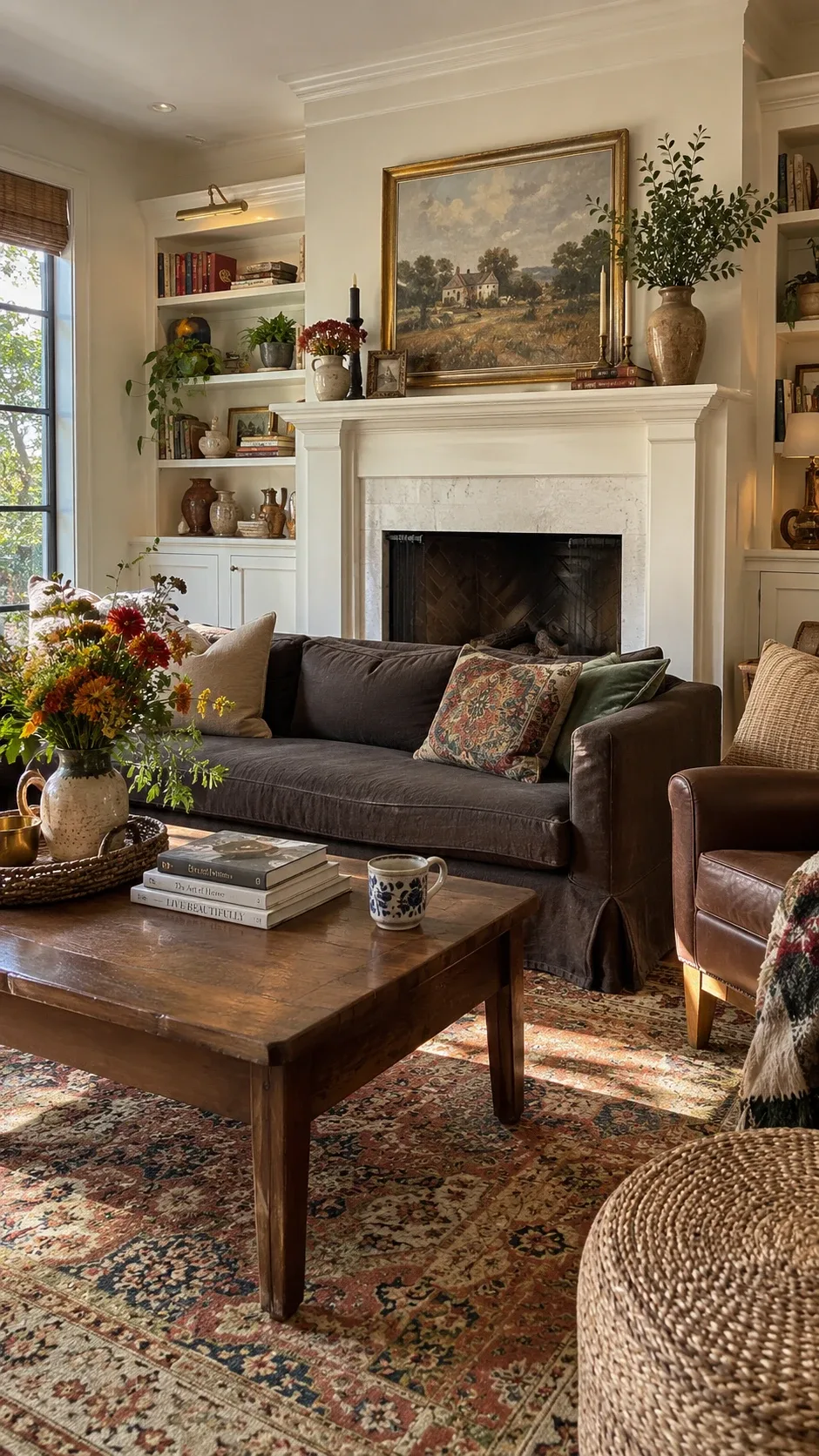
A white or pale limestone fireplace is beautiful, but an all-white living room can feel flat and unfinished — mine did, for months. The moment I brought in a deep charcoal sofa and a walnut side table, the whole room snapped into focus. The pale fireplace popped against the darker furniture, and suddenly it looked like a design decision instead of a blank wall.
How to get the look
- Keep the fireplace and surrounding wall light and simple — let it be the bright anchor.
- Bring in deeper tones through the sofa, rug, and wood finishes: charcoal, espresso, walnut, warm bronze.
- Soften the contrast with natural textiles like linen, cotton, and wool so it stays cozy, not stark.
- Echo the dark tone in small accessories (a throw, a vase, picture frames) so the sofa doesn’t look stranded.
Stick to warm darks rather than harsh black — a charcoal linen sofa reads cozy, while a black leather one can turn the same room cold. Warm bulbs help too; cool white lighting against a white fireplace is the fastest way to make a room feel like a showroom.
5. Turn a Small Fireplace Into a Reading Nook
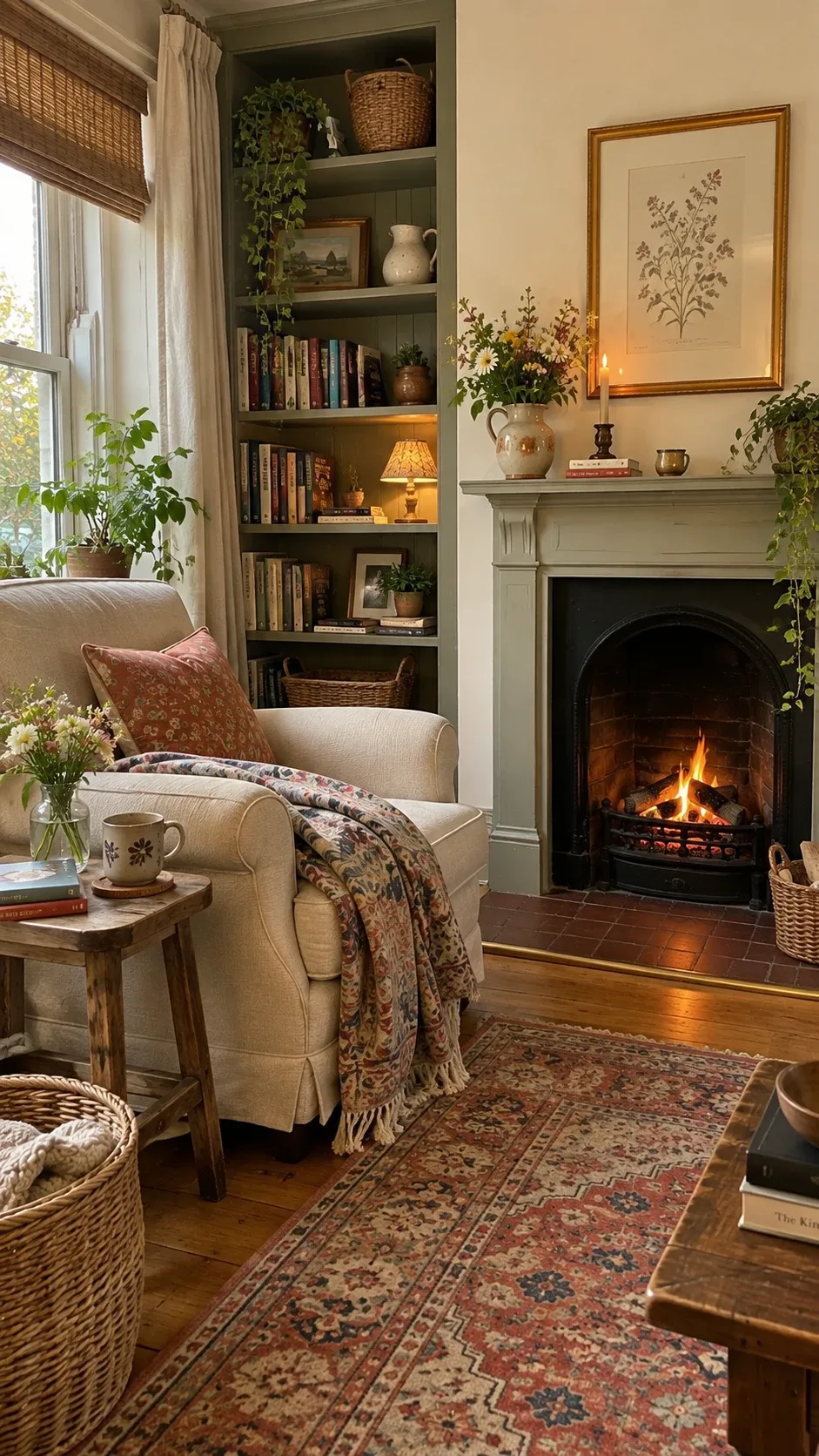
Small fireplaces get ignored, and that’s a shame, because a compact hearth is basically begging to become a reading corner. I set one up in the corner of my living room with a single chair, and it became the most fought-over seat in the house within a week.
How to get the look
- Angle one comfortable chair toward the fire rather than squaring it to the wall — it feels more inviting and fits better in tight spaces.
- Add a small side table within arm’s reach for a mug and a book.
- Put a floor or table lamp behind or beside the chair so you can actually read there after dark.
- Choose a chair with a plush seat but a modest footprint so it doesn’t swallow the corner.
A narrow bookcase or a stack of books on the side table completes it. This setup is also perfect if the fireplace is in an awkward spot that won’t work for a full seating arrangement — instead of fighting the room’s layout, you give the little hearth its own job.
6. Hang One Big Piece of Art Over the Mantel
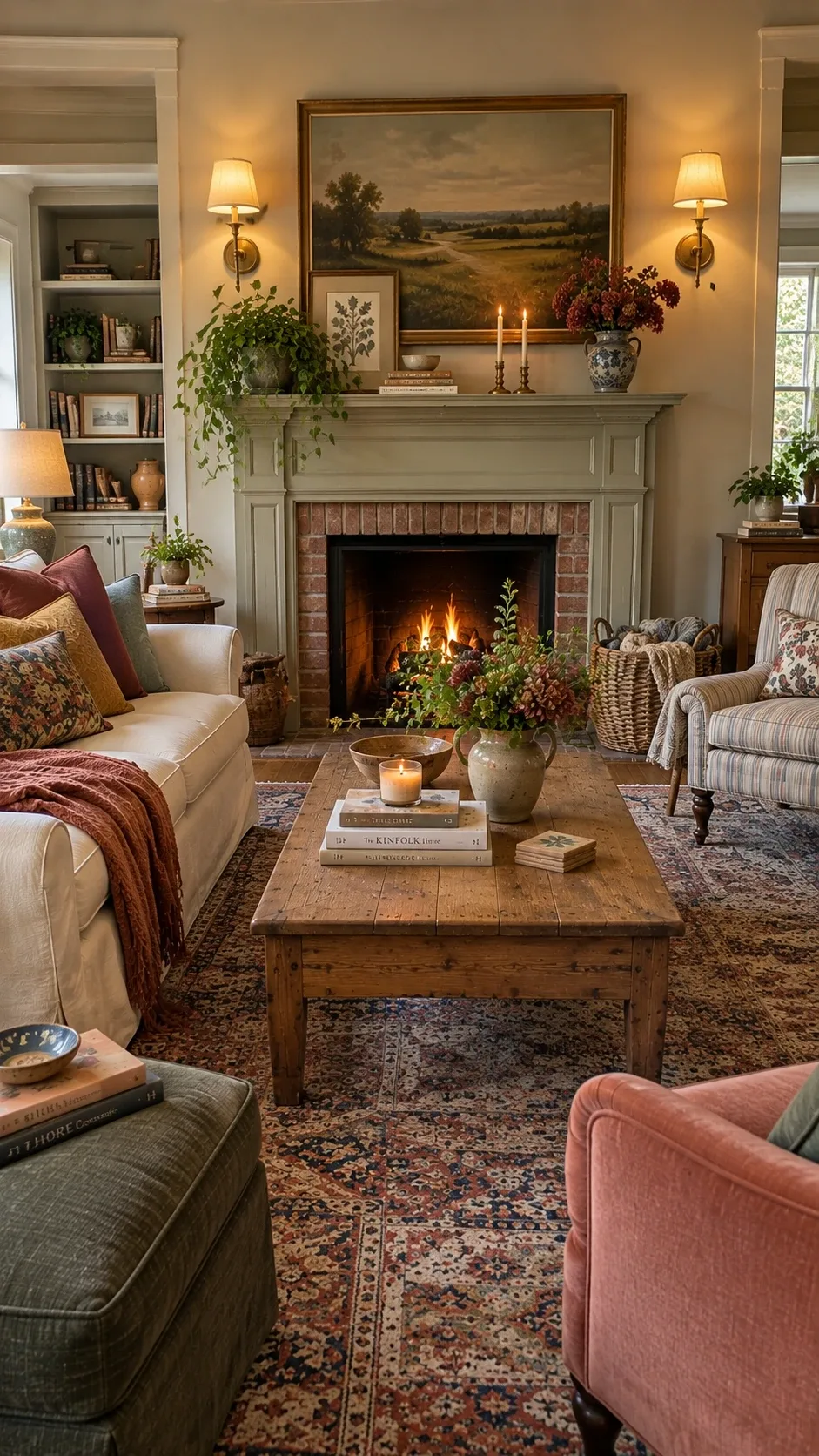
The classic mantel mistake is a crowd of tiny frames that all blur together — I had seven small things up there once and from the couch it just looked like clutter. One oversized piece of art changes everything. It gives the fireplace a proper focal point, connects it to the rest of the room, and you only have to make one decision instead of twenty.
How to get the look
- Pick art that shares two or three colors with your rug or upholstery — related, not identical.
- Go bigger than feels safe. Art that’s too small above a mantel is the most common fireplace styling error I see.
- Center it and give it breathing room; a single strong focal point beats a gallery scramble up there.
- Keep mantel accessories low and minimal so nothing competes with the artwork.
Landscapes and abstract pieces are forgiving choices because they read well from across the room. If art feels like a big commitment, a large mirror does the same job while bouncing firelight around the room — I tried one for a season and the evening glow was honestly magical.
7. Mix Old Architecture With Modern Furniture
An ornate or traditional fireplace can look stuffy if everything around it is equally traditional — or it can look incredible paired with clean, modern furniture. I love this contrast: the fireplace keeps all its character, and a streamlined sofa and sculptural coffee table keep the room from feeling like a museum.
How to get the look
- Let the fireplace be the only decorative element doing heavy lifting; keep furniture silhouettes simple.
- Choose one modern material — brushed brass, glass, or smooth stone — and repeat it in small doses.
- Keep the palette restrained so the architectural details stay the star.
- Add modern pieces sparingly; two or three well-chosen items beat a full modern set against traditional bones.
A simple drum-shade floor lamp next to an old carved mantel, or a low modern coffee table in front of a Victorian firebox — that tension is what makes the room interesting. Just don’t go modern everywhere; the contrast only works when the traditional architecture is clearly in charge.
8. Go Dark on the Fireplace Wall
This one scared me for years, and now it’s my favorite transformation. Painting the fireplace wall a deep, earthy shade — forest green, warm charcoal, deep brown — wraps the room in warmth and makes the fire itself look more dramatic. My living room felt twice as cozy the evening I finished the second coat.
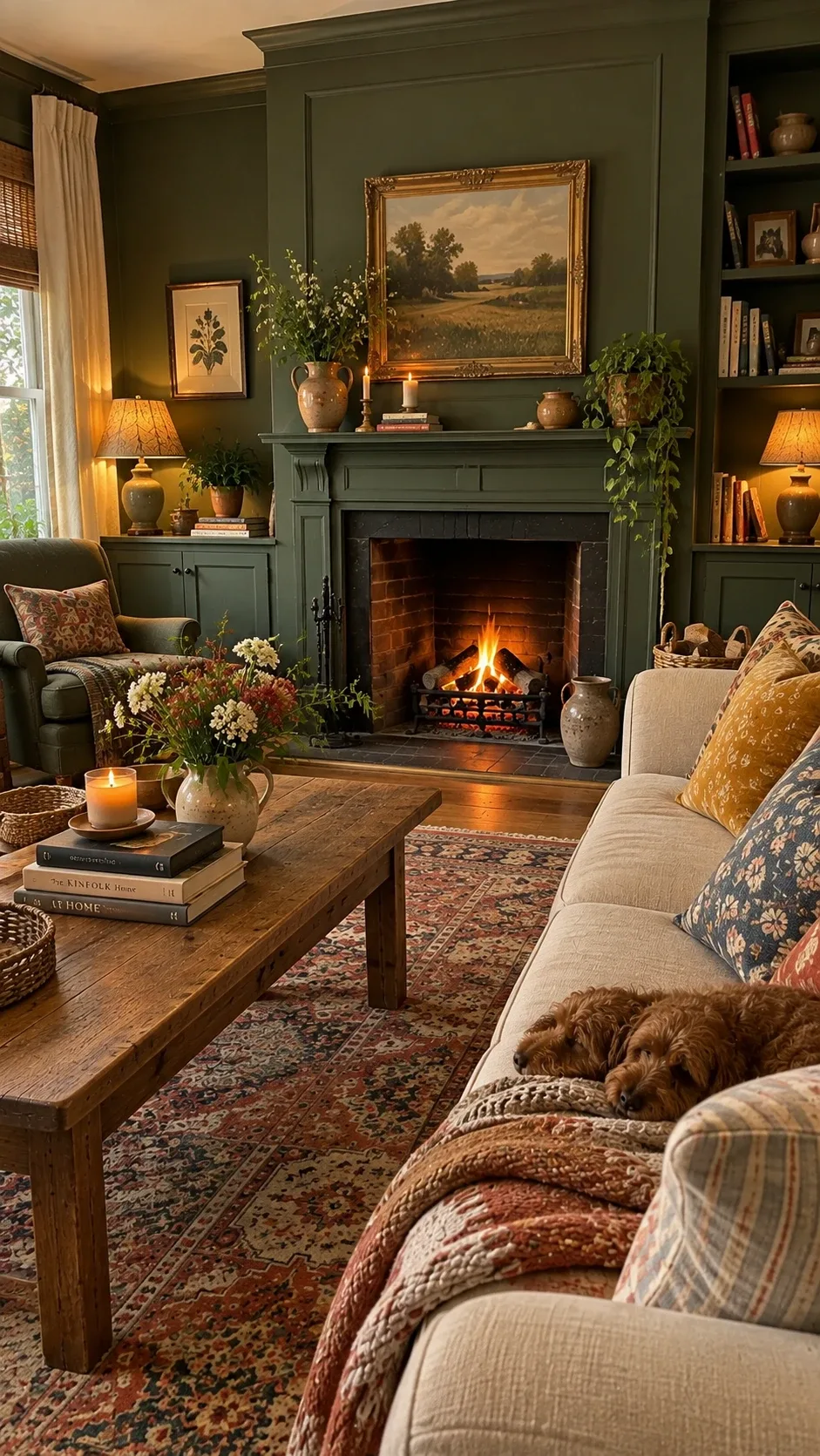
How to get the look
- Test your paint in daylight and at night before committing — dark colors shift a lot with the light.
- Balance the dark wall with lighter upholstery so the room stays inviting rather than cave-like.
- Layer several warm light sources (lamps, candles, the fire itself) instead of relying on one overhead light.
- Use warm-toned bulbs; cool white bulbs fight against dark walls and flatten the whole effect.
If the room doesn’t get much daylight, lean toward a warmer dark — an olive or deep brown — rather than a blue-leaning shade, which can feel chilly in low light. And consider carrying the color onto nearby built-ins for a seamless, intentional look.
9. Soften a Rustic Stone Fireplace With Refined Pieces
Big stone fireplaces have so much natural texture that they don’t need help looking rustic — they need the opposite. The most elegant stone-hearth rooms I’ve seen pair the rough stone with tailored, polished pieces: a clean-lined sofa, a classic rug, an antique-style table. The contrast is what makes it look designed instead of accidental.
How to get the look
- Let the stone be the texture hero; keep furniture shapes refined and simple.
- Choose one wood finish for the main pieces — too many competing wood tones with heavy stone gets visually noisy.
- Use tailored upholstery and classic textiles (linen, wool, a traditional rug pattern) to soften the ruggedness.
- Resist adding more rustic finishes; the stone already supplies all the cabin energy the room needs.
I made this exact mistake once — stone fireplace plus reclaimed wood everything plus antler accents — and my living room looked like a themed restaurant. Swapping in a simple cream sofa and a classic rug fixed it overnight.
10. Exposed Brick? Keep Everything Else Simple
Exposed brick around a fireplace gives you instant character for free, but it’s easy to overdo the rustic thing. When every surface in the room is distressed, the space starts feeling like a costume. Let the brick do the talking and keep the furniture quiet.
How to get the look
- Pair brick with soft, clean-lined seating — a linen sofa in a light neutral is the classic match.
- Add one or two aged-wood pieces, then stop; the brick is already the statement.
- Bring in woven textures (a basket, a jute rug layer) to echo the brick’s earthiness without matching it.
- Keep the brick visible and uncluttered — don’t hang so much on it that you cover the texture.
This is one case where cleaner furniture silhouettes actually make the room feel more relaxed. The contrast between crisp upholstery and rough brick reads effortless; competing textures everywhere just reads busy.
11. Give a Plain Fireplace Texture Instead of Clutter
If your fireplace is just a plain box with no character, the answer isn’t more decor — it’s a better surface. A limewashed finish, handmade tile, natural stone, or subtly textured plaster around the surround can give a boring fireplace a whole personality without a single accessory. I helped a friend limewash her flat drywall fireplace surround in an afternoon, and guests now ask who designed it.
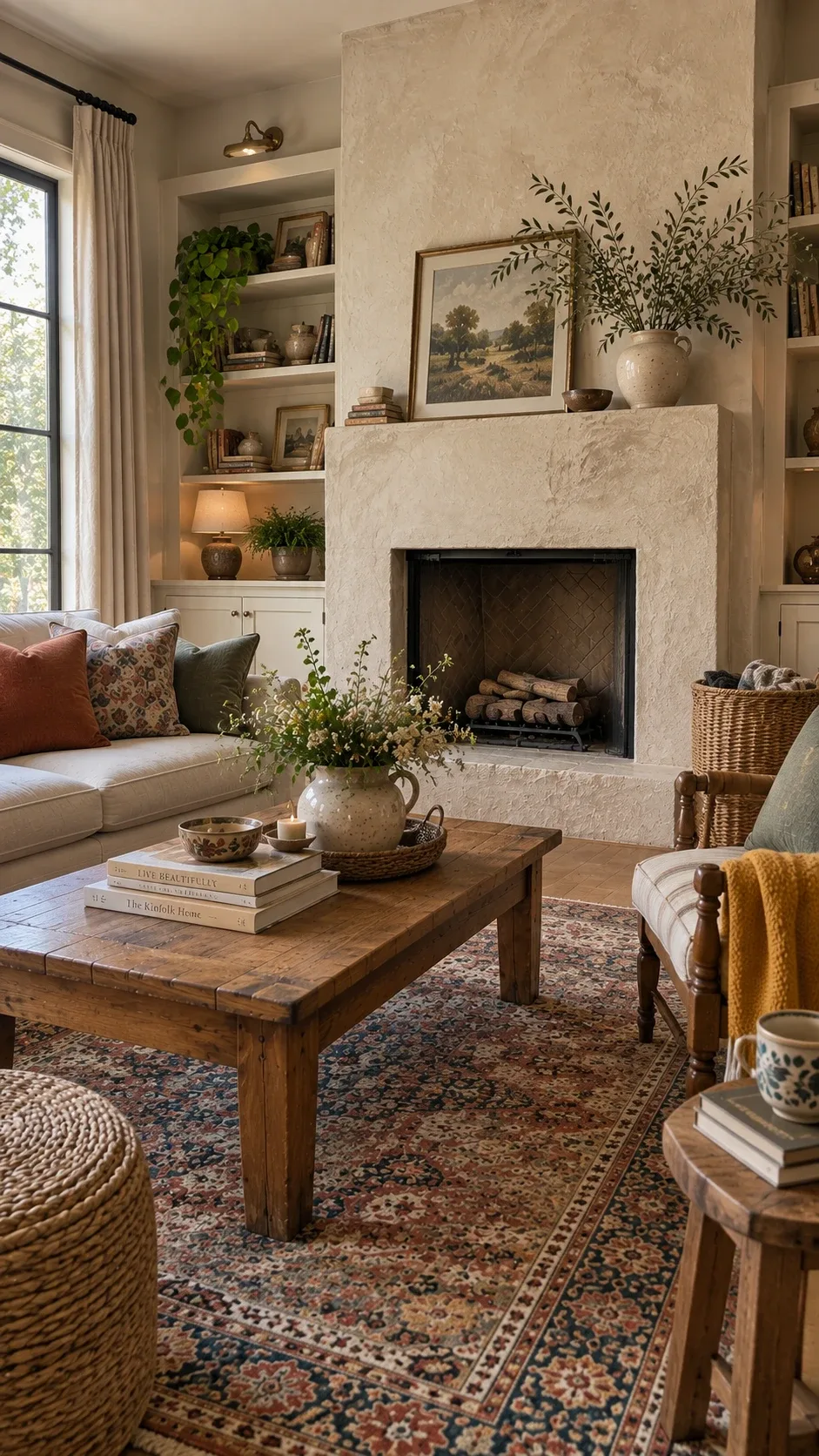
How to get the look
- Choose one dominant surround material and keep everything around it restrained — the material is the decoration.
- Sample finishes in the actual room first; texture and color look very different under your lighting than in a store.
- Echo the surround’s undertone through the rug or upholstery for a pulled-together finish.
- Keep the mantel nearly empty when the surround is heavily textured; the surface itself should carry the interest.
Limewash and textured plaster are the most forgiving weekend projects here — they’re meant to look imperfect, which means your imperfect application just looks intentional. Handmade tile costs more but the variation in the glaze catches firelight beautifully.
12. Try Soft Green Around the Hearth
Of all the colors I’ve seen around a fireplace, soft green might be the most natural fit. It connects effortlessly with wood, stone, brass, and plants — everything that already lives near a hearth. A muted sage or olive on the fireplace wall or built-ins, paired with cream seating and aged brass, gives you a room that feels organic without trying too hard.
How to get the look
- Layer slightly different greens instead of matching one shade everywhere — it reads collected, not coordinated.
- Warm the palette with natural oak or walnut furniture and aged-brass lighting.
- Use cream or ivory upholstery so the green stays the supporting act, not the whole show.
- In low-daylight rooms, choose a warmer olive-leaning green over a blue-green, which can feel cold.
Green is also remarkably forgiving with mixed styles — it works with traditional mantels, modern inserts, and rustic stone alike. If you’re nervous about committing, paint just the fireplace wall and live with it for a month; it’s the cheapest makeover on this list and one of the most convincing.
Mistakes to Avoid Around a Fireplace
Before you rearrange anything, sidestep the errors I’ve already made for you. Don’t block the hearth with furniture pushed flat against it — the fire needs visual and physical breathing room. Don’t line up every seat like a theater; people came to gather, not to watch. Don’t clutter the mantel until the fireplace disappears behind your decor; step back to the couch and check what you actually see. Don’t forget the lighting — a fireplace alone doesn’t light a room, and warm lamps make the difference between moody and gloomy. And don’t pick a rug that’s too small; front legs of all seating should sit on it, or the arrangement floats apart.
Final Thoughts
My fireplace went from an awkward architectural feature to the best seat in the house once I stopped decorating around it and started designing for it. You don’t need all twelve of these ideas — honestly, two or three done well will change how the whole room feels. Pick the one that fixes your biggest frustration, whether that’s a dead layout, a blank mantel, or a wall that needs color, and start there. Then light the fire, sit down, and enjoy the room the way it was always meant to be enjoyed.


Pingback: 13 Green Couch Living Room Ideas That Look Stunning