For years, my morning routine was: splash water, slap on moisturizer, sunscreen if I remembered, done. My skin was dry, flaky around the nose, and no amount of expensive cream seemed to fix it. Then a friend who works at a skincare counter watched me do my routine and said, “You are using good products in the wrong order, so half of them are not working.”
She was right. Product order is not marketing fluff — it is chemistry. Heavy creams block lighter serums from absorbing. Sunscreen under moisturizer gets diluted. Vitamin C applied after oil basically sits on top doing nothing. Once I fixed the order, my dry skin changed more in three weeks than it had in three years of product-hopping.
This is the exact morning order for dry skin chasing that glass-skin glow: what goes on when, why, and the small tweaks that make each step work harder.

The Golden Rule: Thinnest to Thickest
Nearly every layering question is answered by one principle: apply products from thinnest texture to thickest. Watery toners first, then serums, then lotions, then creams, then oils, then sunscreen last (sunscreen always goes last in the morning — it needs to form an even film on top of everything). Wait 30 to 60 seconds between layers so each one can settle. That is the whole system; everything below is just applying it.
The Exact Morning Order
Step 1: Gentle Cleanser (or just water)
Dry skin does not need a foaming morning cleanse — it strips the oils your skin made overnight. If your skin feels comfortable, lukewarm water alone is genuinely enough. If you are oily in the T-zone or wore heavy products overnight, use a milky or cream cleanser, never a foam. Massage for a full 60 seconds; most people rinse after ten and leave residue behind.
Step 2: Hydrating Toner or Essence
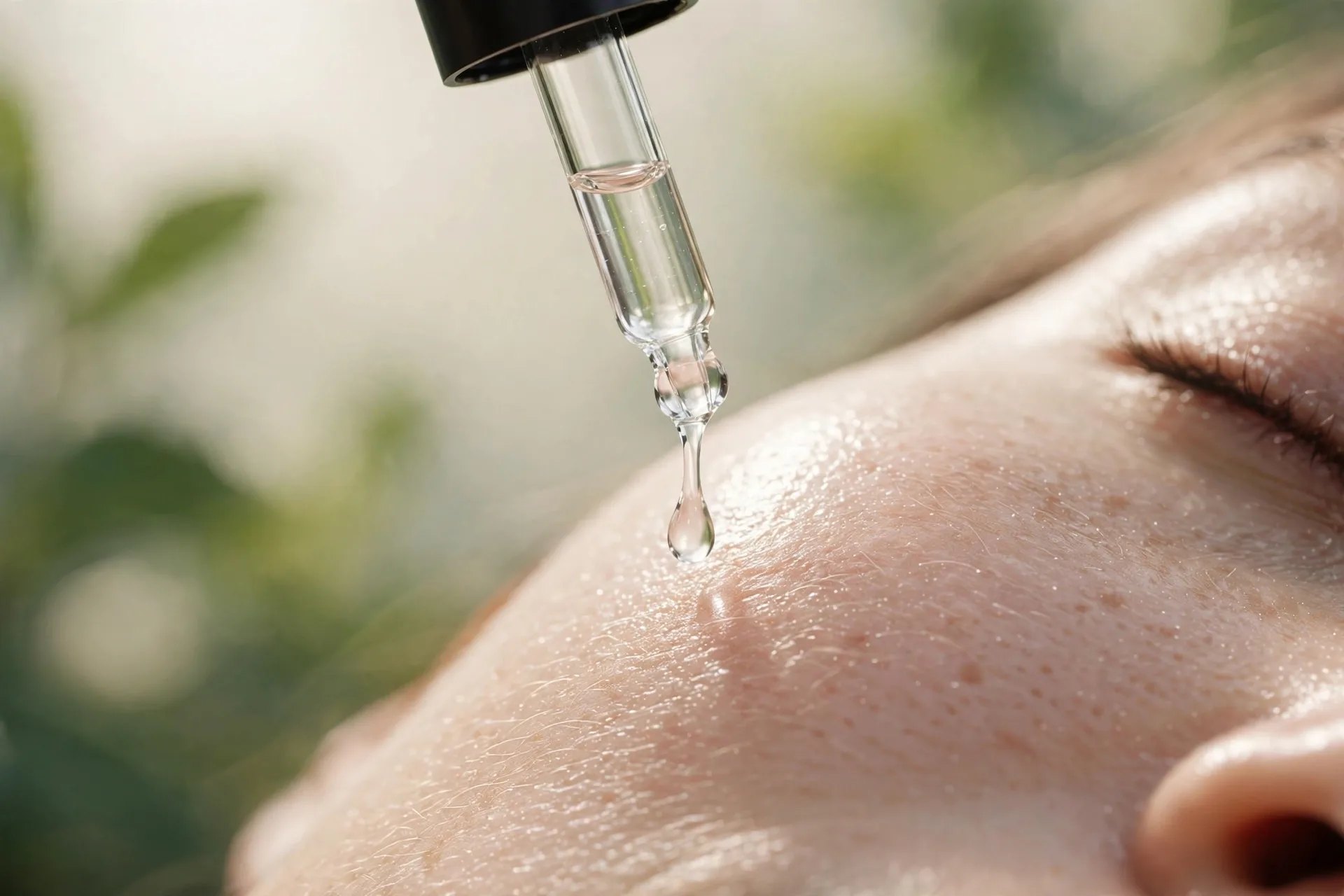
This is the most underrated step for dry skin. A hydrating toner (look for glycerin, hyaluronic acid, or beta-glucan) on damp skin floods it with water that everything after will seal in. Pat it in with your palms — no cotton pads, which waste product and tug at dry skin. Two thin layers beat one thick one.
Step 3: Serum
Serums are concentrated treatments, and order within this step matters too: water-based serums before oil-based ones. For dry glass skin, hyaluronic acid serum on damp skin is the classic — it holds many times its weight in water. Vitamin C (ascorbic acid or a gentle derivative) also goes here in the morning; it boosts sun protection and brightens. If you use both, vitamin C first, wait a minute, then hyaluronic acid. One caution: hyaluronic acid in a dry climate with no moisturizer on top can actually pull water out of your skin — always seal it.
Step 4: Eye Cream
Optional but worth it if your under-eyes are dry or crepey. Use your ring finger, a rice-grain amount, and tap — do not rub — along the orbital bone. Eye cream goes before your heavier face moisturizer so it can actually reach the skin.
Step 5: Moisturizer
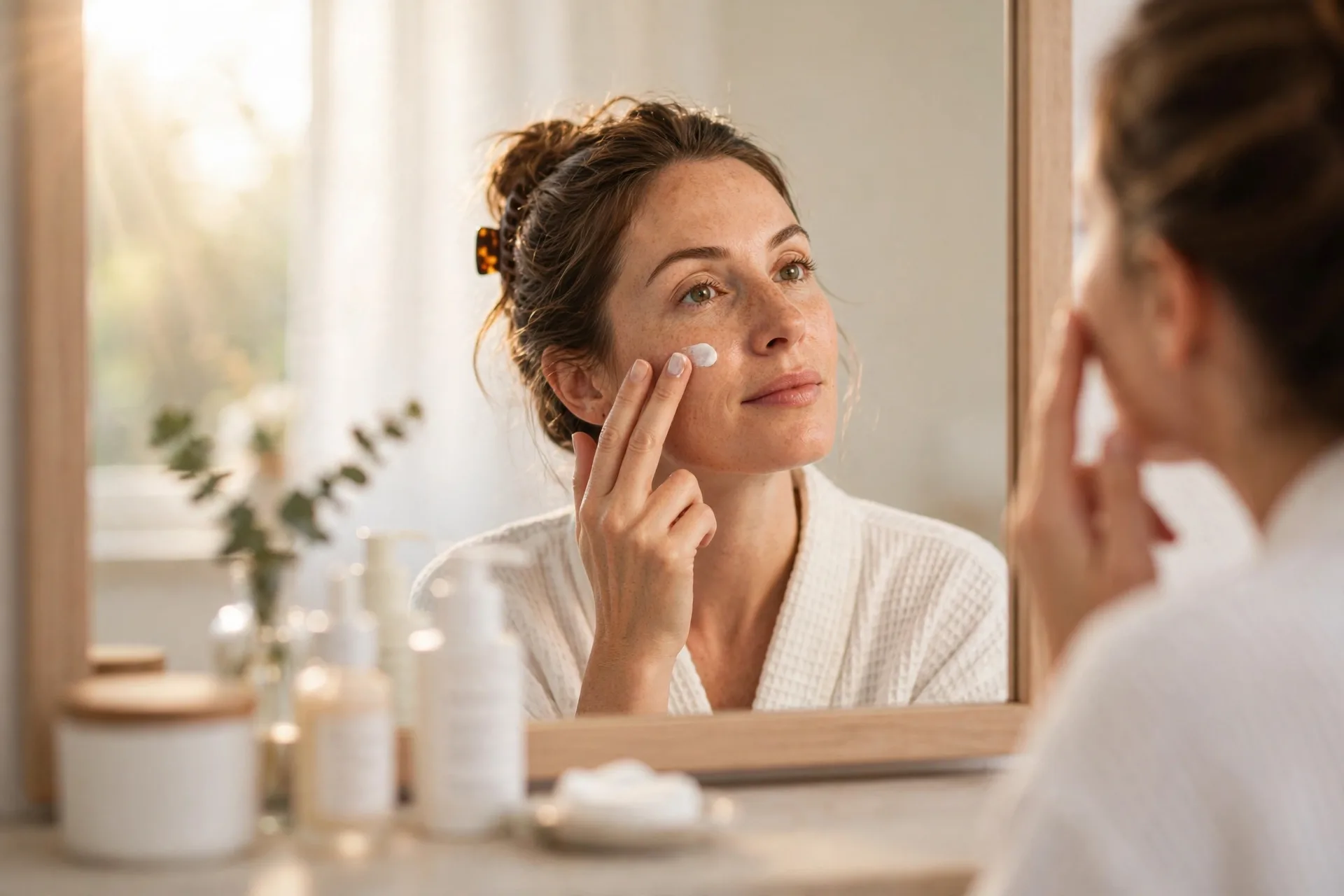
The seal. For dry skin, look for ceramides, squalane, or shea butter — ingredients that repair the barrier, not just sit on top. Apply to slightly damp skin (straight after toner/serum, not bone-dry) and do not forget your neck and the backs of your hands. In winter or very dry climates, a slightly richer cream in the morning is fine; glass skin is about hydration, not mattifying.
Step 6: Facial Oil (optional)
A few drops of squalane or jojoba oil pressed over moisturizer locks everything in and gives that lit-from-within glow. Skip this if you are heading into heavy humidity or wear a lot of makeup — it can make foundation slide. For dry skin in air conditioning or winter, it is transformative.
Step 7: Sunscreen — Always Last
SPF 30 or higher, every single morning, even when it is cloudy. UV damage is the fastest ager of dry skin and undoes everything above. Use a full finger-length amount for face and neck — most people use a quarter of what they need. Chemical vs mineral is personal preference; for dry skin, chemical sunscreens usually layer more comfortably under makeup. Let it set for a few minutes before makeup.

Glass Skin Tweaks for Dry Skin
The glass-skin look — that smooth, poreless, almost reflective glow — is really just well-hydrated skin with light reflection. Three tweaks get dry skin there: first, the “7-skin method” lite version — three layers of hydrating toner instead of one, patted in between. Second, mix a drop of liquid highlighter or a dewy finish into your moisturizer on no-makeup days. Third, mist your face with thermal water or a hydrating mist mid-morning if your office air is dry; then press (do not rub) to reset the glow.
Mistakes That Sabotage the Order
Putting oil before water-based serums — the oil forms a barrier and the serum cannot get through. Mixing vitamin C with strong exfoliating acids in the same routine — irritation city; keep acids for nighttime. Applying everything on completely dry skin — damp skin absorbs water-based products dramatically better. Using too much of each product — a pea of serum and a dime of moisturizer is plenty; excess just pills. And the classic: sunscreen before moisturizer, which dilutes the SPF and breaks the protective film.
A Sample 5-Minute Routine
Short on time? Water rinse, hydrating toner, hyaluronic acid serum, ceramide moisturizer, sunscreen. Five products, five minutes, and your dry skin gets water, treatment, seal, and protection in the right order. Everything else is bonus.
Order will not fix every skin concern, but for dry skin it is the highest-leverage change you can make — free, immediate, and it makes every product you already own work better. Start tomorrow morning. Your skin will notice before your mirror does.
Morning vs Night: What Changes
Your morning and night routines are not the same routine twice — they have different jobs. Morning is about protection: hydrate, treat lightly, seal, and shield with sunscreen. Night is about repair: thorough cleanse, stronger treatments like retinoids or exfoliating acids, and richer moisturizers. Vitamin C belongs to the morning (it boosts UV defense); retinoids and AHAs belong to the night (they break down in sunlight and increase sun sensitivity). If you only remember one distinction, make it this: sunscreen is non-negotiable in the morning and pointless at night.
Product Pairings: What Works Together and What Does Not
Some combinations are power couples; others start fights on your face. Vitamin C + sunscreen is the dream team — studies suggest vitamin C enhances photoprotection. Hyaluronic acid + any moisturizer works because the moisturizer seals the hydration in. Niacinamide plays well with almost everything, including vitamin C (the old warning about them conflicting is outdated for modern formulations).
On the avoid list: vitamin C + strong AHAs/BHAs in the same routine can over-exfoliate and sting — separate them by AM/PM. Benzoyl peroxide + vitamin C can oxidize the vitamin C before it works. Retinoids + vitamin C together in the morning is too much for most skin — keep retinoids at night. And never layer two strong actives you have never tried before on the same day; introduce one at a time, a week apart, so you know which one your skin objects to if something goes wrong.
How Long Before You See Results
Set honest expectations: hydration improvements show in days — your skin will feel softer within the first week of proper layering. Texture and glow take 3 to 4 weeks, one full skin cycle. Dark spots and fine lines need 8 to 12 weeks of consistent vitamin C and sunscreen. If a product stings, burns, or causes new breakouts after two weeks, it is not “purging” — purging only happens with exfoliating acids and retinoids, and only in areas where you already get clogged pores. Everything else causing breakouts is just breaking you out. Stop using it.
Adjusting for the Seasons
Dry skin is not the same year-round, and your morning order should flex with it. In winter, add the facial oil step and consider a richer moisturizer — indoor heating is brutal. In summer, you can often drop the oil and use a lighter gel-cream, but never drop the sunscreen (sweat and water mean reapplying every two hours outdoors). During seasonal transitions, when skin freaks out for no apparent reason, simplify: strip back to cleanser, toner, moisturizer, sunscreen for a week and reintroduce actives one at a time. Your barrier will thank you. Travel is another trigger — airplane cabins and new climates dry skin fast, so pack a richer moisturizer and a hydrating mist whenever you fly.