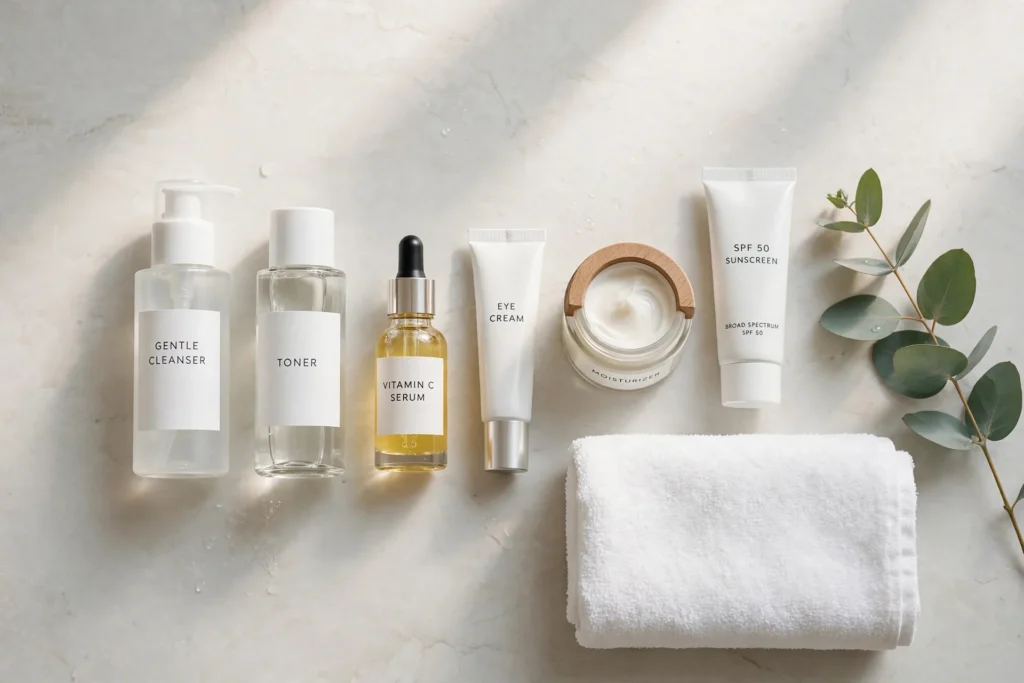

I ruined my skin for months before I realized the problem wasn’t the products — it was the order I was putting them on.
When I first got serious about skincare, I went a little wild. Vitamin C serum from The Ordinary, a hyaluronic acid from L’Oreal, a thick CeraVe moisturizer, sunscreen on top… I had like six bottles lined up on my bathroom counter and I felt like a real beauty guru. Except my face was getting worse. Breakouts along my jaw, weird little bumps on my forehead, and my skin looked dull no matter what I did.
I blamed the products. I swapped brands. I added MORE products. Classic beginner spiral.
Then one day a friend watched my routine and started laughing. “You’re putting moisturizer on BEFORE your serum? Nothing is getting through that.” And just like that, it clicked. I had been layering everything backwards, basically sealing my skin shut before the good stuff could even reach it. Within two weeks of fixing the order, my skin calmed down completely.
So if you’re standing in your bathroom staring at a row of bottles wondering what goes first, this guide is for you. I’m going to walk you through the exact morning order, why each step goes where it does, and the mistakes I made so you don’t have to repeat them.
Why the Order Actually Matters
Think of your skincare like getting dressed for winter. You put the thin t-shirt on first, then the sweater, then the heavy coat last. You wouldn’t put the coat on first and then try to squeeze a t-shirt over it — nothing fits, nothing works right.
Your skin absorbs products the same way. Lightweight, watery products go first because they need to reach your skin directly. Thick creams and oils go last because they create a seal that locks everything in. If you reverse that, the thin stuff just sits on top of the thick stuff and never actually gets absorbed. You’re literally washing money down the drain.
The golden rule is simple: thin to thick. That’s 90% of skincare ordering right there.
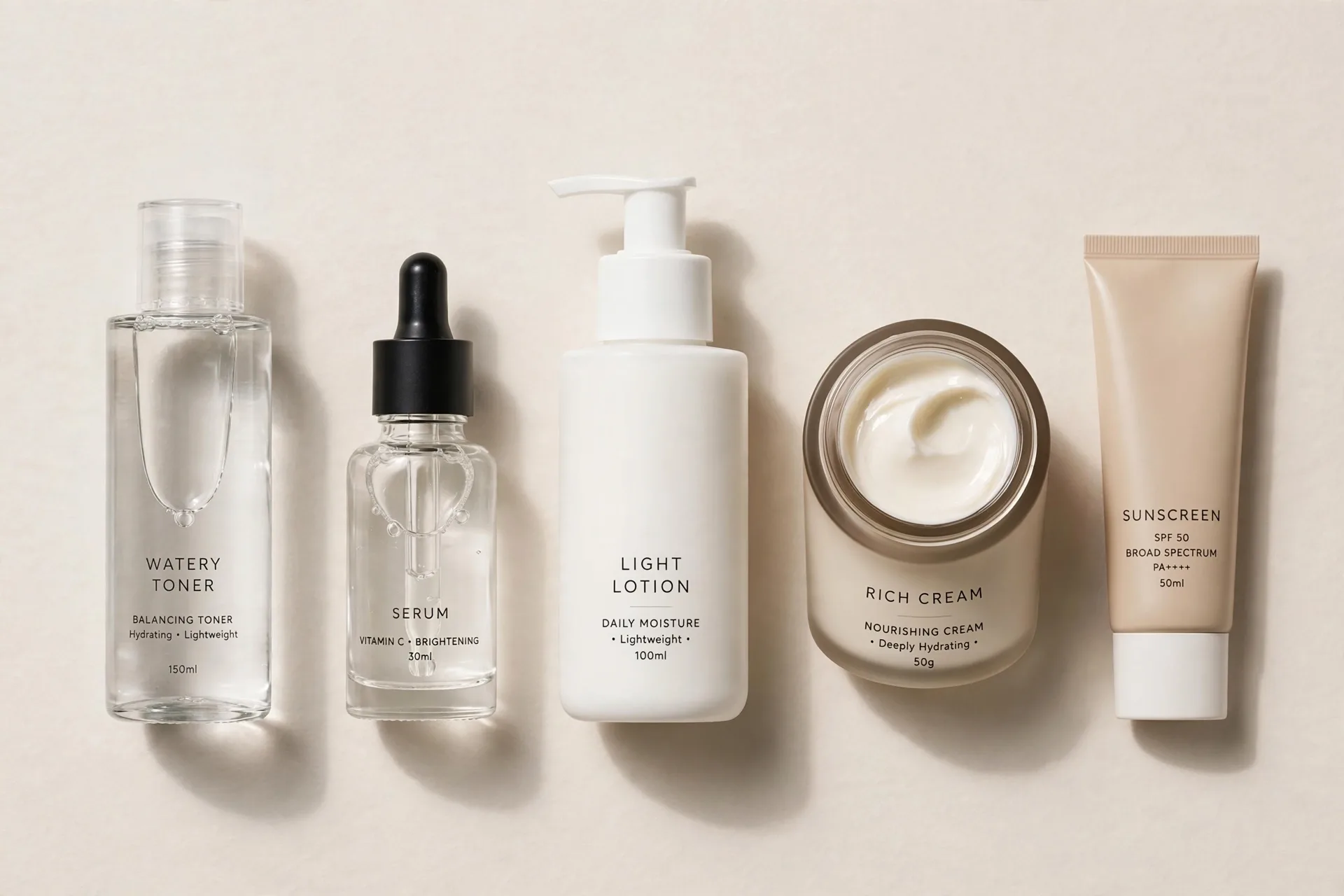
The Morning Routine Order: Step by Step
Here’s the full morning routine in the correct order. Don’t panic if you don’t own all of these — I’ll show you a stripped-down version at the end too.
Step 1: Cleanser
Start with a clean face. In the morning, you don’t need a harsh deep-clean — your face mostly just has overnight oil and whatever leftover products from last night. A gentle cleanser is enough.
I use CeraVe Hydrating Facial Cleanser in the morning because it’s mild and doesn’t leave my skin feeling tight. If you’re oily, something like Neutrogena’s Ultra Gentle Daily Cleanser (the foaming one) works great too. The key thing: after washing, your face should feel comfortable, not squeaky. Squeaky means you stripped too much.
Splash with lukewarm water — hot water is sneaky damage, it dries your skin out over time. Massage the cleanser for about 30 seconds (count it, you’ll be surprised how short your usual 5-second wash actually is), then pat dry with a clean towel. Don’t rub.
Step 2: Toner or Essence
This is the step most beginners skip, and honestly, it’s optional — but it makes everything after it work better. A hydrating toner preps your skin, like dampening a sponge before it can absorb water properly. Dry sponge? Water rolls off. Damp sponge? Soaks it right up.
Look for toners with hyaluronic acid or glycerin. I really like the Laneige Cream Skin Toner — it’s milky and hydrating without any sting. Apply it to slightly damp skin (don’t fully dry your face after cleansing) and press it in with your palms. Pressing beats rubbing here; you’re helping it sink in, not dragging your skin around.
If toners feel like an extra you don’t want to buy yet, you can skip straight to the next step. No guilt.
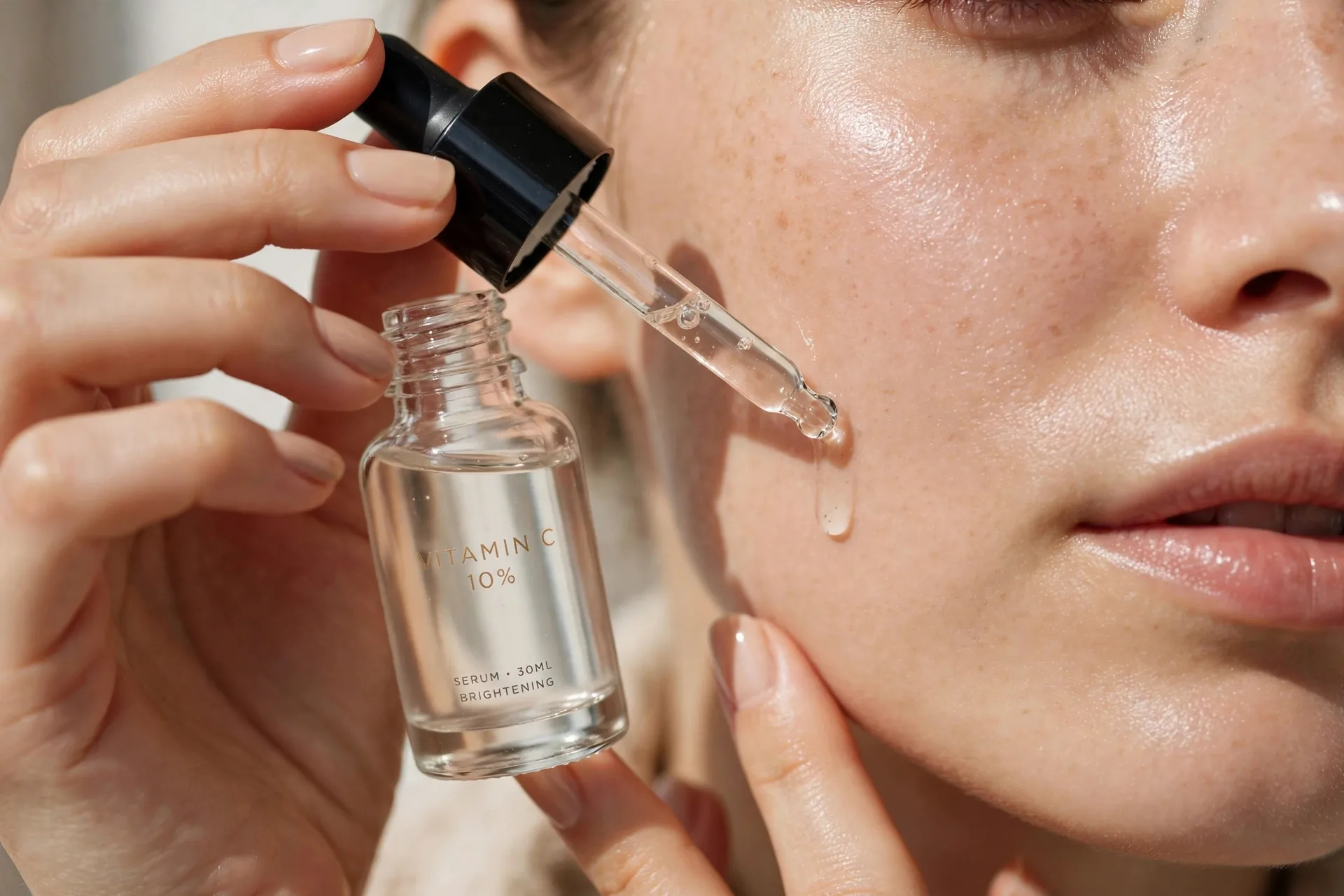
Step 3: Serum (Vitamin C Goes Here)
Now we’re at the treatment step — the one doing the heavy lifting. In the morning, this spot belongs to vitamin C serum if you use one. Vitamin C is an antioxidant, which means it fights the damage from sun and pollution that your skin collects during the day. It also brightens over time — my dark spots from old breakouts faded noticeably after about two months of consistent use.
My beginner mistake here was using way too much. You need like 3-4 drops for your whole face. I was pumping out a full dropper and wondering why my face felt sticky and my makeup pilled. Less is genuinely more with serums.
If you don’t use vitamin C, whatever your main treatment serum is goes here — niacinamide, hyaluronic acid serum, whatever. One treatment serum is plenty for a beginner routine. I made the mistake of layering three different serums at once and my skin freaked out. Pick one, let it work.
Give it about a minute to absorb before moving on. I usually brush my teeth in between steps — built-in timer.
Step 4: Eye Cream
Tiny step, tiny amount. Eye cream goes before moisturizer because it’s usually lighter than your face cream, and the skin around your eyes is the thinnest on your face so it absorbs fast.
Use your ring finger (it’s naturally the gentlest) and tap — don’t rub — a pea-sized amount around the orbital bone. I use the CeraVe Eye Repair Cream, nothing fancy. Honestly? For most beginners, your regular moisturizer works fine around the eyes too. Eye cream is nice-to-have, not must-have. I include it because my under-eyes get dry and crepey without it, especially in winter.
Step 5: Moisturizer
Now the seal. Moisturizer locks in all the watery layers underneath and keeps your skin barrier happy. This is the step I used to do second (facepalm), which meant my serums were sitting on top of cream doing absolutely nothing.
Pick based on your skin type, not on hype. Dry skin? Something richer like CeraVe Moisturizing Cream (the one in the tub). Oily or combo? A gel-cream like Neutrogena Hydro Boost. I have combination skin and I switch between the two depending on the season — heavier in winter, lighter in summer.
A nickel-sized amount is usually enough. Warm it between your palms first, then press and smooth it over your face and neck. Yes, neck. Your neck shows age faster than almost anywhere else and everyone forgets it.
Step 6: Sunscreen (Non-Negotiable)
Last step, every single morning, no exceptions. Sunscreen goes last because it needs to form an even film over everything to protect properly. If you put moisturizer over sunscreen, you disturb that film and the protection drops.
This was my biggest skincare regret — I skipped sunscreen through my early twenties because I thought it was only for beach days. The sun damage happening on a regular Tuesday commute is the same UV as a beach. Dark spots, fine lines, dullness — most of it traces back to unprotected daily exposure.
Find one you actually like wearing, because the best sunscreen is the one you’ll use daily. I love the La Roche-Posay Anthelios Ultra-Light Fluid — it doesn’t leave a white cast and sits well under makeup. For a budget pick, the Neutrogena Ultra Sheer is solid. You need about two finger-lengths of product for full face and neck coverage. Most people use half that and wonder why they still burn.
If you wear makeup, it goes on AFTER sunscreen. Give the sunscreen 2-3 minutes to set first.
The Simple Version: 3 Steps Is Enough
Feeling overwhelmed? Here’s the truth nobody selling you products wants to admit: a 3-step morning routine covers 95% of what your skin needs.
- Cleanser — gentle wash
- Moisturizer — suited to your skin type
- Sunscreen — every day
That’s it. Seriously. I did just these three for almost a year and my skin was the best it had ever been. All the serums and essences are upgrades, not requirements. Start simple, get consistent, then add one product at a time if you want more.
Mistakes I Made (So You Don’t Have To)
Putting products on in the wrong order
Obviously. Moisturizer before serum meant my expensive serums were completely wasted for months. Thin to thick. Tattoo it on your brain.
Using too much of everything
Beginners always over-apply. A full pump of serum, a huge glob of moisturizer. Your skin can only absorb so much — the rest sits on top, pills under makeup, and clogs pores. Start with less than you think you need. You can always add more.
Adding five new products at once
When I finally learned the right order, I got excited and introduced vitamin C, niacinamide, AND a new toner in the same week. My skin broke out and I had no idea which product caused it. Add one new product at a time and give it at least a week before adding the next. Boring advice, but it saves you so much detective work.
Mixing vitamin C with the wrong things
Vitamin C doesn’t play well with everything. Don’t layer it directly with strong exfoliating acids (like glycolic acid) in the same routine — it can irritate. In the morning, keep it simple: vitamin C, then moisturizer, then SPF. Save your acids for nighttime.
Not waiting between steps
I used to slap everything on in 60 seconds flat and run out the door. Products need a minute or two to absorb, otherwise they mix into a soup on your face and none of them work properly. You don’t need long waits — just enough that each layer feels mostly absorbed before the next goes on. Brushing your teeth or getting dressed between steps is the easiest hack.
Skipping sunscreen on cloudy days
UV rays don’t care about clouds. Up to 80% of UV passes through cloud cover. I learned this the fun way — with a sunburn on an overcast day. Sunscreen is a daily thing, full stop.
How Long Before You See Results?
Real talk: skincare is slow. You’ll feel a difference in hydration within a few days of getting the order right — skin just feels more comfortable and plump. But visible changes like fading dark spots or smoother texture take 4-8 weeks of consistent use. Your skin renews itself roughly every 28 days, so you need at least one full cycle to judge anything.
Take a photo of your bare face when you start. Same lighting, same angle, once a week. Future you will thank present you, because day-to-day you won’t notice the gradual change but the photos don’t lie.
What About Nighttime?
Quick note since everyone asks: the order at night is the same idea (thin to thick), but you swap sunscreen for your night treatment. So it’s cleanser → toner → treatment serum (like retinol or exfoliating acids) → eye cream → moisturizer. No SPF at night — there’s no sun to protect from while you sleep, and your skin does its repair work overnight. Maybe that’s a whole other article, though.
Final Thoughts
Getting the order right honestly changed my skin more than any single product ever did. It’s free, it takes no extra time, and it makes everything you already own work the way it’s supposed to.
If you take one thing from this, let it be the thin-to-thick rule. Cleanser, then watery stuff, then serums, then creams, then sunscreen. Once that clicks, you’ll never stare at your bathroom counter in confusion again.
Start with the simple three steps, stay consistent for a month, and then decide if you want to add anything. Your skin — and your wallet — will thank you.



Pingback: DIY Rose Water Toner for Glowing Skin: My Simple Homemade Recipe
Pingback: Vitamin C Serum: How to Layer It Without Irritation