
Last March, I caught myself staring at my nails during a coffee run and feeling genuinely annoyed. They were still wearing that deep oxblood shade from December — beautiful in its moment, but now it just looked heavy. Outside, the trees were doing that pale-green almost-spring thing, and my hands looked like they belonged to a different season entirely.
That is the exact awkward in-between that winter-to-spring transition nails were made for. You are done with dark, moody polish, but full neon summer brights feel premature when it is still 50 degrees and you are wearing a sweater. Transition nails live in that sweet spot: lighter, fresher, a little playful, but still wearable with your real life.
I have spent the last few springs testing this category obsessively, and I have learned that the best transition manicures share three traits: sheer or pastel bases that feel like fresh air, one small detail that makes them interesting, and colors that grow out gracefully. Here are 18 ideas that nail all three.
What Makes a Great Winter-to-Spring Transition Nail
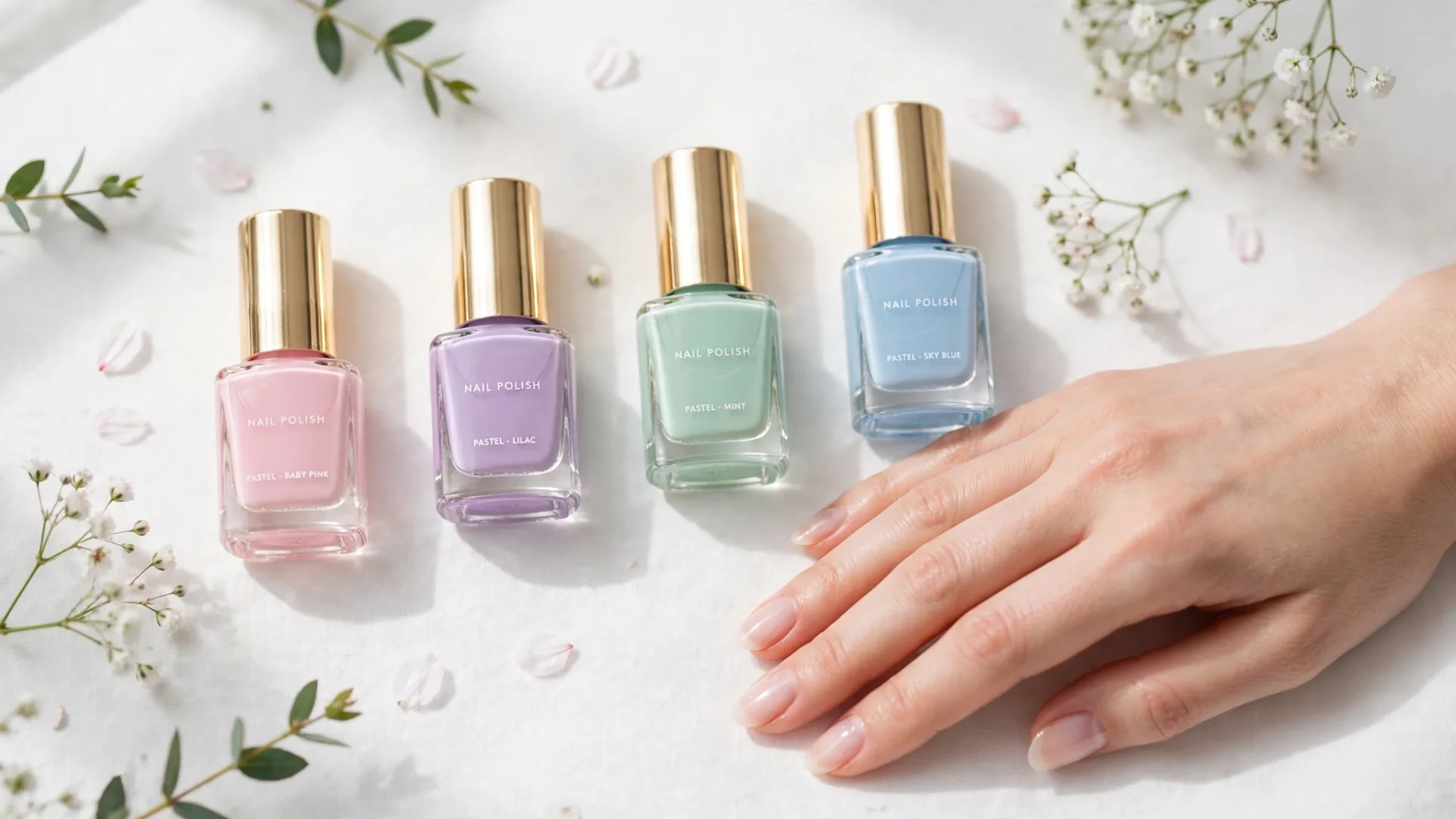
Before the list, a quick framework. Winter nails lean opaque, dark, and jewel-toned. Spring nails lean sheer, pastel, and floral. A transition design borrows from both sides: maybe a winter shape (short almond, neat square) with a spring color, or a spring shade done in a cozier, muted finish. The goal is a manicure that looks intentional right now, not one you will be sick of in ten days.
The 18 Designs
1. Sheer Milky Pink
The undisputed queen of transition season. Two to three thin coats of a sheer milky pink over your natural nail gives that clean, healthy, expensive look. It goes with everything, it photographs beautifully, and chips are nearly invisible. If you only try one design from this list, make it this one.
2. Pastel French Tips
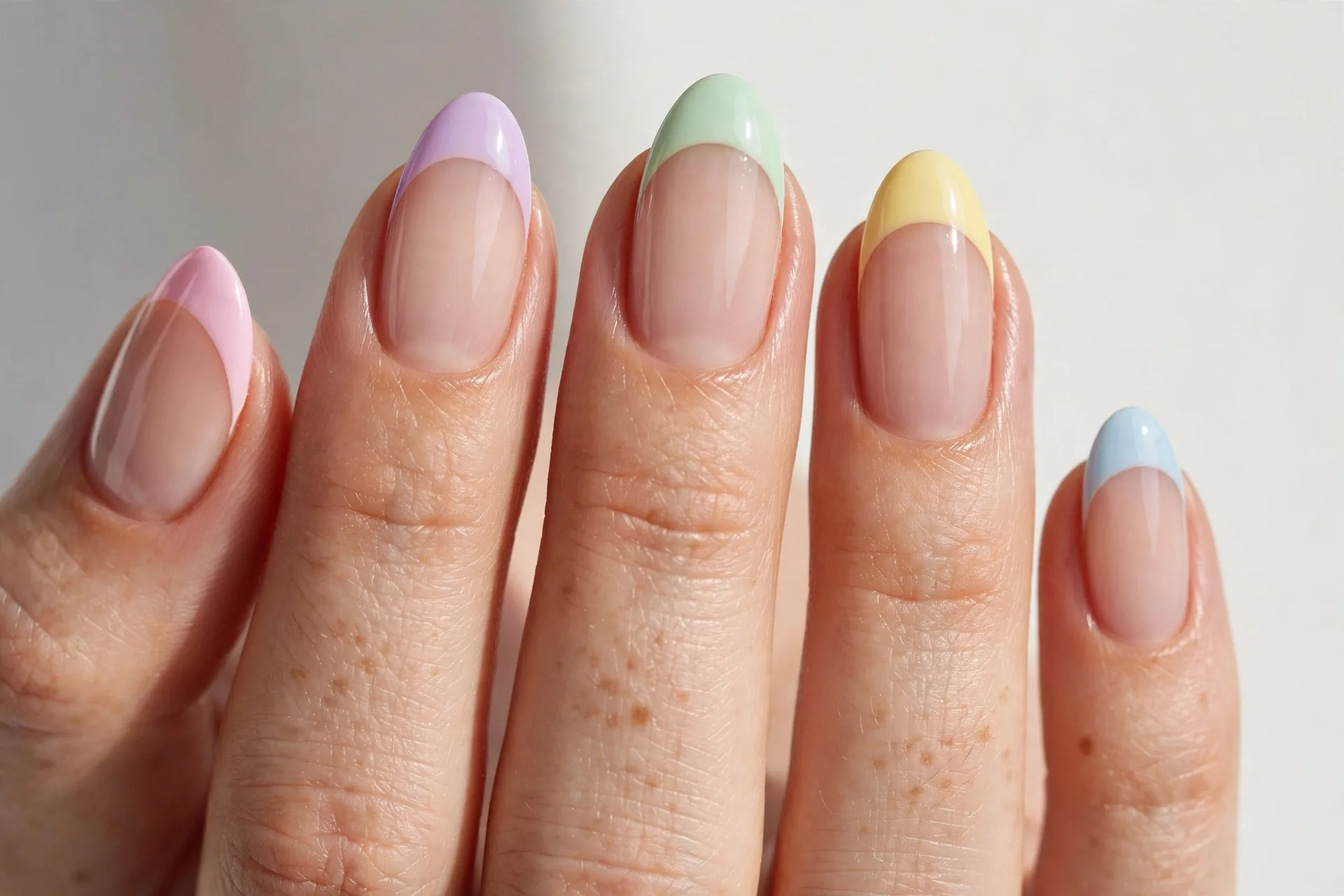
Take the classic French and swap the white tips for pastels — baby pink, lilac, mint, butter yellow, one shade per nail or all the same. The nude base keeps it wearable; the colored tips say spring is coming. This is my most-requested salon design every March.
3. Sage Green Solids
Sage is the bridge color of the season — earthy enough for late winter, fresh enough for spring. A solid sage manicure on short, neat nails looks modern and calm. Add a matte top coat if you want it to feel extra current.
4. Micro Daisy Art
Tiny white daisies with yellow centers, one or two per nail, on a sheer nude base. They are small enough to read as a detail rather than a theme, which keeps them from feeling childish. A dotting tool makes the petals almost foolproof.
5. Light Glazed Donut Nails
The glazed trend, but dialed down for spring: a sheer pink or pearl base with a whisper of chrome powder on top. The result is luminous rather than metallic — like your nails are lit from within. Gorgeous in natural daylight.
6. Baby Blue Solids
Baby blue is the color equivalent of opening a window. On its own it is simple, but that simplicity is the point — clean, crisp, optimistic. It pairs surprisingly well with the cream and beige knits you are still wearing.
7. Butter Yellow
Not neon, not mustard — butter. This soft, creamy yellow is flattering on more skin tones than people expect, and it is one of those shades that makes you look instantly happier. Two coats for full opacity, always with a good base coat since yellows can stain.
8. Lilac Ombré
A gradient from pale lilac at the cuticle to nearly white at the tip (or the reverse). Ombré hides grow-out better than almost any other design, which makes it practical, and the lilac keeps it firmly in spring territory.
9. Cherry Blossom Branches
A few delicate dark-pink branch strokes with tiny blossom dots on an accent nail or two, the rest in sheer pink. It is the most literal spring design here, but done minimally it reads elegant, not costume-y.
10. Mint Micro French
Micro French — tips painted half as thick as a standard French — in mint green over a sheer base. The thin line makes it feel delicate and modern. This is the design I wear when I want something interesting that coworkers will not stare at.
11. Sheer Nude with Gold Flecks
A sheer nude base with tiny gold foil flecks scattered near the tips. It catches the light when you move your hands and looks far more expensive than the five minutes it takes. Perfect for the weeks when your calendar is full of dinners and events.
12. Periwinkle Solids
Periwinkle sits exactly between blue and purple, which makes it the ultimate in-between-season shade. It is soft but not washed out, and it looks striking against both fair and deep skin tones.
13. Peach Fuzz
Warm peachy-pink solids with a glossy top coat. Peach flatters warm undertones beautifully and has that juicy, fresh feeling that dark winter shades completely lack. If your skin leans warm, this might be your shade of the season.
14. Negative Space Half Moons
Leave a bare half-moon at the cuticle and paint the rest in a pastel of your choice. The negative space makes grow-out nearly invisible — the design still looks deliberate three weeks in. Lilac and sage work especially well here.
15. Lilac Chrome
For the days you want a little drama: a lilac base with chrome powder buffed over the top. It is reflective and eye-catching but the lilac keeps it soft. Fair warning — chrome shows every imperfection in your base, so take time on prep.
16. Daffodil Dot Accents
A sheer base with small yellow dots clustered like tiny daffodils on one accent nail per hand. Minimal effort, maximum spring energy. A toothpick works fine if you do not own a dotting tool.
17. Sheer Pink Aura
The aura trend in its softest form: a sheer pink base with a slightly deeper pink bloomed in the center of each nail. It is dreamy and dimensional, and because the edges stay sheer, it grows out without a harsh line.
18. Coral Red Shift
If you are not ready to give up red, shift it: trade your winter oxblood for a bright coral-red. Same confidence, completely different season. It is the easiest transition of all — one bottle swap — and it works for every nail length.

How to Make Your Transition Manicure Last
Spring weather is weird — one day you are gardening, the next you are wearing gloves again. That stop-start is rough on polish. Cap the free edge (run polish along the very tip of the nail) with every coat including top coat; it is the single biggest chip-prevention trick. Reapply top coat every two to three days. And keep cuticle oil in your bag — hydrated cuticles make any manicure look a week fresher than it is.
Mistakes to Avoid
The biggest one I see: going full neon too early. Neon corals and highlighters look amazing in July sunlight and slightly off in March’s grey light — pastels and sheers are the safer spring bet. Second: skipping base coat with pastel yellows and corals, which stain the nail plate. Third: choosing a design with a hard grow-out line (like a dark solid) right before a busy month — pick ombré, aura, or negative space instead if you know you will not redo them for three weeks.
Transition season only lasts a few weeks, but the right manicure makes those weeks feel lighter. Pick the design that made you smile reading this list — that instinct is usually right.

Best Transition Shades for Your Skin Tone
Pastels are not one-size-fits-all, and the wrong undertone can make hands look washed out. Fair skin with cool undertones glows in baby blue, lilac, and periwinkle; avoid butter yellow, which can emphasize sallowness. Fair skin with warm undertones loves peach, butter yellow, and warm sheer pinks. Medium skin tones can wear almost everything here, but sage green and coral red are especially striking. Deep skin tones make pastels pop beautifully — milky pink, lilac, and mint create gorgeous contrast, and gold-flecked designs look incredible. When in doubt, hold the polish bottle next to your hand in natural light; your eyes will tell you in two seconds.
Salon Visit or DIY?
Most of these 18 designs are genuinely DIY-friendly — solids, sheers, dots, and even the micro French are doable at home with a steady hand and a good top coat. Book the salon for chrome finishes (they need a perfectly smooth base and proper lamp curing), intricate cherry blossom art, and ombré blends if you have never sponged a gradient before. A smart middle path: get the tricky base done professionally, then maintain it at home with top coat refreshes. Either way, bring a reference photo — describing “lilac chrome” out loud gets you five different interpretations.


Pingback: 17 Glossy Short Milk Nails & Sheer Cream Manicure Ideas for 2026 - Beautifully Curated Life